
Why Waste Management Brokers Choose Cable Wire Recycling for Digital Waste Tracking Compliant Cable Collection
Waste management brokers rarely touch cable and copper waste with their own hands. A broker arranges collection and disposal on behalf of retail chains, facilities management contracts, housing associations, local authorities and construction clients, usually across many sites and often without holding a waste site or environmental permit of their own. The actual collection, weighing, grading and recording work falls to a registered carrier, dealer or specialist recycler working underneath that broker relationship. From 1 October 2026, mandatory Digital Waste Tracking (DWT) went live in England, and it changed what a broker needs from that subcontractor. A broker’s own compliance file is now only as good as the movement data the collector underneath them can supply, quickly and in a format that feeds the new digital service rather than sitting on a paper transfer note in a filing cabinet. This is why more brokers are moving away from a different local scrap yard at every site and toward one cable recycling specialist they can brief once and reuse across every end client location that produces surplus cable. The appeal is not simply convenience. A broker who can show a consistent, repeatable collection process for cable waste across an entire client portfolio is in a far stronger position when a client, an auditor, or a regulator asks how a particular waste stream was handled, because the answer is the same whichever site the question relates to.
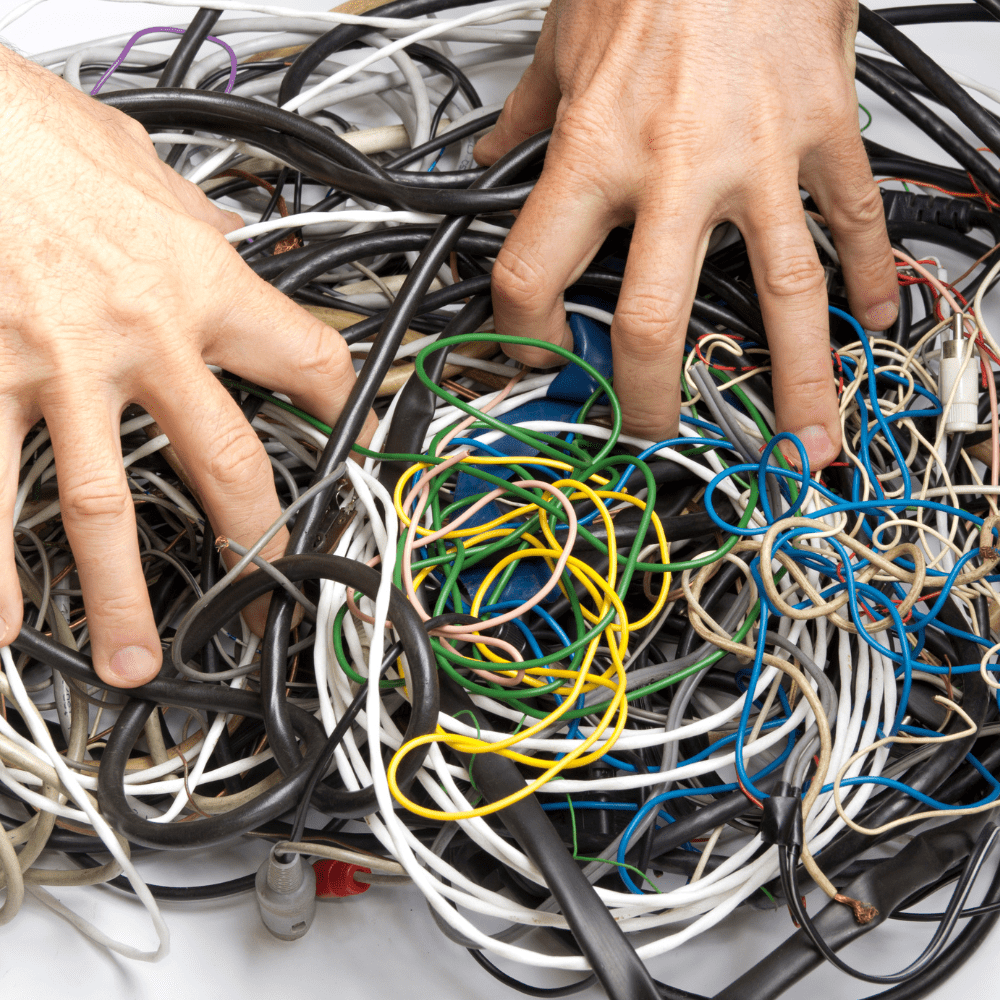
Why Waste Management Brokers Need a Cable Specific Recycling Subcontractor
What a Waste Management Broker Arranges Without Holding Their Own Waste Site
A broker’s position in the waste chain is unusual compared with most of the businesses that produce the waste in the first place. A broker does not typically own a yard, a permit or processing equipment. Instead, a broker’s value is coordination: finding the right registered carrier, dealer or recycler for each waste stream an end client produces, negotiating terms, and taking responsibility for making sure the paperwork trail is correct even though someone else is physically doing the collection. That means a broker’s reputation, and in many cases their own registration status, rests heavily on the quality of the subcontractors they bring into their network. Under the rules for registering as a waste carrier, broker or dealer, anyone arranging the transport, keeping, treatment or disposal of controlled waste on behalf of someone else generally needs to be registered, and that registration sits alongside the duty of care obligations that apply to the whole waste chain, not just the person who physically lifts the material.
Cable and copper offcuts arranged through a broker are controlled waste in exactly the same way as any other stream a broker manages, which means they need correct classification under the relevant European Waste Catalogue (EWC) code and the right accompanying paperwork, usually a waste transfer note recording what was collected, from where, by whom and where it went next. A broker who already handles general mixed waste, construction debris, or WEEE for a client is used to this discipline. The question is whether their cable specific subcontractor applies the same discipline, because a weak link in one stream can undermine the broker’s whole compliance position with that client.
In practice, this discipline comes down to fairly simple habits repeated consistently: weighing every load rather than estimating it, recording the cable type and grade rather than a generic description, noting the collection date and site, and issuing the transfer note promptly rather than only when chased. None of this is complicated on its own. What is harder is finding a subcontractor who applies those habits on every single job, across every site, without the broker having to check each time. A cable only specialist has far fewer distractions pulling attention away from that routine than a yard also sorting steel, aluminium, white goods and vehicle parts on the same day.
Why a Generic Scrap Yard Loses Cable Specific Data for Brokers
The common disposal headache brokers describe is inconsistency between different local scrap yards. One yard weighs and records cable separately; another tips it straight into a general mixed metal skip alongside steel, aluminium and whatever else came off the same job. One yard issues a transfer note promptly; another takes days, or only on request, which delays a broker closing out their own duty of care file for that collection. A yard that mixes cable into broad mixed metal records is not being careless exactly, it is simply built around handling many metal types at once rather than specialising in one. For a broker who now needs clean, stream specific movement data to support accurate reporting, that blurred record is a genuine problem, because the data a broker submits is only as granular as the data their subcontractor hands back to them. A business that only recycles cable and wire does not have that problem, because every job that comes through the yard is, by definition, already a single waste stream with its own weight and grade recorded against it.
How Digital Waste Tracking Changes Cable Waste Movement Records for Brokers
What Digital Waste Tracking Means for Subcontracted Cable Collection
The Digital Waste Tracking service is designed to replace the old model of paper waste transfer notes sitting in separate filing systems with a shared digital record that follows a waste movement from the point it is produced through to its final destination. For a broker, this is a meaningful change in what “good paperwork” looks like. It is no longer enough for a subcontractor to eventually produce a transfer note if asked. The expectation under digital tracking is that movement data, what was collected, when, in what quantity, and where it went, is captured accurately and made available in a timely way, because that data is what feeds the shared record a broker and their end client may both need to rely on.
For cable waste specifically, this matters more than it might first appear. A broker arranging a one off collection from a single site can probably absorb a slow or inconsistent paperwork turnaround from a local yard without it becoming a pattern. A broker running the same cable waste stream across ten, twenty or fifty end client sites a year cannot, because inconsistency at that scale becomes a recurring gap in the broker’s own record keeping, visible the moment anyone looks closely at the stream across the full client relationship rather than one isolated job.
It is worth being clear about what digital tracking does and does not change. It does not alter the underlying legal responsibility a broker already carries under duty of care, and it does not replace the need for a proper waste transfer note describing the cable collected. What it changes is the format and the pace that record needs to exist in, moving away from a purely paper based system kept separately by each party and toward a shared digital record that a broker, an end client, and a regulator could all potentially reference. A subcontractor who already records weight and grade accurately on paper has most of the groundwork done, since the habit that matters is accuracy and consistency rather than any particular piece of software.
Why Movement Data Speed Matters for a Broker’s Duty of Care File
Duty of care has always required anyone involved in a waste movement to check what they are dealing with, make sure it is managed properly, and keep records that prove it. The waste duty of care code of practice sets out that expectation clearly for everyone in the chain, brokers included. What digital tracking adds is pace. A broker who used to be able to chase up a transfer note a week or two after collection, and still be comfortable with their duty of care file, is now working against an expectation that the underlying movement data is current, not retrospective. A subcontractor that treats weighing and recording as a routine, repeatable step of every single collection, rather than an afterthought completed only when a client chases it, is far easier for a broker to build a reliable reporting relationship with. This is one of the clearest practical reasons a broker benefits from a cable recycling specialist rather than a yard where cable is a minor side line to other metal types.
What a Broker’s Typical Cable and Copper Waste Collection Looks Like
A typical cable related job for a broker starts with an end client, often with several sites, that produces recurring surplus or offcut cable as part of normal operations rather than as a single one off clearance. The table below sets out some of the more common end client types a broker might be managing cable waste for, and what that cable waste tends to look like in practice.
| End Client Type | Typical Cable Waste Source | Why It Recurs |
|---|---|---|
| Retail chain or facilities contract | Shop fit outs, lighting and till system rewires | New stores and refits happen on a rolling schedule |
| Housing association or landlord | Rewires during void turnaround and refurbishment | Properties cycle through tenants and upgrades continuously |
| Construction or fit out contractor | Site offcuts, decommissioned temporary power runs | Every project phase produces its own cable waste |
| Local authority or public sector client | Building upgrades, street lighting, school refurbishments | Public buildings are refurbished on recurring capital programmes |
| IT or facilities infrastructure client | Network cabling replaced during infrastructure upgrades | Technology refresh cycles repeat every few years |
Multi Site End Clients That Produce Recurring Cable Waste
A construction site produces a fairly predictable pattern of offcut and decommissioned cable waste as a project moves through its phases, while a public sector client running a rolling programme of school and public building refurbishments tends to produce smaller, more frequent batches spread across many separate buildings rather than one large single clearance. An IT or facilities client managing network infrastructure upgrades across a multi site estate has its own distinct pattern again, often needing secure handling of decommissioned network cabling alongside the ordinary copper recovery process. What all of these have in common, from a broker’s point of view, is that the underlying cable waste needs classifying correctly under the right EWC code regardless of which end client site it came from, something covered in detail in the government’s guidance on classifying different types of waste. A broker managing several of these client types at once benefits enormously from a single subcontractor who already understands that every one of these jobs, however different the site, is fundamentally the same waste stream needing the same treatment.
Volume is the main variable that changes from job to job, not the type of material or the paperwork it needs. A small housing void turnaround might produce a modest bag of offcut cable, while a full retail fit out or a decommissioned warehouse infrastructure upgrade can produce several tonnes in one visit. A broker benefits from a subcontractor comfortable handling both ends of that range under the same standard, rather than a smaller operator who struggles with a genuinely large load, or a larger generic yard that treats a small job as not worth the trip.
Why Cable Wire Recycling Limited Suits Waste Management Brokers Better Than a Generic Scrap Yard
One Briefing, Every Site: Consistent Weighing and Grading of Cable
Because Cable Wire Recycling Limited recycles cable and wire only, and never any other metal, every job that arrives is already a single, clean waste stream before any sorting even begins. Household cable, armoured cable, high grade cable and any copper bearing cable are weighed and graded using the same consistent approach whether the job comes from a Birmingham housing refurbishment or a facilities contract several hundred miles away. For a broker, that consistency is the entire point of choosing a specialist. Rather than briefing a different local yard on what counts as armoured cable, what counts as high grade cable, and how each should be recorded, a broker can brief Cable Wire Recycling Limited once, through getting a quote, and reuse that same relationship and the same grading standard across every end client site that produces cable afterwards. Understanding how cable is graded in the first place also helps a broker sense check what they are being told by any subcontractor, and the site’s own guide to how scrap cable grades are explained is a useful reference point for any broker new to the detail of cable specifically, as opposed to general ferrous and non ferrous scrap.
Birmingham Based With UK Wide Collection for Broker Networks
A broker’s end clients are rarely confined to one town, and a multi site retail chain, housing association or construction contractor will usually have sites spread across several regions rather than clustered in one place. Cable Wire Recycling Limited is based in Birmingham but collects right across the UK, which means a broker is not forced to find a different local collector every time an end client opens a new site or wins a contract in an unfamiliar part of the country. Full detail on where collection currently reaches is set out on the coverage page, and brokers managing a West Midlands heavy client base specifically can see the regional detail in the complete regional service guide. For a broker, this single point of contact model removes one of the more tedious parts of managing a cable waste stream across a growing or geographically spread client portfolio, which is sourcing and vetting a new local disposal option every time the client base expands into new territory.
There is a knock on benefit here too. Every time a broker brings in an unfamiliar local collector for a new site, they are effectively starting the vetting and quality assurance process again from nothing, with no track record to rely on for that particular relationship. Staying with one cable specific subcontractor across every site means the broker only has to build and maintain that trust once, and every new site added to the arrangement inherits the same standard rather than being a fresh unknown.
Duty of Care, Licensing and Documentation for Broker Subcontracted Cable Collection
Registration and Waste Carrier Checks Brokers Should Make
Any broker bringing a new subcontractor into their network should be comfortable checking that the collector they are dealing with is operating correctly, and the starting point for that check is confirming registration status through the official process to register or renew as a waste carrier, broker or dealer. Brokers sometimes ask subcontractors whether they are licensed, and the honest answer depends on exactly what is meant by that word in a given conversation, since licensing, permitting and carrier registration are related but distinct concepts that get used loosely in everyday trade conversation. The site’s own explainer on what being licensed actually means for scrap cable is a useful reference for anyone, broker included, who wants to understand that distinction properly rather than relying on the word being used casually.
Brokers also have good reason to be alert to disreputable operators in the cable and copper space generally, given how often copper theft and informal buying crop up in industry conversation. The guidance on how to avoid scrap cable scams is relevant reading for a broker vetting any new subcontractor, not just an end client disposing of cable directly, because the same red flags that should concern a homeowner or electrician apply equally when a broker is deciding who to trust with movement data that will ultimately sit inside their own compliance file.
Why Cable Grading Supports Cleaner Duty of Care Records
Grading matters for duty of care in a way that is easy to overlook. A transfer note that simply says “scrap metal” tells a broker very little about what was actually collected, whereas a record that specifies cable type, grade and weight gives a broker something genuinely useful to hold against their own client reporting obligations. Understanding how different cable grades are explained helps a broker have a more informed conversation with their end client about what was actually produced on site, and it also helps a broker spot, early on, whether a subcontractor’s own record keeping is detailed enough to support accurate reporting once that data needs to flow into a shared digital system rather than sitting quietly in a drawer.
Many brokers and their end clients also want some reassurance about what happens to cable once it leaves their site, partly for their own environmental reporting and partly because clients increasingly ask the question directly. The explanation of what happens to cable after it is recycled gives a broker a straightforward, honest answer to pass on to an end client who wants to understand the destination of their waste stream, rather than leaving that question unanswered or guessed at.
For a broker, having that answer ready matters more than it used to. End clients with their own sustainability reporting, particularly larger retail chains, housing associations and public sector bodies, increasingly want to know not just that cable waste was removed, but what happened to it afterwards and how much of it was recovered rather than landfilled. A broker who can point to a clear, honest explanation of the recycling process, rather than a vague assurance, is in a stronger position when that question comes up in a client review meeting.
Bulk Collection and UK Wide Coverage for Brokers Managing Multiple Sites
Bulk Cable Collection for Large Loads Across Multiple End Client Sites
A broker’s cable waste volumes vary enormously by job. A single housing void turnaround might produce a modest amount of offcut cable, while a full retail fit out, a large construction decommissioning, or a public sector refurbishment programme can produce a genuinely large single load. Cable Wire Recycling Limited is happy to carry out bulk collection where a job justifies it, which matters to a broker because it means the same subcontractor relationship covers both ends of that range, from a smaller recurring job through to a large one off clearance, without the broker needing a separate arrangement for bigger loads. Businesses across Birmingham, Solihull and the wider West Midlands already use this for bulk cable collection services, and the same approach extends to collections arranged further afield through a broker relationship, with full detail of the cable and wire recycling services across the West Midlands giving a sense of how that regional service operates in practice before scaling it to a wider broker network.
Getting Started: How a Broker Briefs Cable Wire Recycling Limited Once
The practical appeal for a broker is straightforward. Rather than sourcing and vetting a different local scrap yard for every end client site, a broker briefs Cable Wire Recycling Limited once on how cable and copper waste should be classified, weighed, graded and recorded, then reuses that same standard and the same point of contact across every site that produces cable afterwards, wherever in the UK that site happens to be. A broker can start that relationship through the get a quote page or by reaching the team directly through contact us to discuss how a recurring, multi site collection arrangement would work for their particular client base. Cable Wire Recycling Limited also holds five star reviews on Google, which reflects the kind of dependable, repeatable service a broker needs when they are putting their own reputation on the line by recommending a subcontractor into a client relationship they have worked hard to build.
That one time briefing covers the practical detail a broker’s own compliance team will ask about before signing off a new subcontractor: how collections are scheduled around an end client’s working hours, how waste transfer documentation is issued per site rather than batched in a way that hides which site a load came from, and how a query about a specific collection gets answered without the broker having to chase several different depots for the same answer. Once that standard is agreed, adding a new end client site to the arrangement is a case of passing on an address and a point of contact, not renegotiating terms from scratch.
Waste Management Broker Cable Recycling FAQ
Q1 Do waste management brokers need their own waste carrier registration if they subcontract cable collection?
Generally, yes. Anyone arranging the transport, keeping or disposal of controlled waste on behalf of someone else, which is exactly what a broker does, normally needs to register as a waste carrier, broker or dealer in their own right, separately from whichever registered carrier or dealer actually performs the physical collection.
Q2 How does Digital Waste Tracking affect a broker who subcontracts cable collection rather than collecting it themselves?
Digital Waste Tracking relies on accurate, timely movement data being captured at the point waste changes hands. For a broker, that means the quality of their own compliance record depends heavily on how quickly and accurately their subcontracted cable collector supplies weight, grade and movement details for each job, rather than the broker generating that data themselves.
Q3 Why would a broker use a cable only recycler instead of a general scrap metal yard?
A cable only recycler keeps every stream separate by definition, since cable and wire are the only material handled. A general scrap yard dealing with many metal types is more likely to record cable within a broader mixed metal category, which gives a broker less useful stream specific data to support accurate reporting and duty of care records.
Q4 Can Cable Wire Recycling Limited collect from multiple end client sites spread across different parts of the UK for one broker?
Yes. Cable Wire Recycling Limited is based in Birmingham and collects across the whole UK, which suits a broker managing end clients with sites in different regions, since one subcontractor relationship can cover every site rather than needing a separate local arrangement for each location.
Q5 What size of cable waste collection can a broker arrange through Cable Wire Recycling Limited?
Both. Bulk collection is available for large loads such as a full site fit out or decommissioning, and the same service also covers smaller, more frequent collections such as recurring void turnaround waste from a housing portfolio, so a broker is not restricted to one job size.
Q6 What types of cable waste does Cable Wire Recycling Limited accept from broker arranged jobs?
Household cable, armoured cable, high grade cable and any other cable or wire containing copper are accepted. Other scrap metal is not accepted, since the business recycles cable and wire exclusively, which is part of why its records stay stream specific rather than blended with other metal types.
Q7 Where can a broker check current cable waste price information to pass on to an end client?
Cable Wire Recycling Limited publishes current information on its scrap cable prices page, which is the correct place to direct an end client asking about value, rather than relying on figures quoted informally by any other party in the chain.