
Why Main and Multi-Trade Contractors Choose Cable Wire Recycling as a Single Site-Wide Cable Waste Partner
Main and principal contractors coordinating several subcontractors on one job should use Cable Wire Recycling Limited as a single site-wide cable waste partner, covering every subcontractor’s cable offcuts under one collection schedule and one paper trail instead of five separate arrangements. Based in Birmingham and collecting UK wide, the business handles cable and wire only, so armoured, data and household cable are graded correctly rather than crushed into a general skip. Bulk collection covers the volume peaks at strip-out and first fix, and a reputation widely reviewed as five star on Google backs up a genuinely specialist service rather than a generalist one.
On a construction, refurbishment or fit-out job with several subcontractors on site, cable waste rarely has one owner. Electricians leave first and second fix offcuts, data and telecom installers strip out old structured cabling, fire and security teams generate their own cable runs, and no single person on site is responsible for making sure all of it is collected, recorded and recycled properly. For the main contractor, that gap shows up as inconsistent handling, a patchy paper trail, and cable that too often gets crushed into a general skip alongside plasterboard and packaging.
Cable Wire Recycling Limited works with main and principal contractors as a single site-wide cable waste partner: one collection arrangement covering every subcontractor’s cable waste on a job, whoever produced it. Based in Birmingham and collecting UK wide, the business handles cable and wire only, never other scrap metal, which means the grading and handling knowledge is specific to armoured, data and household cable rather than a general skip firm sorting cable in with everything else. Combined with bulk collection for large clearances and a schedule built around how a real programme actually runs, that specialism is what turns five separate subcontractor arrangements into one point of contact and one paper trail for the whole site.


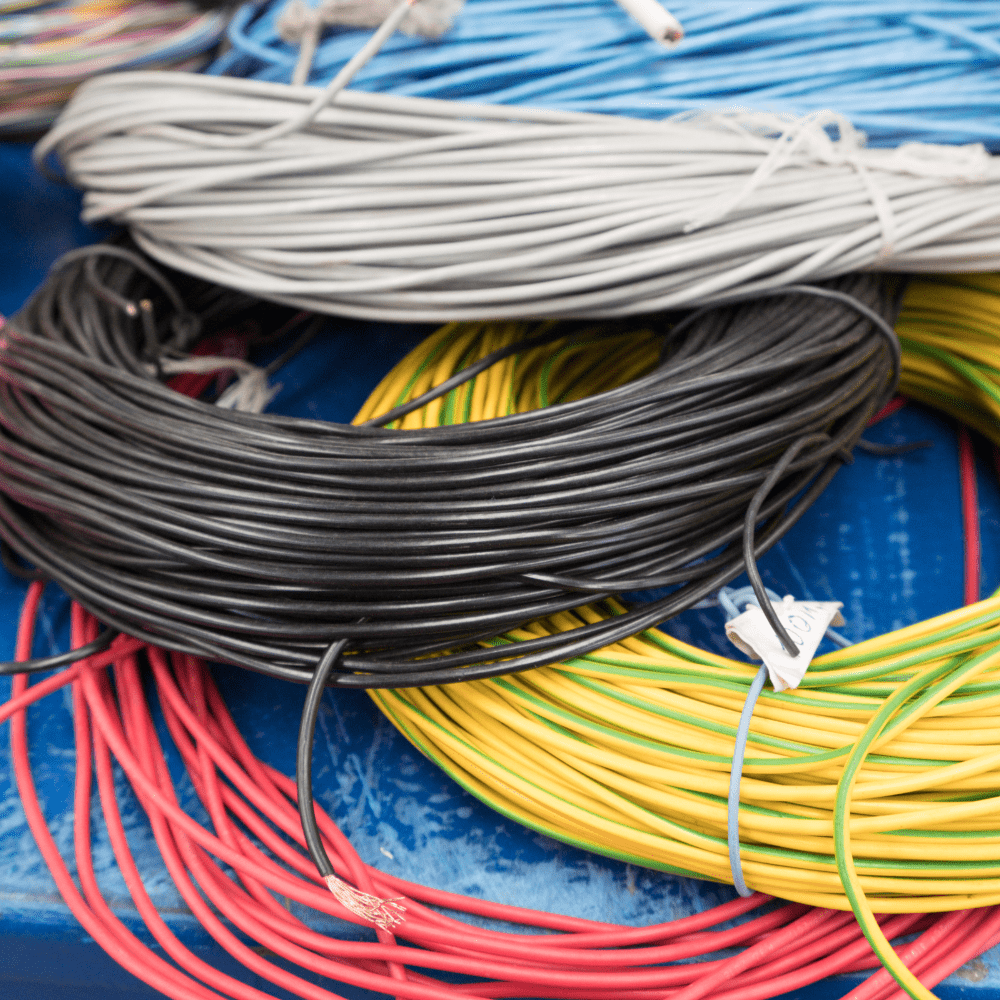
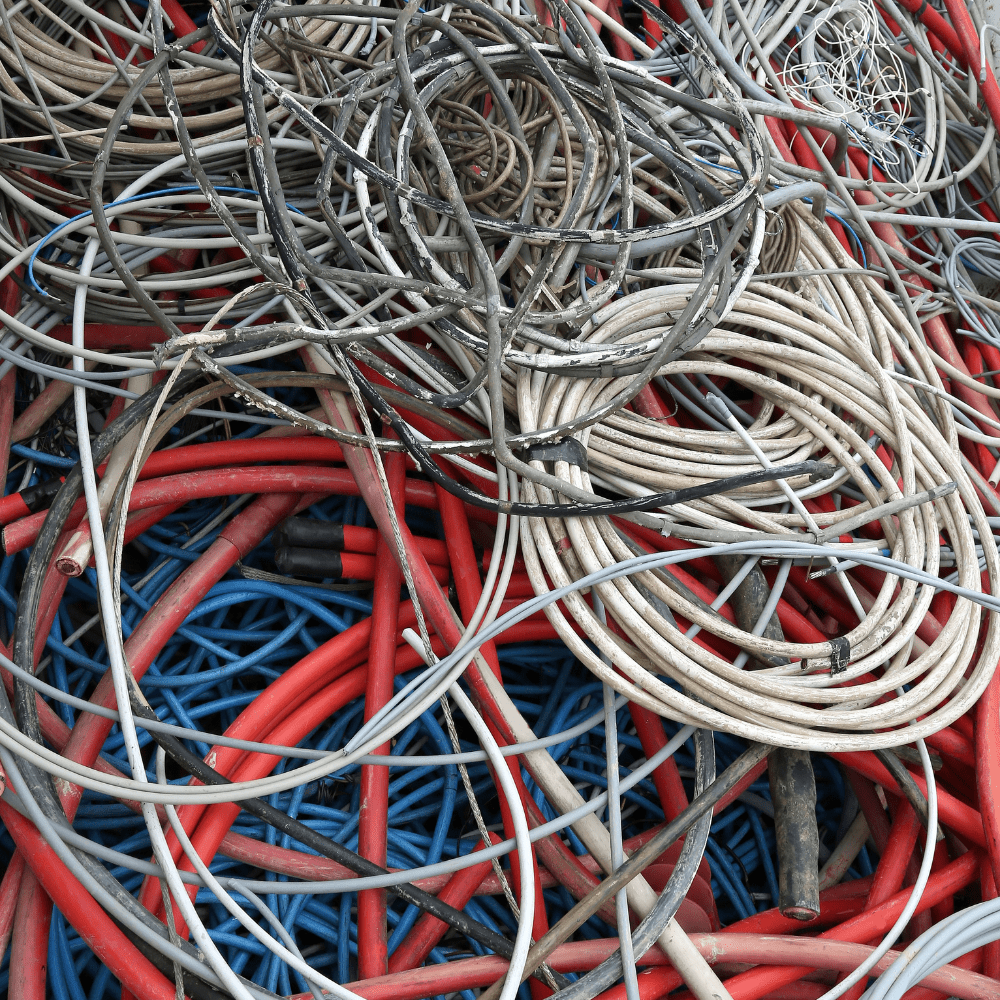

The Real Problem: Multiple Subcontractors, One Site, No Single Plan for Cable Waste
A typical multi-trade job produces cable waste at several different points in the programme, not just once. Electrical first fix leaves offcuts of twin and earth and armoured cable as containment goes in. Second fix adds more once sockets, switches and fittings are connected. Data and telecom installers generate their own waste when structured cabling is run, tested and trimmed. Fire alarm and security contractors leave fire rated cable offcuts once detection and access control wiring is complete. On a refurbishment, there is often a fifth stream too: redundant cable stripped out of ceiling voids and risers before new services go in.
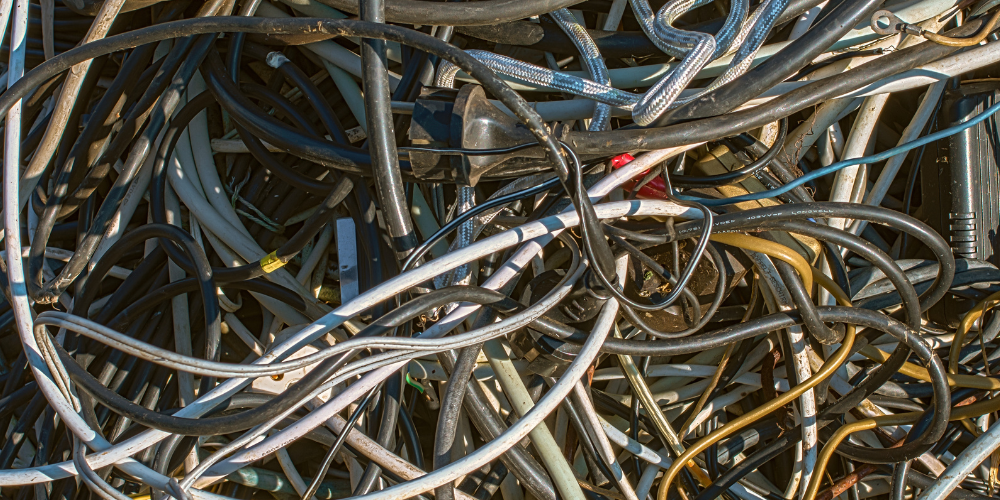
Left to run its own course, each of those five sources ends up with its own informal arrangement, or none at all. One subcontractor might take their offcuts away themselves. Another leaves them in a corner for the site skip. A third calls a local scrap collector nobody on site has checked. None of this is coordinated centrally, none of it produces a consistent record, and cable containing copper, which is the whole point of recycling it properly, frequently gets crushed into a mixed skip where it is lost entirely. Our construction site cable waste guide covers the general problem in more depth, and our page on cable recycling for construction sites across Birmingham, Solihull and the West Midlands sets out how collection typically works locally. For a main contractor trying to evidence proper waste handling for the whole site, five uncoordinated arrangements, or worse no arrangement at all for some of them, is the actual problem, not the recycling itself.
Why Main Contractors Choose Cable Wire Recycling as a Single Site-Wide Cable Waste Partner
The case for consolidating a site’s cable waste into one specialist arrangement rests on four things, and all four are genuine, checkable facts about Cable Wire Recycling Limited rather than a general sales pitch.
First, cable and wire specialism. Cable Wire Recycling Limited only recycles cable and wire, never other scrap metal, so grading a coil of armoured SWA cable, a bundle of structured cabling offcuts and a length of redundant lighting circuit is routine, not guesswork. A general skip firm or a mixed metal yard handles cable as one line item among dozens of material types; a cable specialist handles it as the entire business.
Second, one collection arrangement instead of five. Rather than the main contractor chasing an electrician for their offcuts, then a data installer, then a fire and security contractor, then whoever is doing the strip out, one arrangement collects from the site regardless of which trade generated the waste that day. That is one phone call, one schedule and one contact for site management to deal with, covered in more detail on our cable recycling services page.
Third, bulk collection for the peaks. Strip out and first fix both produce far more cable waste in a short window than the rest of the programme combined. A site-wide arrangement that can scale up for those peaks, rather than a standing weekly collection sized for a quiet week, actually matches how cable waste is really produced on a live job.
Fourth, Birmingham based with UK wide collection. The business is headquartered on Fort Parkway in Birmingham but collects from sites across the whole UK, so a main contractor running jobs in more than one region does not need a different cable collector for each postcode. Combined with a reputation widely reviewed as five star on Google, that is the practical basis for choosing one recycler for the whole site rather than leaving five subcontractors to sort five separate arrangements.
None of this replaces the main contractor’s own responsibility for the site. What it does is remove the coordination problem: instead of managing five relationships and five sets of paperwork, there is one. If you are scoping this for an upcoming job, get a quote for site-wide collection before the programme starts, so the arrangement is in place before the first fix offcuts appear rather than after a skip has already taken them.
CDM 2015 and the Principal Contractor’s Duty Over Site Cable Waste
The Construction (Design and Management) Regulations 2015, generally shortened to CDM 2015, put general site organisation and welfare, which includes how site waste is managed, in the hands of the principal contractor on any project with more than one contractor. The HSE’s summary of CDM 2015 duty holders sets out the full list of responsibilities, and the HSE’s guidance on principal contractor roles is specific about coordinating the work of all contractors on site, not just supervising each one’s own arrangements separately.
That distinction matters for cable waste specifically. If each subcontractor is left to sort their own disposal, the principal contractor is relying on five, or more, separate and unverified arrangements to add up to compliant site management. If one of those subcontractors quietly skips the job, or hands cable to somebody without checking they are a registered waste carrier, that gap sits with the principal contractor’s overall duty, not just with the individual trade.
A single site-wide cable waste arrangement is a direct, practical way to close that gap. Instead of five unverified arrangements, there is one, agreed with the main contractor, covering the whole site regardless of which trade generated the cable that week. It gives the principal contractor a single point of contact to deal with (our contact us page has the direct phone number and email for arranging this) and, since it applies across every subcontractor’s output, it is far easier to stand behind if a duty holder ever needs to show how site waste was actually managed.
Environmental Protection Act 1990: One Duty of Care Covering Every Subcontractor’s Cable Waste
Separately from CDM 2015, section 34 of the Environmental Protection Act 1990 places a duty of care on anyone who produces, holds or arranges the disposal of waste, to make sure it only passes to someone authorised to take it. On a multi-trade site, that duty does not stop at the main contractor’s own waste. It applies separately to each subcontractor’s cable offcuts too, which is exactly where an uncoordinated site tends to fall down: one subcontractor’s arrangement might be properly documented, another’s might not be, and there is no single view across the whole site.
The government’s waste duty of care code of practice and the guidance on how to classify different types of waste both set out what being authorised to take waste actually means in practice, including registration as a waste carrier and, for cable and wire specifically, registration under the Scrap Metal Dealers Act 2013. Our separate page on what a licence to sell scrap cable actually means goes into this in more detail if you want to check what to look for in any cable collector, ours included.
The practical benefit of a site-wide arrangement here is straightforward: instead of checking that five subcontractors have separately satisfied their own duty of care, the main contractor is checking one, and that one relationship generates a single, consistent record covering cable waste from every trade on the job.
One Collection Schedule Instead of Five: How Site-Wide Cable Waste Collection Works
In practice, a site-wide cable waste arrangement does not mean one lorry turning up once and taking everything away. It means a schedule, or an on-call arrangement, built around the actual sequence of trades on a programme, so cable is collected close to when each trade actually produces it rather than sitting in a skip for weeks. That looks different depending on which trade is active.
Electrical First Fix and Second Fix Cable Waste
Electrical first fix produces offcuts of twin and earth, armoured SWA cable and containment as circuits are run through walls and ceiling voids. Second fix adds more once sockets, switches, consumer units and fittings go in and cable ends get trimmed to length. Both stages happen at different points in the programme, sometimes weeks apart, so a collection built around one fixed date misses one or the other. Scheduling collection around when the electrical contractor actually reports each stage complete, rather than a single date for the whole job, is what keeps this cable out of the general skip. Our page on cable recycling for electricians across Birmingham, Solihull and the West Midlands covers how this works when it is a single electrician managing their own offcuts rather than a whole site.
Structured and Data Cabling Waste from IT and Telecom Installers
Data and telecom installers generate a different kind of cable waste again: offcuts and test failures from structured cabling, along with any old cabling removed as part of an upgrade. It carries a lower proportion of copper by weight than power cable, so it needs bulking and handling on its own terms rather than mixed in with heavier gauge offcuts. Our pages on cable recycling for IT and telecom companies across Birmingham, Solihull and the West Midlands and recycling redundant data cabling from office upgrades both cover this in more depth. On a multi-trade site, folding the data installer’s waste into the same site-wide arrangement as the electrical contractor’s means one collection covers both, instead of the data installer needing a separate relationship of their own.
Fire Alarm and Security Cabling Waste on a Multi-Trade Site
Fire alarm and security installers produce their own offcuts too, often fire rated or screened cable that looks different from standard power or data cable and needs identifying correctly rather than guessed at. Security cabling in particular can carry access control and CCTV runs, where the installer would rather old cable was collected and accounted for properly than left in a skip where anyone on site can pick through it. Our page for IT managers on secure cable disposal when upgrading network infrastructure sets out the same principle for network and security cabling specifically. Bringing this waste stream into the same site-wide arrangement as every other trade removes the temptation to just leave it for whoever tidies the site last.
Redundant Cable from Strip-Out and Refurbishment Work
On a refurbishment or fit-out rather than a new build, there is usually a fifth stream: redundant cable stripped out of ceiling voids, risers and old containment before new services go in. This can be a large volume in a short window, often the largest single cable waste event of the whole programme. Our Cat A and Cat B fit-out cable recycling guide covers this stage specifically, including how strip-out cable differs from the smaller ongoing offcuts produced during first and second fix. Treating strip-out as a scheduled, planned collection rather than an afterthought is one of the clearest wins of setting up a site-wide arrangement before the programme starts.
Cable Grading Explained: Why a Cable and Wire Specialist Beats a General Skip
Cable is not one material. Different cable types contain different proportions of copper, different insulation and sheathing, and different amounts of non-metal content, and grading them correctly is what determines whether they are recycled properly or simply crushed as mixed waste. A general skip, or a yard that handles all types of scrap metal, has no particular reason to sort cable this carefully; a cable and wire specialist does, because it is the entire business rather than one line among many.
| Cable type | Common source on a multi-trade site | What it typically contains | Why it needs separate handling |
|---|---|---|---|
| Armoured (SWA) cable | M&E first fix, second fix, redundant supply runs | Copper conductors under steel wire armour and PVC sheathing | The steel armour has to be separated from the copper core, so treating it like ordinary flex undervalues it |
| Structured and data cabling | IT and telecom installers, comms room strip-outs | Fine copper pairs inside a PVC or low smoke jacket | Lower copper proportion by weight than power cable, so it needs bulking separately |
| Fire and security cabling | Fire alarm and security installers | Copper cores, often fire rated or screened sheathing | Different insulation type from standard cable, easy to misgrade if mixed in |
| Household and flex offcuts | Electrical first and second fix | Copper conductors in standard PVC insulation | Sorted by gauge, and usually the highest everyday volume on any site |
| Redundant supply and containment cable | Strip-out and refurbishment | Larger gauge copper, occasionally older lead sheathed cable on older buildings | Needs checking on arrival, particularly on older building refurbishments |
This is the practical difference between a cable specialist and a general skip: every one of those five rows gets identified and handled on its own terms rather than compacted together. Our guides on how to recycle armoured cables across Birmingham, Solihull and the West Midlands and on why electricians should recycle armoured cable properly go into SWA grading specifically, since it is usually the highest volume cable type on an M&E-heavy site. On a multi-trade job with several of these cable types appearing at different stages, that grading knowledge only pays off if the collection arrangement is with a specialist in the first place, not a generalist handling cable as an afterthought.
Bulk Cable Collection for Strip-Out, First Fix and Large Site Clearances
Strip out, first fix and any large clearance produce far more cable in a single window than a standing weekly collection is sized for. Bulk collection is built for exactly this: a larger vehicle and a scheduled visit timed to when the volume is actually there, rather than a fixed small collection that cannot keep up. Our bulk cable collection services across Birmingham, Solihull and the West Midlands page covers how this is arranged and what to expect on the day.
On a multi-trade site, bulk collection usually lines up with two moments: the strip-out at the start of a refurbishment, when redundant cable comes out of ceiling voids and risers in one go, and first fix, when containment offcuts build up before second fix even starts. Both are predictable if the main contractor knows the programme, which means bulk collection can be booked in advance rather than arranged reactively once a site manager notices cable piling up in a corner. Building this into the programme early, rather than after the strip-out has already happened, is what makes bulk collection actually work as intended.
Which Sites Suit a Site-Wide Cable Waste Partner (And Which Don’t)
A single site-wide cable waste arrangement earns its keep once there is more than one cable-producing trade on a job. Below that threshold, it can be more coordination than the site actually needs.
| Site situation | Suits a site-wide arrangement | Why | Better suited to |
|---|---|---|---|
| New build with electrical, data, fire and security trades all on site | Yes | Cable waste appears at different stages from different trades, and one schedule covers all of them | |
| Office or retail refurbishment with a strip-out and several trades finishing together | Yes | Bulk collection handles the strip-out peak, and one paper trail covers the whole job | |
| Rolling refurbishment programme across several site addresses | Yes | A recurring arrangement can be spread across multiple sites rather than set up fresh each time | |
| Small job with a single electrician and minor offcuts | Not really | Volume is too low to justify site-wide coordination | A single electrician’s own cable recycling arrangement |
| Domestic rewire managed directly by a homeowner | No | This is a household-scale job, not a site coordination problem | Household cable collection arranged directly |
The pattern is simple: the more trades producing cable waste on one site, the more a single arrangement saves in coordination, paperwork and missed collections. A main contractor running a six-week single-trade snagging job does not need this. A main contractor running a twenty-week fit-out with four subcontractors touching cable at different points does. If you are not sure which side of that line your job falls on, get in touch and talk it through before committing to an arrangement either way.
A Single Point of Contact in Practice: Site-Wide Cable Waste Collection on a Real Programme
Take a fairly typical six-month office refurbishment in Birmingham with four subcontractors touching cable at different points. The M&E contractor completes electrical first fix in week three, leaving armoured and standard offcuts. The data cabling installer runs structured cabling in week six and strips old cabling from the ceiling void in the same week. The fire and security contractor finishes their cable runs in week nine. The original strip-out, back in week one, already produced the largest single volume of redundant cable stripped from the previous fit-out.
Under a site-wide arrangement, all four of those events are covered by one relationship: the strip-out in week one is a bulk collection booked in advance, the first fix offcuts in week three are collected on a normal round, the data cabling waste in week six is picked up once the installer reports it, and the fire and security offcuts in week nine close out the job. The main contractor deals with one point of contact throughout, referenced once in the programme rather than chased four separate times, and ends the job with one consistent record covering cable waste from every trade rather than four incomplete ones. Our page on cable recycling for construction projects across Birmingham, Solihull and the West Midlands sets out how this is typically scoped before a programme starts.
Cable Waste Value: Why We Point You to Our Scrap Cable Prices Page Instead of Figures Here
Cable waste has a value because of the copper it contains, and that value moves with the wider metals market, so any figure printed in an article like this would be out of date within weeks. Rather than quote a number here, current information sits on our dedicated scrap cable prices page, which is kept up to date rather than fixed at the point an article was written.
For a main contractor coordinating several subcontractors’ cable waste, this matters slightly differently than it does for an individual trader: value is one part of the arrangement, but it is not usually the main reason to consolidate. The bigger win is coordination, paperwork and one point of contact across the whole site. Even so, it is worth checking current cable values before agreeing a site-wide arrangement, so everyone understands how value is assessed before the first collection happens.
Common Mistakes Main Contractors Make with Site Cable Waste
A few patterns come up again and again on multi-trade sites, and each one is avoidable with a site-wide arrangement agreed before the programme starts.
- Leaving each subcontractor to arrange their own disposal. This is the default when nobody addresses it explicitly, and it produces exactly the inconsistent handling and patchy paperwork described earlier in this article.
- Letting cable go into the general skip. Once cable is crushed in with plasterboard, packaging and general waste, it cannot be recovered properly, and the copper it contains is effectively lost.
- Treating strip-out as an afterthought. The largest single cable waste event on a refurbishment is often the one nobody planned a collection for, because it happens before the main trades have even started.
- No consistent record across the whole site. If four subcontractors have four different, or no, waste arrangements, there is no single document a principal contractor can point to that covers the whole site’s cable waste, which is exactly the gap CDM 2015 and the Environmental Protection Act 1990 duty of care are both designed to close.
- Using whoever is convenient rather than a registered specialist. A subcontractor arranging their own collection at the end of a shift is unlikely to check the collector is a registered waste carrier, which puts the principal contractor’s overall duty of care at risk even though the arrangement was somebody else’s.
Every one of these is solved the same way: agree a single site-wide cable waste arrangement before the programme starts, rather than discovering the gaps once cable is already missing from the record. If your next job is at that planning stage now, get a quote for site-wide collection while it is still easy to build into the programme.
Cable Wire Recycling Limited: Birmingham Based, Collecting Site Cable Waste UK Wide
Cable Wire Recycling Limited is based on Fort Parkway in Birmingham, and collects cable waste from sites right across the UK, not only the West Midlands. For a main contractor running jobs in more than one region, that matters: a site-wide arrangement set up for a Birmingham job can extend to a site anywhere else in the country, rather than needing a different cable collector lined up for every postcode. Full detail on where collection is available is on our coverage page.
The business recycles cable and wire only, never other scrap metal, and takes on bulk collection for large loads as standard rather than as an exception. Combined with a reputation widely reviewed as five star on Google, that is the practical case for a main contractor choosing Cable Wire Recycling as the one cable waste arrangement for a whole site, rather than leaving each subcontractor to find their own.
Multi-Trade Contractors Cable Waste FAQ
Q1 What is a site-wide cable waste partner on a construction project?
A site-wide cable waste partner is a single collection arrangement that covers every subcontractor’s cable waste on one job, rather than each trade arranging its own disposal separately. For a main or principal contractor, that means one collection schedule, one point of contact and one consistent record covering cable waste from electrical, data, fire and security trades alike, instead of chasing several separate arrangements across the same site.
Q2 Can Cable Wire Recycling collect cable waste from more than one subcontractor on the same site?
Yes. Cable Wire Recycling Limited can arrange a single collection schedule that covers cable waste from every subcontractor on a site, whether it comes from electrical first and second fix, data cabling installation, fire and security work, or a strip-out, rather than needing a separate arrangement with each trade individually.
Q3 Does a site-wide cable waste arrangement remove the principal contractor’s duties under CDM 2015?
No. CDM 2015 places overall responsibility for site organisation, including waste, with the principal contractor regardless of who collects it. A site-wide cable waste arrangement does not remove that responsibility, but it makes it far easier to meet, since one consistent arrangement and one paper trail cover the whole site instead of several unverified subcontractor arrangements.
Q4 What types of cable waste does Cable Wire Recycling collect from a multi-trade site?
Cable Wire Recycling Limited collects armoured SWA cable, household and flex offcuts, structured and data cabling, and fire alarm and security cabling, along with redundant cable stripped out during refurbishment. The business recycles cable and wire only, never other scrap metal, so every one of these cable types is graded and handled on its own terms.
Q5 How does bulk collection work for a strip-out or first fix clearance?
Bulk collection is scheduled around the point in the programme where cable waste volume peaks, typically strip-out at the start of a refurbishment or first fix on a new build. Rather than a fixed small collection that cannot keep pace, a larger vehicle and visit are booked in advance once the main contractor knows roughly when that stage will finish.
Q6 Does Cable Wire Recycling collect cable waste from sites outside Birmingham?
Yes. Cable Wire Recycling Limited is based in Birmingham but collects cable waste from construction sites across the whole UK, which means a main contractor running jobs in more than one region can use the same site-wide arrangement rather than sourcing a different collector for each location.
Q7 How do we find out what our site’s cable waste is worth?
Cable value depends on copper content and the wider metals market, so it changes regularly and is not something we quote in general articles. Current information is kept up to date on our scrap cable prices page, and is worth checking before agreeing a site-wide collection arrangement so everyone understands how value is assessed.