
Cat A and Cat B Fit-Out Cable Recycling: A Guide for Contractors and Landlords
Cat A strip-out releases a landlord’s base build cabling: containment, first-fix distribution cable and lighting circuits, often original to the building. Cat B strip-out releases a tenant’s own power, data and lighting control cabling, removed again at lease end under dilapidations obligations. Both stages produce recoverable copper cable, and knowing which stage a project is at determines the volume, grade and collection timing to plan for.

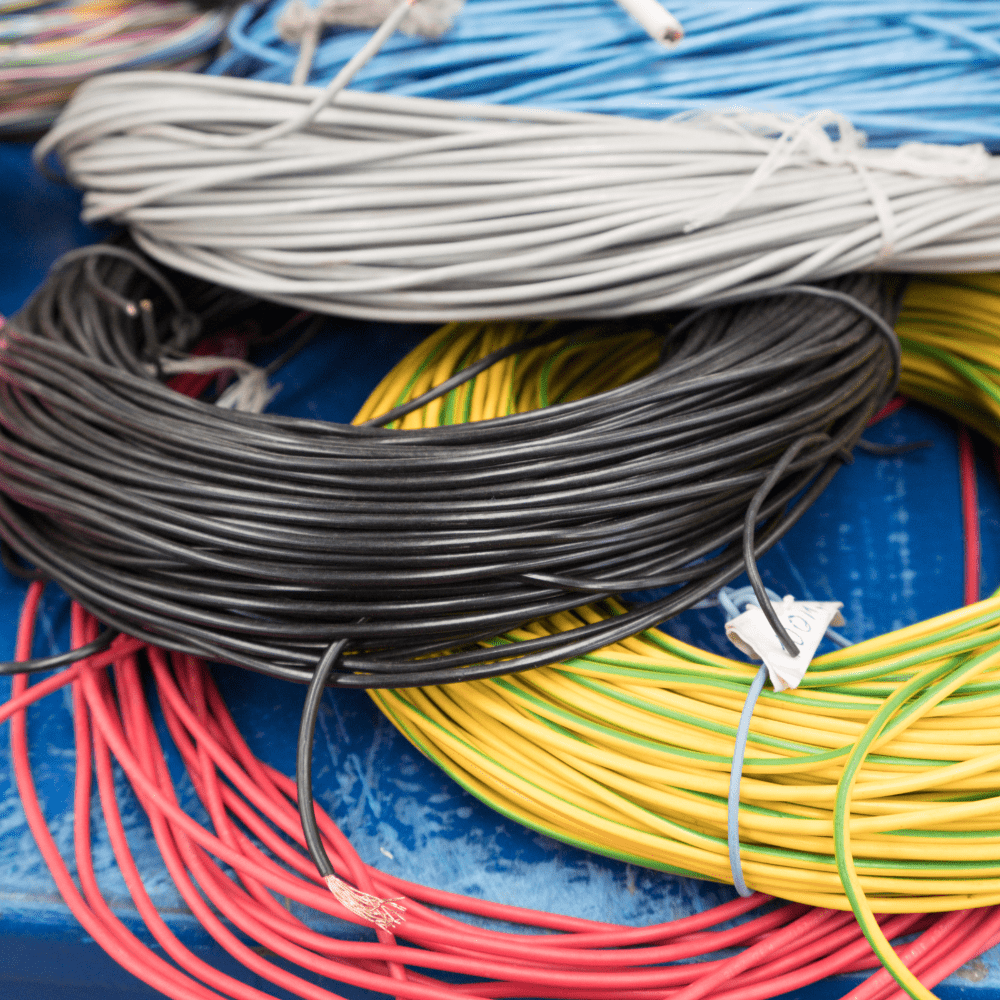
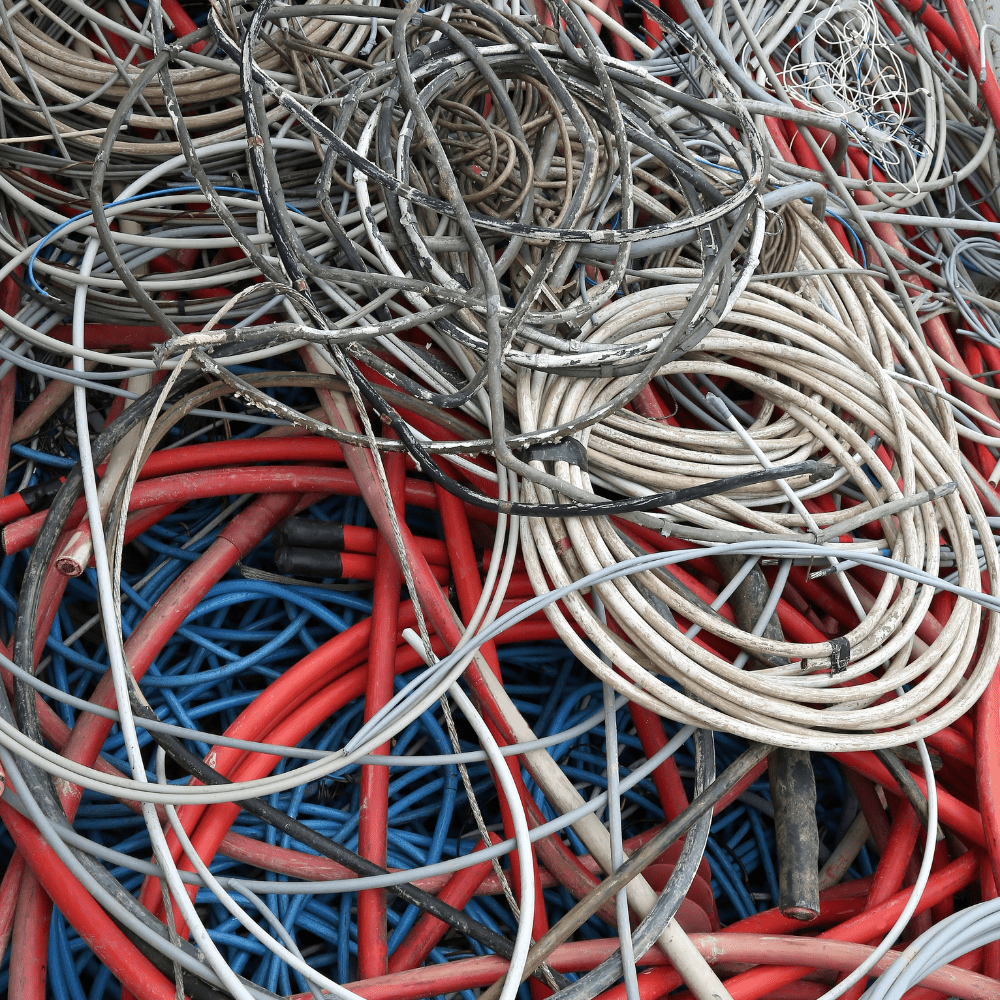

What Cat A and Cat B Fit-Out Cable Recycling Actually Means
Commercial office and retail space changes hands on a cycle, and every time it does, cable comes out of the ceiling void, the raised floor and the partition walls. The industry describes that cycle using two categories borrowed from the RICS and BCO fit-out guides: Cat A and Cat B. Knowing which category a strip-out belongs to is the starting point for planning cable recycling properly, because the two stages release different cable in different quantities on different timescales.
Cat A refers to the landlord’s base build fit-out, sometimes called the shell and core plus category A works. It covers raised access floors, suspended ceilings, mechanical and electrical services to a common standard, containment (the trays, baskets and conduit that carry cable through the building), first-fix distribution cabling, distribution boards and basic lighting circuits. A Cat A space is ready for a tenant to move into and build their own fit-out on top, but it is not fitted out for any specific occupier yet.
Cat B refers to the tenant’s own fit-out, layered on top of the Cat A shell: specific power distribution to desks, structured data cabling, audio-visual cabling, lighting control systems and partition-specific circuits. Cat B work is tailored to one occupier, and it gets stripped out again when that occupier leaves, sometimes repeatedly as the same floor changes tenants every few years.
This distinction matters for cable recycling because it is not one strip-out with one type of waste. A landlord commissioning a Cat A refresh between tenancies is dealing with older, often original-build containment and distribution cable. A tenant’s contractor stripping a Cat B fit-out at lease end is dealing with newer, purpose-installed cabling that is commercially redundant but often in good condition. This guide treats the two separately, and it sits alongside our broader guide to recycling cable waste after an office or shop refurbishment for projects spanning both categories at once.
Cat A Strip-Out Cable: What a Landlord Base Build Releases
A Cat A strip-out, sometimes run as a full base build refresh before a floor is remarketed, tends to release cable in place for years, sometimes since the building’s original construction. The typical mix includes:
- First-fix distribution cable running from the building’s main intake to floor distribution boards, often larger gauge armoured or SWA (steel wire armoured) cable given the loads it was designed to carry.
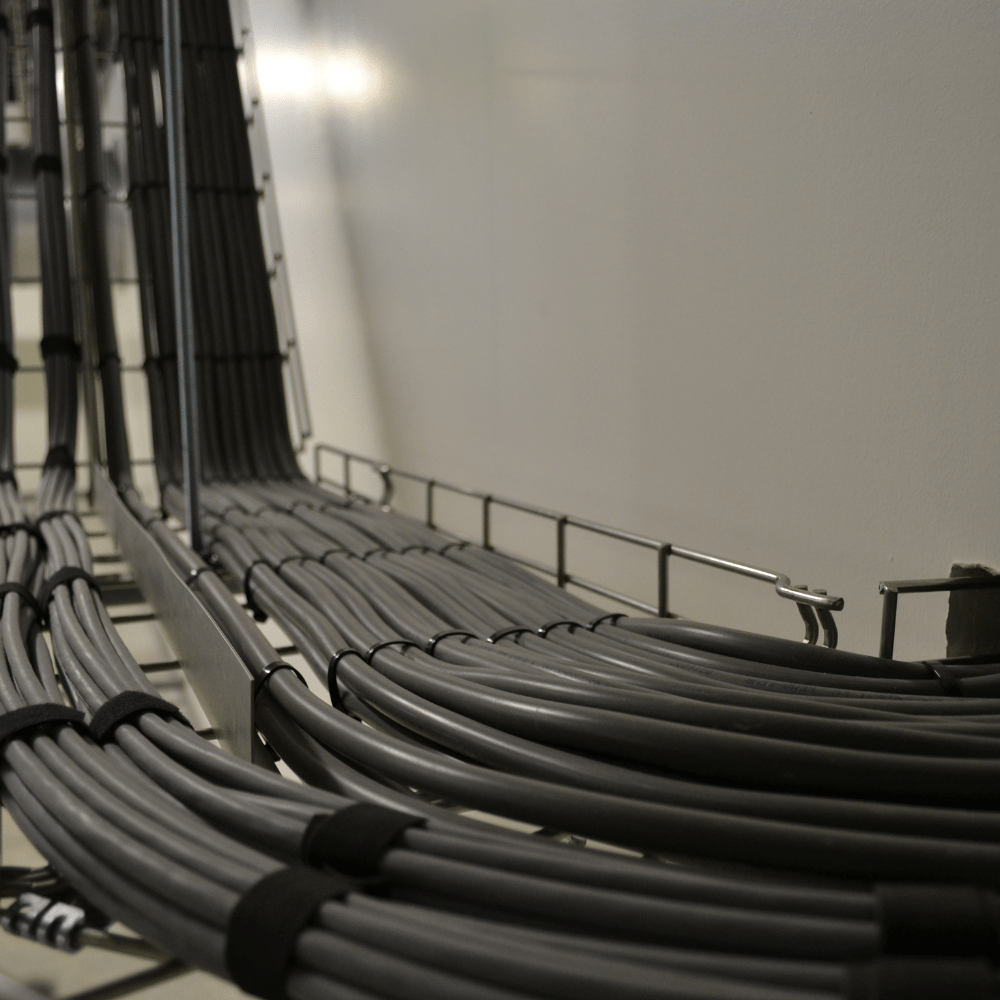
- Containment systems including cable tray, basket tray and conduit, which is not cable itself but is commonly recovered alongside it during the same strip-out.
- Base lighting circuit cable serving common areas, corridors, stairwells and the general office lighting grid installed to the original landlord specification.
- Distribution board feeder cable and sub-main cabling connecting floor-by-floor distribution to the building’s main supply.
- Older data or telecoms first-fix cabling where the original base build included a basic structured cabling backbone for future tenants to connect into.
Because this cable can be years or decades old, its condition varies more than Cat B cable. Some of it is the original installation, some replaced during interim maintenance. What stays consistent is that it is landlord-owned, part of the base build, and its removal is usually driven by a decision to upgrade the shell before remarketing, rather than by a single tenant’s departure. Our construction site cable waste guide covers the wider strip-out picture a Cat A refresh often sits within, particularly where it involves structural or M&E work beyond cable alone.
Cat B Strip-Out Cable: What a Tenant Dilapidations Strip-Out Releases
A Cat B strip-out is driven by a single tenant’s occupation ending, whether through lease expiry, a break clause or an early surrender. What comes out reflects that tenant’s specific fit-out rather than the building’s shared infrastructure. The typical mix includes:
- Structured data cabling serving desks, meeting rooms and comms cabinets, commonly Category 5e, Category 6 or Category 6a cable depending on when the fit-out was installed.
- Desk and floor box power cabling distributing sockets across an open-plan layout, frequently run through floor voids or perimeter trunking specific to that tenant’s desk plan.
- Audio-visual cabling serving meeting rooms, reception screens and presentation equipment.
- Lighting control cabling for tenant-specific lighting zones, sensors and dimming circuits layered on top of the Cat A base lighting.
- Partition-specific circuits for power and data serving cellular offices or meeting rooms the tenant added.
The defining feature of Cat B cable is that it is often newer and in noticeably better condition than Cat A cable, because most commercial leases run three to ten years and Cat B fit-outs are rarely more than one lease cycle old. It is commercially redundant the moment the tenant leaves, but it has not usually degraded the way older base build cable has. Structured data cabling in particular is worth planning for separately, and our dedicated guide on recycling redundant data cabling from office upgrades goes into category cabling grades in more depth.
One naming overlap causes genuine confusion on site: Cat A and Cat B describe fit-out stages, while Category 5e, Category 6 and Category 6a describe structured data cabling standards. A Cat B strip-out and Category 6 cable are two different uses of the word category that happen to share a common industry shorthand, so when briefing a collection it is worth being specific about which one is meant.
Cat A Versus Cat B Cable Waste: A Derived Volume and Grade Comparison
Cable weight and grade differ enough between the two stages that it is worth working through the arithmetic rather than guessing. Using typical UK commercial office fit-out densities, a landlord base build commonly carries in the region of 3 to 5 kilograms of first-fix distribution cable and containment per square metre, once basket tray, sub-main feeder cable and lighting circuit cable are accounted for. Applied to a fairly ordinary 1,000 square metre office floor, that puts a full Cat A strip-out in the range of 3 to 5 tonnes of cable and containment, before the containment steelwork is weighed separately.
A Cat B tenant fit-out generally carries less cable by weight, commonly in the region of 1.5 to 2.5 kilograms per square metre once desk power cabling, structured data cabling, AV and lighting control circuits are totalled, giving a working range of roughly 1.5 to 2.5 tonnes on the same floor. The lower weight reflects thinner gauge data and control cabling replacing the heavier distribution cable that stays part of the Cat A base build and is not touched during a routine dilapidations strip-out.
These are working ranges rather than a site survey, since real floors vary by age, tenant density and prior fit-out cycles. They are useful for sizing a collection in advance, particularly when deciding between a single skip and bulk cable collection for a full floor programme.
| Metric | Cat A base build strip-out | Cat B tenant strip-out |
|---|---|---|
| Typical cable age | Original build or previous refresh, often 10 or more years | Current lease cycle, typically 3 to 10 years |
| Dominant cable type | SWA and larger gauge distribution cable, first-fix containment | Structured data cabling, desk power, AV, lighting control |
| Approx. weight per square metre | 3 to 5 kg | 1.5 to 2.5 kg |
| Physical condition | Variable, reflects age and prior maintenance | Generally good, commercially redundant rather than degraded |
| Who commissions removal | Landlord or managing agent | Tenant or their fit-out contractor, under dilapidations |
| Typical driver | Base build refresh before remarketing | Lease expiry, break clause or early surrender |
CDM 2015 Duties During Cat A and Cat B Strip-Out Work
Strip-out and demolition work on a commercial fit-out is construction work under the Construction (Design and Management) Regulations 2015, whether it is a Cat A base build refresh or a Cat B dilapidations strip-out. Legal duties fall on the client, the principal designer and the principal contractor to plan, manage and monitor the work so it is carried out safely, including how waste, cable among it, is handled on site. HSE’s summary of CDM 2015 sets out who holds which duty, and it applies whether the client is a landlord commissioning a Cat A refresh or a tenant’s contractor running a Cat B dilapidations job.
In practice this means a strip-out programme needs a plan for removing cable safely, not just quickly. Cable running through live containment, still connected to an energised distribution board, or being pulled from a ceiling void above occupied space below, all carry risks a documented CDM plan is meant to address before work starts. Where a Cat A refresh involves structural strip-out alongside cable and containment removal, HSE’s demolition safety guidance covers the wider safe practice, and a competent principal contractor will already be working to it.
The practical takeaway: a collection needs to fit inside a method statement and risk assessment that already exists for the wider job, not sit outside it as an afterthought booked once the skip is already full.
Dilapidations Obligations and Cat B Cable Removal at Lease End
Most commercial leases include a dilapidations clause requiring the tenant to reinstate the space to Cat A shell condition before the lease ends. That obligation covers stripping out everything added during the Cat B fit-out, and cable removal is a direct part of it: structured data cabling, desk power circuits, AV cabling and lighting control wiring all need to come out as part of reinstatement, not just the partitions and finishes.
Getting proper value back from that cable does not remove the dilapidations obligation, but it can meaningfully offset the cost of the strip-out itself, since the tenant or their contractor is paying to remove the cable either way. Treating cable as a recoverable material rather than mixed waste is one of the more overlooked ways to manage a dilapidations budget, particularly on a floor with several years of accumulated structured cabling never fully removed during smaller interim changes.
Dilapidations strip-outs also carry a compliance dimension that is easy to overlook under programme pressure. The DEFRA waste duty of care code of practice sets out that anyone who produces, holds or manages waste, including a tenant’s contractor removing Cat B cable, has a duty of care to ensure it is handled and passed on properly, with a waste transfer note kept for at least two years for non-hazardous waste. A corporate landlord’s own compliance reporting will often expect that documentation to exist, and a breach of the duty of care carries an unlimited fine, so the paperwork is worth building into the programme from the start rather than chasing retrospectively.
Structured Data Cabling Recycling From a Cat B Office Fit-Out
Structured data cabling deserves its own attention within a Cat B strip-out because it behaves differently to power cabling in both volume and value. A typical open-plan floor can carry several kilometres of Category 5e, Category 6 or Category 6a cable once every desk drop and comms cabinet connection is counted, and being thinner gauge than power cable, it is easy to underestimate the weight until it is actually pulled.
Data cabling contractors handling the strip-out side of a Cat B job are often separate from the main fit-out contractor, brought in to de-cable the structured network before the wider strip-out proceeds. That separation is worth planning collection around, since data cabling removal often finishes on a different day and may need its own collection rather than being bundled with heavier power cable. Our guide to recycling redundant data cabling from office upgrades covers how structured cabling grades are assessed and collected.
Timing a Void Period: Booking Bulk Collection for Cat A and Cat B Strip-Out
Fit-out and strip-out programmes almost always run against a fixed void period between one tenant leaving and the next moving in, and that period is rarely generous. A landlord wants the Cat A refresh finished and remarketed as quickly as possible, and a tenant under a dilapidations clause is working to a lease-end date that does not move. Cable collection needs to be responsive to that reality rather than treated as a low-priority task fitted in whenever convenient.
The practical implication is booking collection at the right scale from the start. A single small collection sized for a partition-only job will not keep pace with a full floor strip-out generating several tonnes of cable over a matter of days, and a delayed collection can leave cable and containment stacking up on site, taking space a tight programme cannot spare. Bulk cable collection is built for exactly this, handling a full skip-load or multiple loads across a defined window, and it is worth arranging before the strip-out starts. Sites across Birmingham, Solihull and the wider West Midlands, and further afield through our scrap cable collection service, can be scheduled around a confirmed void period rather than left open-ended.
Cat A and Cat B Fit-Out Cable Recycling Suitability Matrix
Different projects sit at different points across the Cat A and Cat B spectrum, and the right approach shifts with each one. The table below maps the three common project types to what they typically release, roughly how much, and how timing behaves.
| Project type | Typical cable released | Approximate scale | Timing consideration |
|---|---|---|---|
| Cat A base build strip-out only | First-fix distribution cable, containment, base lighting circuits | 3 to 5 tonnes per 1,000 sq m floor | Tied to landlord’s remarketing programme, moderate flexibility |
| Cat B tenant strip-out (dilapidations) only | Structured data cabling, desk power, AV, lighting control | 1.5 to 2.5 tonnes per 1,000 sq m floor | Fixed by lease-end date, limited flexibility |
| Combined Cat A and Cat B strip-out | Both categories together, full floor down to shell | 4.5 to 7.5 tonnes per 1,000 sq m floor | Compressed void period, needs bulk collection scheduled in advance |
Segments Handling Cat A and Cat B Fit-Out Cable Waste
Several distinct groups commission or manage this kind of cable removal, and each tends to approach it slightly differently.
Landlords and managing agents commissioning a Cat A refresh are usually planning around a remarketing date and want the base build brought up to a common standard before viewings start. Cable recycling for this group sits alongside the wider cable recycling services we offer landlords managing multiple properties across a portfolio.
Tenants and their fit-out contractors handling a Cat B dilapidations strip-out are working to a lease-end deadline and a reinstatement specification set by the landlord’s surveyor, where cable removal is as much about meeting that schedule as it is about the recycling itself.
Main contractors running a combined strip-out and refit programme, taking a floor from tenant occupation back to shell and into a new Cat A specification, are dealing with both cable profiles in one programme and benefit most from bulk collection scheduled around defined milestones.
Data and IT contractors stripping structured cabling specifically, often working ahead of the main strip-out contractor, are a narrower but recurring segment on larger floors where the comms infrastructure is de-cabled as its own package of work. Similar principles apply to other high-volume commercial sites, including the factory and warehouse cable recycling work we carry out for industrial premises going through their own refit cycles.
Who Cat A and Cat B Fit-Out Cable Recycling Isn’t For
This kind of structured approach is not necessary for every job that touches office cable. A very small partition-only touch-up, moving a couple of desks or adding one meeting room without disturbing the wider Cat B installation, generates negligible cable volume and does not need the planning described here. A simple call to arrange a small collection covers that scale of work well.
It is also less relevant where a site already has a single unified strip-out contractor running the whole demolition and waste package under one arrangement, cable included. Even then it is worth getting a second quote specifically for the cable, since a generalist contractor’s waste arrangement does not always reflect the best return on copper content, and a separate cable-specific collection can be run alongside the main strip-out without disrupting it.
Failure Modes in Cat A and Cat B Fit-Out Cable Waste Management
A handful of recurring mistakes show up on Cat A and Cat B strip-out projects, and most are avoidable with a small amount of planning before the strip-out starts.
The most common is cable and containment going straight into a mixed general waste skip alongside plasterboard, ceiling tile and partition offcuts. Once mixed in with general construction waste it is effectively lost as a recoverable material, and separating it back out afterwards is rarely practical.
A second, quieter failure mode is no waste transfer note being kept, which matters more than it appears for a corporate landlord or main contractor with its own compliance obligations under the waste duty of care. Without that documentation a business cannot evidence where its waste went, and the waste duty of care code of practice makes clear responsibility does not end the moment cable leaves site.
A third is using informal on-site buyers with no registered waste carrier status. Anyone collecting or dealing in scrap cable commercially in England and Wales needs to be a registered waste carrier, and using someone who is not creates a compliance gap for whoever produced the waste. Where cable is stored on site awaiting collection in volume, it is also worth checking whether storage falls within an exemption or requires a permit, which guidance on waste environmental permits sets out.
A fourth, specific to the scale of fit-out work, is underestimating strip-out cable volume and booking a single small collection when the job actually needs bulk collection across several loads, typically because the collection was planned around a partition-only job mentally rather than the full floor of containment and distribution cable a genuine strip-out releases.
Choosing a Route for Cat A and Cat B Strip-Out Cable Recycling
There are effectively three routes for handling cable coming out of a Cat A or Cat B strip-out, worth comparing directly rather than defaulting to whichever happens to already be on site.
An informal on-site buyer, someone offering to take scrap cable away without formal registration, is the least reliable route: no verifiable waste carrier registration, no documentation trail, and typically no consistency in how the material is valued, which leaves the site producing the waste exposed if anything is ever queried.
A generalist waste contractor running a mixed skip for the whole strip-out is administratively simple, one skip and one invoice, but it rarely reflects the specific value of the copper content, since cable is treated the same as plasterboard and timber rather than as a distinct recoverable material.
A specialist registered cable recycler collecting cable separately, sized to the actual volume through a standard or bulk collection, keeps the material documented, keeps its value distinct from general waste, and can be scheduled to match a void period rather than a generic skip changeover date. For any project releasing more than a token amount of cable, this is the route that reflects both compliance and value.
Real-World Scenarios: Cat A and Cat B Strip-Out Cable Recycling in Practice
1980s Office Floor Cat A Strip-Out Before Remarketing
A managing agent responsible for a 1980s office building is refreshing a vacant floor back to Cat A shell condition before remarketing it. The floor still carries much of its original first-fix cabling and containment, never fully replaced during interim tenancies. The strip-out releases several tonnes of older SWA distribution cable and tray over a two week window tied to a marketing launch rather than a lease-end date. Bulk collection scheduled around that launch date keeps the programme on track.
Five-Year Cat B Dilapidations Strip-Out at Lease Expiry
A tenant’s fit-out contractor is stripping five years of accumulated Cat B cabling as the lease reaches expiry, working to a fixed reinstatement deadline set by the landlord’s surveyor. The cable released is almost entirely structured data cabling and desk power circuits, in good condition but commercially redundant the moment the space is vacated. A waste transfer note is essential here, since the tenant’s compliance team will want evidence of proper disposal as part of closing out the dilapidations schedule.
Combined Cat A and Cat B Strip-Out on a Four-Week Void Period
A main contractor is running a combined strip-out and refit programme, taking a floor from full Cat B occupation back to shell and into a new Cat A specification, inside a four week void period. Both cable profiles come out in quick succession, tenant data and power cabling first, then any Cat A base build elements also being replaced. The compressed programme leaves no room for a delayed collection, making bulk collection booked in advance the only realistic approach.
Retail Unit Cat A to Cat B Strip-Out Between Tenants
A retail unit is stripped between two different tenant fit-outs, with the outgoing tenant’s shopfitting and till point cabling coming out before the unit is prepared for its next occupier. Retail Cat B cabling tends to be more varied than office cabling, mixing shopfitting power circuits, point of sale systems and catering equipment, and the window is often shorter given retail rent pressure. A responsive collection matched to the shopfitting programme suits this project best.
The Verdict on Cat A and Cat B Fit-Out Cable Recycling
Treating Cat A and Cat B strip-out as a single undifferentiated event misses what actually matters for planning cable recycling properly. Cat A releases older, heavier base build cable on a landlord’s own timeline. Cat B releases newer, lighter tenant cabling on a fixed lease-end deadline. A combined strip-out releases both, usually inside a compressed void period with little room for error. Recognising which stage a project sits at, sizing collection to the genuine volume, and keeping the paperwork straight under CDM 2015 and the waste duty of care are what separate a strip-out that recovers proper value from cable and one that loses it into a mixed skip. For any of the scenarios above, a quote sized to the actual scope, or a call through our contact page to talk through a void period timeline, is the practical next step before the programme starts.
Cat A and Cat B Fit-Out Cable Recycling FAQ
1. What is the difference between Cat A and Cat B fit-out for cable recycling purposes?
Cat A is the landlord’s base build fit-out, including containment, first-fix distribution cable and basic lighting circuits, installed to a common standard before a tenant moves in. Cat B is the tenant’s own fit-out layered on top, including desk power, structured data cabling, AV and lighting control. For cable recycling, Cat A cable tends to be older and heavier, while Cat B cable is newer, lighter and tied to a specific tenant’s occupation.
2. Does CDM 2015 apply to a Cat A or Cat B strip-out?
Yes. Strip-out and refurbishment work on a commercial fit-out counts as construction work under the Construction (Design and Management) Regulations 2015, placing duties on the client, principal designer and principal contractor to plan, manage and monitor the work safely, including how waste such as cable is handled during removal.
3. Who is responsible for cable removal during a Cat B dilapidations strip-out?
Responsibility usually falls on the tenant, who is contractually obliged under most commercial leases to reinstate the space to Cat A shell condition before the lease ends. The tenant’s fit-out contractor typically carries out the physical strip-out, including removing all Cat B cabling added during the tenancy, as part of meeting that dilapidations obligation.
4. How much cable comes out of a typical Cat A strip-out?
Using a working estimate of 3 to 5 kilograms of cable and containment per square metre of floor plate, a 1,000 square metre Cat A base build strip-out typically releases somewhere in the range of 3 to 5 tonnes of cable and containment. Actual volume varies with building age, previous refurbishment history and how much original first-fix cabling remains in place.
5. Is structured data cabling worth recycling separately from other Cat B cable?
Yes. Structured data cabling, commonly Category 5e, Category 6 or Category 6a, is thinner gauge than power cable and easy to underestimate by weight, but a full floor can release several kilometres of it. It is often removed by a separate data cabling contractor ahead of the wider Cat B strip-out, which means it can need its own collection timed independently from the main strip-out programme.
6. Do we need a waste transfer note for Cat A or Cat B strip-out cable?
Yes. Anyone producing, holding or managing waste, including cable removed during a Cat A or Cat B strip-out, has a duty of care under the DEFRA waste duty of care code of practice to ensure it is passed on properly, with a waste transfer note kept for at least two years for non-hazardous waste such as scrap cable.
7. What is the risk of using an informal on-site buyer for Cat A or Cat B strip-out cable?
An informal buyer with no registered waste carrier status leaves the party producing the waste, whether that is the landlord, tenant or contractor, without a documented compliance trail and potentially in breach of their own duty of care obligations. It also tends to be inconsistent in how the material is valued compared with a registered specialist collection.
8. Can a single collection handle a full floor Cat A or Cat B strip-out?
It depends on scale. A small partition-only job can usually be handled with a single collection, but a full floor Cat A base build strip-out, a full Cat B dilapidations strip-out or a combined programme typically releases several tonnes of cable and is better served by bulk collection covering a full skip-load or multiple loads across a defined window, scheduled in advance around the void period.
9. How far in advance should cable collection be booked for a Cat A or Cat B strip-out?
As early as the strip-out programme itself is confirmed, ideally before work starts on site. Void periods and dilapidations deadlines are usually fixed, and booking collection reactively once cable is already stacking up on site risks delaying the wider programme, particularly on a combined Cat A and Cat B strip-out running to a compressed timeline.
Cable Wire Recycling Limited
Fort Parkway
Birmingham, B24 8DW
Tel: 0121 328 9858
Email: info@cablewirerecycling.co.uk