
Why Self Storage Facility Operators Choose Cable Wire Recycling for Site Fit-Out and Refurbishment Cable Waste



Why Self Storage Facility Fit-Outs Generate Repeat Cable Waste
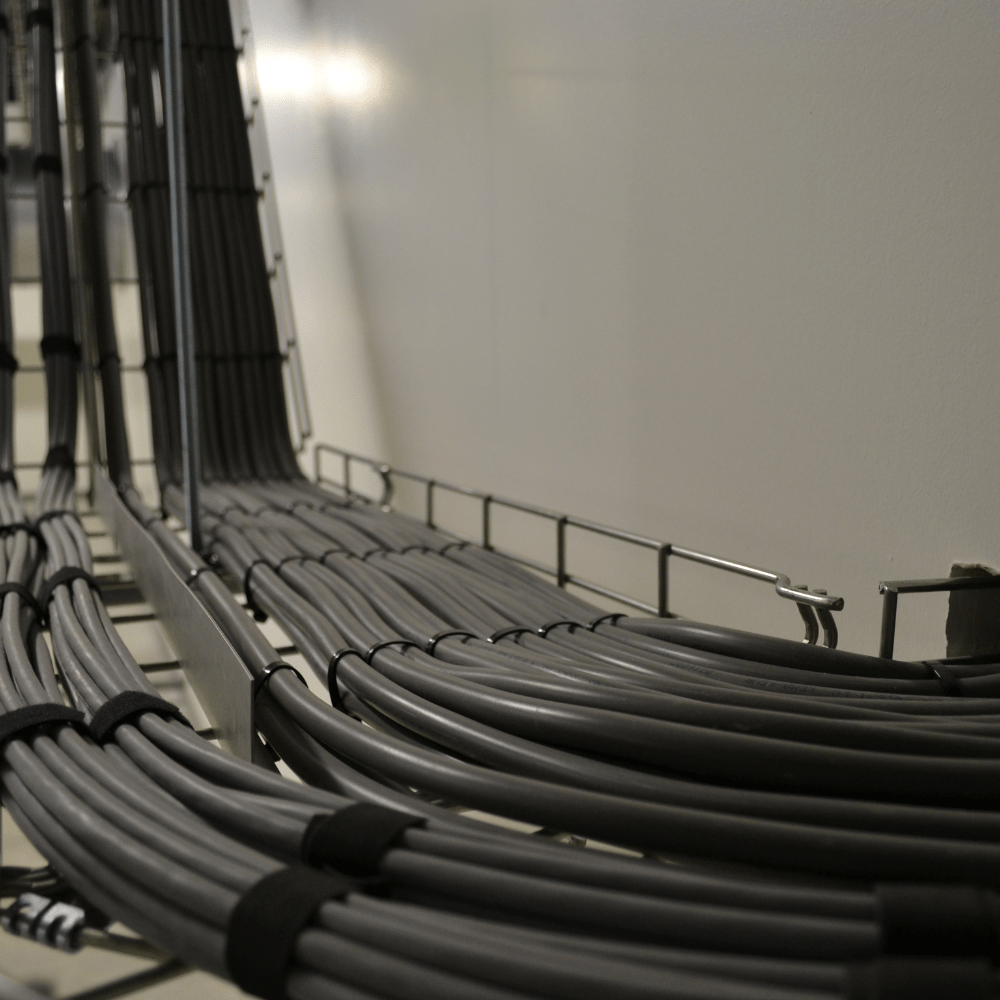
Self storage has been one of the steadier growth stories in UK commercial property over the past decade, and that growth shows up on the ground as a constant programme of new site builds, acquisitions and refits of older stock. Every one of those projects follows a broadly similar electrical fit-out, whether it is a purpose built facility on the edge of a retail park or an older warehouse being converted into storage units. Roller shutter doors need motor wiring and control circuits fitted to every unit. Corridors and individual units need lighting circuits run throughout the building. CCTV cameras need cabling to cover entrances, corridors, lifts and the yard. Access control systems, keypads, fobs and gate intercoms need their own wiring runs. Fire detection and alarm cabling has to reach every part of the building to meet the fire safety standard the site needs to operate under.
Because this electrical specification repeats so closely from one site to the next, a self storage operator opening or refurbishing more than one location in a year is effectively running the same job again and again, just at a different address. A newly built site generates a first, substantial batch of installation offcuts, reel ends and packaging waste from first fit electrical work. A refit or reconfiguration of an existing site, converting a block of larger units into smaller ones, upgrading an ageing CCTV system, or replacing a fire panel and its cabling, produces the reverse problem: a batch of stripped out cable that has reached the end of its working life and has to be removed before new cable goes in.
For an operator running a handful of sites, this might happen a couple of times a year. For an operator actively growing a portfolio, acquiring sites, opening new branches, or running a rolling refurbishment programme across an existing estate, something similar can be happening somewhere in the group at almost any given time. That is the pattern worth recognising from a waste perspective. Self storage fit-out cable waste is not a one-off event to plan around once. It is a recurring, fairly predictable output of running and growing a self storage business, and it deserves a repeatable answer rather than being treated as an afterthought tacked onto each individual project’s general waste arrangements.
There is also a seasonal and cyclical pattern worth noting. Many operators concentrate acquisitions, new openings and larger refurbishment projects into particular points in their financial year, which means cable waste from fit-out work can arrive in clusters rather than evenly across twelve months. A facilities team that has arranged disposal for one project in isolation can find itself scrambling to repeat the exercise two or three more times within a few months when several sites in the pipeline complete around the same period. Building a standing arrangement with one cable recycling partner removes that scramble, because the same booking process applies whether it is the first site of the year or the fifth.
Our cable recycling services page sets out the full range of cable types we collect, and our construction site cable waste guide covers the wider context of managing cable waste on an active building or fit-out project, much of which applies directly to a self storage site mid-refurbishment. Where fit-out work follows a Cat A or Cat B style specification, our Cat A and Cat B fit-out cable recycling guide walks through how that strip-out cable is typically graded and collected, and the same principles apply whether the building behind it is an office floor or a storage unit corridor.
What Roller Shutter, Lighting and Access Control Cable Waste Looks Like on a Storage Site
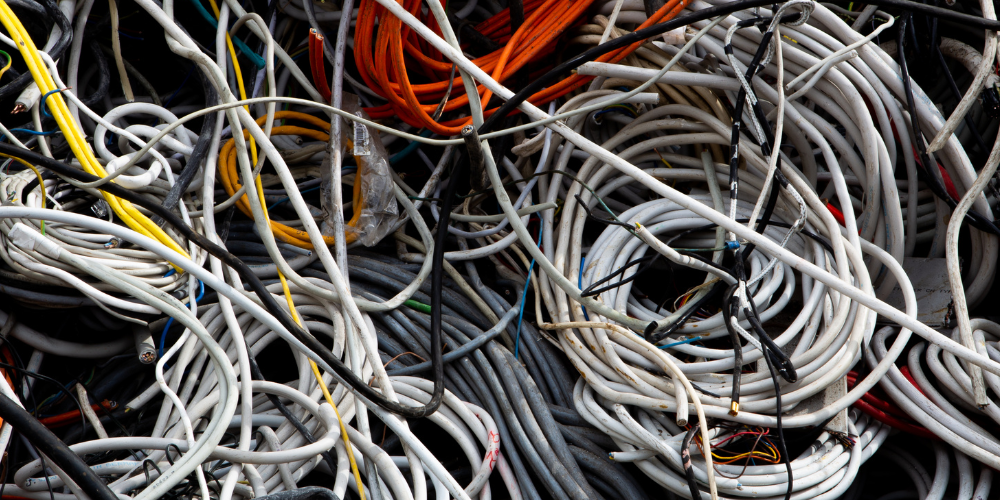
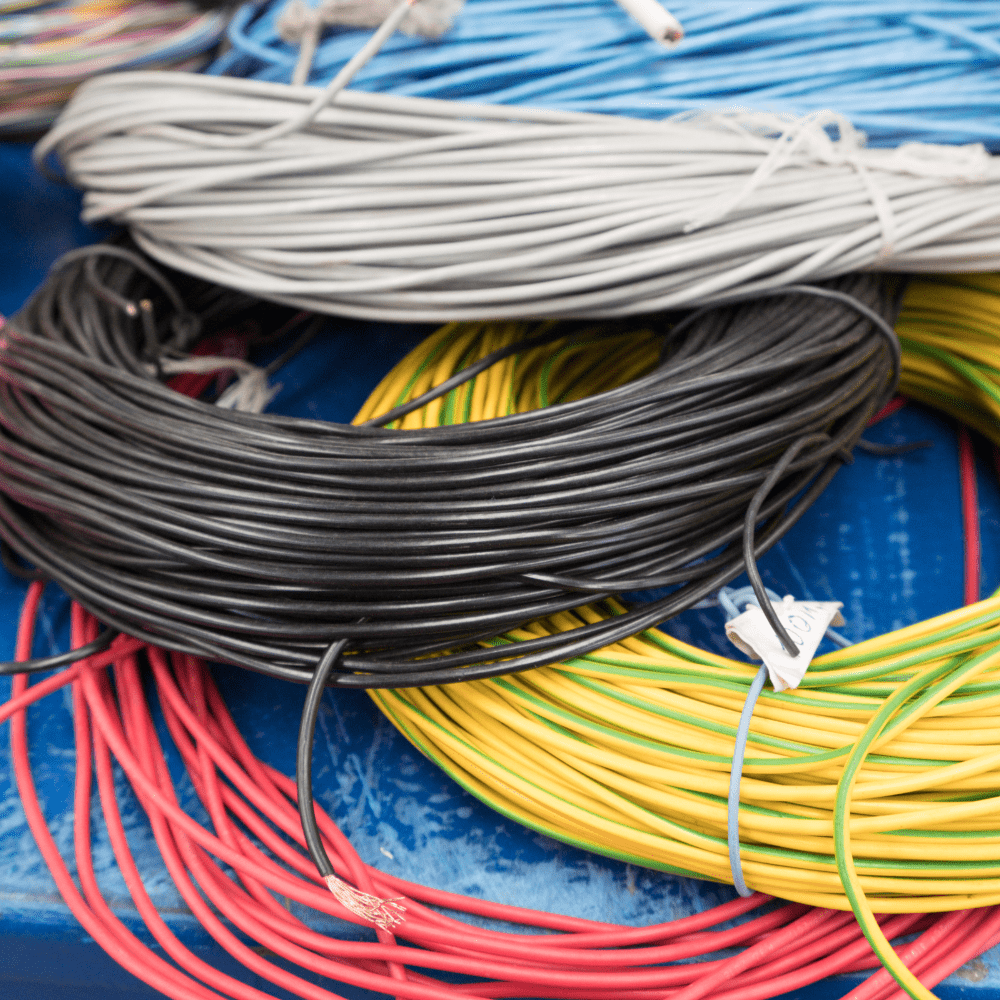
It helps to be specific about what actually comes off a self storage site during a fit-out or refit, because each cable type carries a different grade and a different reason for being there. Roller shutter door motors are usually wired with armoured or heavy duty cable able to carry the load safely and withstand being run through walls, floor voids or external conduit, and when a block of units is reconfigured or shutters are upgraded, this cable is removed in reasonably long, continuous runs. Lighting circuit cable through corridors and units tends to be lighter gauge but covers a lot of linear distance across a typical facility, so the total weight across a whole site strip-out can be considerable even though no single run looks dramatic on its own.
CCTV cabling is its own category again. Older analogue coaxial runs are increasingly being replaced with structured cabling for IP camera systems, so a CCTV upgrade at an established facility often means pulling out an entire legacy camera network in one go rather than a handful of cables. Access control wiring, the cable running from keypads, fobs readers and intercoms back to a control panel, is lower volume per door but adds up across a site with dozens of unit doors, a main gate and internal fire doors fitted with access restrictions. Fire detection and alarm cabling, finally, is designed to be continuous and reliable, which means when a fire system is upgraded or extended, a genuinely large amount of cable can be removed from ceiling voids and risers in one session.
| Cable type on a storage site | Typical source of waste | Where it tends to be found |
|---|---|---|
| Roller shutter motor and control cable | New unit fit-out, shutter upgrade or replacement | Unit entrances, external shutter housings |
| Lighting circuit cable | New build wiring, corridor relamping, LED upgrade | Corridors, stairwells, individual units |
| CCTV cable (coax or structured) | Camera system replacement or extension | Risers, ceiling voids, external runs |
| Access control and intercom cable | Keypad, fob reader or gate system upgrade | Entrances, internal fire doors, main gate |
| Fire detection and alarm cable | Fire system upgrade, extension or compliance work | Ceiling voids, risers, plant rooms |
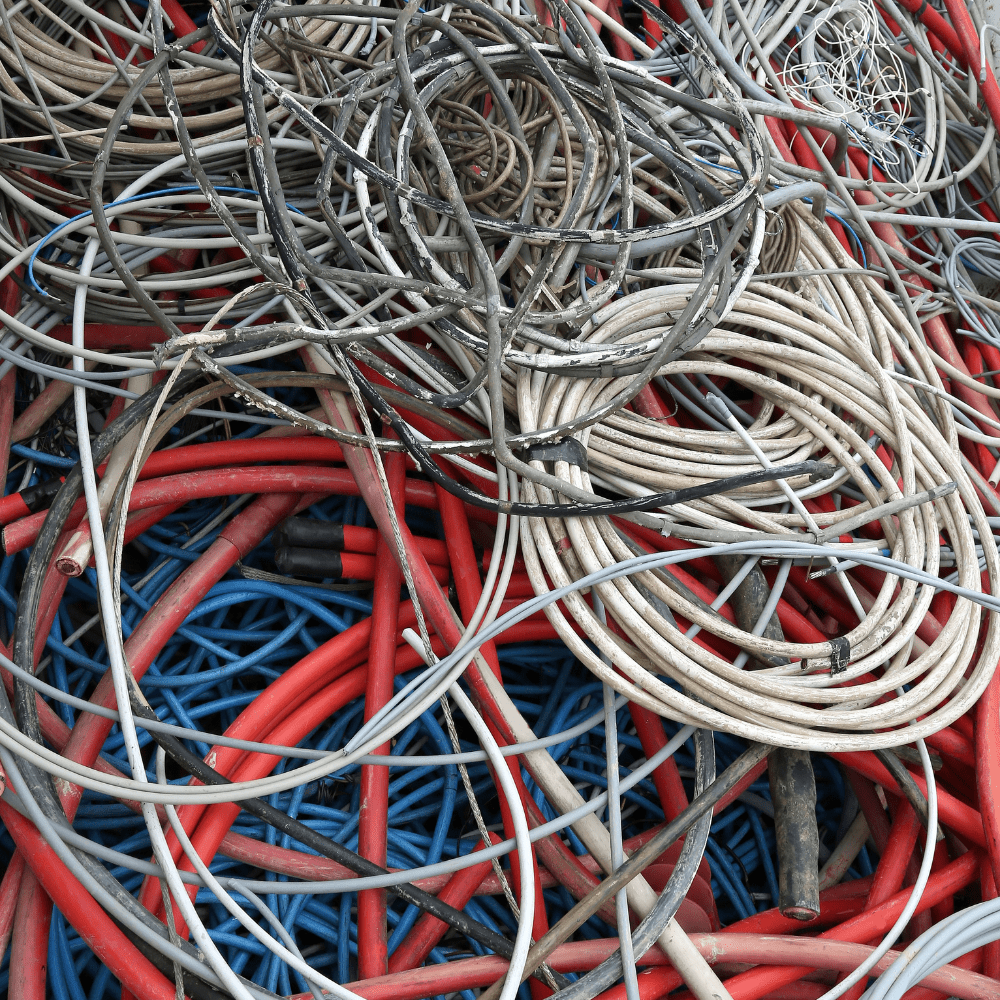
It is also worth being aware that cable condition varies considerably depending on why it is being removed. Cable taken out during a planned upgrade, replacing a working but outdated CCTV system, for example, tends to be in reasonably intact runs with connectors and fittings still attached, whereas cable removed after damage, water ingress in an external shutter housing, or a fault that triggered an emergency repair, can arrive in shorter, more fragmented lengths. Neither condition is a problem for collection, but it does affect how a load is graded, and letting a specialist assess it on arrival avoids any guesswork on site about what a particular batch is actually worth as recovered material.
A full site refurbishment can easily produce several of these streams at once, which is one reason this waste is worth collecting and recording as a single defined batch rather than letting it get absorbed into whatever skip happens to be on site that week. Our factory and warehouse cable recycling page covers a comparable commercial building profile, and for the data and security angle on CCTV and access control cable specifically, our page for secure cable disposal when upgrading network infrastructure explains why cabling connected to camera and access systems deserves a properly managed removal rather than being left loose on site.
Why General Site Waste Handling Loses the Copper Value in Self Storage Cable Waste
Here is the disposal problem most self storage operators run into without necessarily noticing it. The electrical or fit-out contractor doing the strip-out work is focused, understandably, on finishing the installation safely and on time. The cable that comes out during that process is frequently left for the facility operator, the main contractor or whoever is managing the site to deal with as general waste. From there it tends to go straight into whichever skip is already on site for the rest of the construction debris: plasterboard, packaging, timber offcuts and the rest.
Once cable is mixed in with general construction waste in a mixed skip, the copper content inside it effectively disappears from view. A skip or general waste contractor is not set up to separate, weigh and record cable as its own stream; their business is moving bulk waste off site efficiently, not grading individual materials within it. The practical result is that copper which could have been recovered and recycled as cable gets landfilled or processed as low grade mixed waste instead, and the facility operator never sees any benefit from the material value that was sitting in that waste in the first place.
For an operator running a single site, this might be a one-off inefficiency worth tolerating. For an operator managing several sites, possibly across different regions, the same problem repeats at every single location unless something changes. Sourcing a new local disposal option every time a different branch gets refurbished is itself an extra piece of admin on top of running the actual fit-out, and it means the operator can never build a consistent, repeatable process across the group. One site’s cable waste might get handled reasonably well by a helpful local contractor, while another site’s waste simply goes in the skip because nobody on that particular job thought to ask.
This is not an unusual failure specific to self storage sites. It is simply what happens on most construction and fit-out projects by default, across almost every sector, because cable is small enough and light enough relative to other site waste that it rarely gets flagged as something worth separating out unless someone on the project specifically asks for it to be. The difference for a self storage operator is scale and repetition: the same oversight repeated across ten or twenty sites a year adds up to a meaningful amount of recoverable material quietly disappearing into general waste streams, year after year, simply because nobody built a standing instruction to stop it happening.
Treating cable as its own recognised waste stream, separate from general site waste, is the fix. Our page on what happens to cable after recycling explains where that material goes once it leaves a site, and our piece on the environmental impact of cable recycling sets out why recovering copper properly matters beyond the immediate convenience of an empty skip. The same lesson applies directly to a retail or office fit-out, as covered in our guide to recycling cable waste after an office or shop refurbishment, and a self storage site mid-refit faces exactly the same structural problem with exactly the same fix.
Why Cable Wire Recycling Limited Suits Self Storage Facility Operators
This is where the case for a cable only specialist becomes straightforward rather than theoretical. Cable Wire Recycling Limited recycles cable and wire exclusively. We do not take general scrap metal, and we are not trying to be a broad waste contractor who happens to also handle cable alongside everything else. That focus means every part of our process, from how we assess a load to how we weigh and grade it, is built around cable specifically, which suits a self storage operator whose waste profile is, as covered above, overwhelmingly cable based: shutter wiring, lighting circuits, CCTV and access control cable, and fire cabling.
We are based in Birmingham and collect across the whole UK, which matters directly to an operator whose sites are not all in one place. Rather than finding a different disposal arrangement for a facility in the Midlands, another for a site further north, and another again for a southern branch, a portfolio operator can brief us once and use the same point of contact for every site that needs clearing, whether that is a single unit reconfiguration or a full building strip-out. Our coverage page sets out the areas we serve, and our get a quote page is the quickest route to arranging a specific collection for a site once a project is confirmed.
We also do bulk collection, which is the relevant service for a facility fit-out or refurbishment rather than a trickle of small drop-offs. A full site strip-out, particularly one combining shutter wiring, lighting, CCTV and fire cabling at the same time, can generate a genuinely large volume of material in one go, and that is exactly the kind of job bulk collection is designed for. Finally, we have built up five star Google reviews over time, which reflects a general reputation for doing this reliably rather than any single headline claim, and is worth checking directly if you want a sense of how we have handled similar jobs for other customers.
None of this depends on the facility being in Birmingham. A self storage group based anywhere in the UK, with a site anywhere in the UK, can use the same service and the same point of contact. What matters to us is that the material is cable or wire with recoverable copper content, not where the building happens to sit on a map, and that is precisely why a cable only specialist with UK wide collection suits a sector built around multiple, geographically spread sites far better than a local scrap yard ever could.
How We Grade and Weigh Self Storage Fit-Out Cable
Grading matters because not all the cable coming off a storage site is the same grade of material, and a collection process that treats it all identically underpays for the higher grade content and overcomplicates the lower grade content. Armoured shutter motor cable, lighting circuit cable and fire cabling are typically different grades with different copper content, and our scrap cable grades explained overview, reachable through our main services page, sets out how different cable types are assessed. Every collection is weighed on arrival, with the weight and grading recorded so the figures behind any later paperwork are accurate rather than estimated. We never quote or discuss specific prices or price trends in this content; our scrap cable prices page is the right place to look for current pricing information once you are ready to arrange a collection.
Bulk Collection for Multi Site Self Storage Portfolios Across the UK
A single site refurbishment is one thing to arrange. A rolling programme across a portfolio of ten, twenty or more facilities is a different kind of logistics problem, and it is here that a UK wide, cable only collection partner earns its place. Rather than an operator’s facilities or regional managers each sourcing their own local disposal contact, which tends to produce inconsistent service, inconsistent record keeping and inconsistent outcomes from site to site, a single partner used across every location means the same standard applies everywhere, whether the facility is in the West Midlands or several hundred miles away.
Bulk collection for businesses undertaking larger clearance work is covered on our bulk cable collection services page, which describes exactly the kind of larger scale job a full facility strip-out produces. For operators with sites spread across a wider region, our local area pages for Dudley, Walsall and Redditch give a sense of how far our regular West Midlands coverage reaches, and the same approach extends to collections anywhere else in the UK through our wider coverage page. For an operator timing several refurbishments across a financial year, having that one point of contact means each new project can simply be booked in rather than re-researched from scratch.
This kind of repeatable arrangement also helps internally within a self storage business. A facilities or operations manager overseeing several branches can tell site teams and contractors exactly what to do with stripped cable at every location, because the instruction does not change from site to site. That consistency reduces the chance of cable being thrown into a general skip simply because nobody at a particular branch knew there was a better option, which was the exact problem described earlier in this article.
It is also easier to brief a contractor correctly when the instruction is the same every time. A new electrical or fit-out contractor working on their first job for a particular self storage operator can simply be told to set stripped cable aside for a named collection partner rather than being left to make their own judgement about what counts as waste worth separating. Over a portfolio of sites and a rotating list of contractors, that single, repeatable instruction does more to protect the recoverable value in fit-out cable than any amount of after the fact checking once a job is finished and the skip has already been emptied.
Fire Cabling, CCTV and Access Control Cable Recycling at Storage Sites
Fire, CCTV and access control cabling deserve a section of their own because they sit slightly apart from ordinary power and lighting cable in terms of why a site chooses to upgrade or replace them. Fire detection and alarm systems are typically upgraded for compliance reasons, either because a system has aged out of its expected service life or because a change of use or layout within the building triggers a reassessment of the fire strategy. When that happens, cabling throughout risers and ceiling voids is often replaced wholesale rather than patched, which produces a single large batch of continuous run cable rather than scattered offcuts.
CCTV and access control cable carries a slightly different consideration. Both systems are connected, directly or indirectly, to security and surveillance infrastructure, and operators reasonably want any cable removed from these systems handled properly rather than left lying around a site where it is visible and accessible. Our page on secure cable disposal when upgrading network infrastructure, written originally with network and IT upgrades in mind, applies just as well to a facility’s CCTV backbone or access control wiring being replaced, since the underlying principle, removing redundant cabling connected to a security system in a controlled way rather than leaving it loose, is identical.
There is also a practical site management reason to deal with this cable promptly rather than let it accumulate in a plant room or riser cupboard. Loose cable with recoverable copper content sitting unattended on a site is a target for opportunist removal, and a facility already investing in CCTV and access control upgrades has an obvious interest in not undermining that investment by leaving the old cabling from the same upgrade sitting around afterwards. Arranging a collection as soon as the strip-out is complete, rather than waiting until a convenient gap in the schedule, closes that window.
Compliance and Waste Documentation for Self Storage Site Clearances
Cable waste generated during a self storage fit-out or refurbishment is still waste in the eyes of UK environmental regulation, and it is worth a facility operator or their contractor understanding the basic framework around it, even where the day to day collection process is handled by a specialist. If cable is going to be stored on site for any length of time before collection, rather than removed immediately as it comes out, this is the kind of activity that can fall under waste storage exemptions or permitting requirements depending on the volume and how long it sits there, and the government’s guidance on waste environmental permits sets out when an exemption or permit is actually needed.
There is also specific government guidance covering the storage and treatment of waste cable itself. The position on storing and treating hazardous waste cable and the separate low risk waste position on storing and treating waste cable at existing T9 exempt operations both give useful background on how cable specifically is treated within waste regulation, which is more detailed and more relevant than generic mixed metal guidance. A site manager arranging a larger refurbishment, where cable might sit in a skip or holding area for a few days before a collection is booked, is the kind of scenario this guidance is actually written for.
Finally, because fire cabling, lighting and electrical infrastructure upgrades are frequently the trigger for this waste in the first place, it is worth being aware of the government’s Approved Document P guidance on electrical safety, which covers the standards the electrical work generating this waste needs to meet. None of this changes what we do as a collector, taking the finished waste cable off your hands and recycling it properly, but understanding the regulatory picture around storage and the underlying electrical standard helps a facilities team brief contractors correctly and keep their own paperwork in order. If you want to talk through a specific site or a programme of refurbishments before committing to anything, our contact us page is the best starting point, and you can reach us directly to discuss timing and access for a particular facility.
Self Storage Cable Recycling FAQ
Q1 What counts as self storage facility cable waste?
It covers any cable or wire removed from a self storage site during a build, fit-out or refurbishment, including roller shutter motor and control cable, lighting circuit cable, CCTV cable, access control and intercom wiring, and fire detection and alarm cabling. If it contains copper and has come out of the building as part of electrical work, it falls within what we collect.
Q2 Do you collect roller shutter cable disposal waste directly from site?
Yes. Roller shutter motor and control cable is one of the most common cable types removed during a self storage fit-out or unit reconfiguration, and we collect it alongside any other cable waste generated at the same time, so it does not need to be separated out into its own job.
Q3 Can you handle a full self storage site refurbishment in one collection?
Yes, this is exactly what our bulk collection service is for. A full strip-out combining shutter wiring, lighting circuits, CCTV cable and fire cabling can be collected as a single larger job rather than several smaller ones, which suits the way most refurbishment projects actually run.
Q4 Do you collect self storage facility cable waste across the whole UK?
We are based in Birmingham and collect UK wide, which is particularly useful for an operator managing sites in different regions. One point of contact can arrange collections for every site in a portfolio rather than sourcing a different local option at each location.
Q5 What happens to the cable once it leaves a storage site?
It is weighed, graded and processed for recycling so the copper and other recoverable materials inside it are properly recovered rather than being lost to landfill as part of general mixed waste. Our page on what happens to cable after recycling covers this in more detail.
Q6 Can you collect cable regularly if we are running a rolling self storage refurbishment programme?
Yes. Operators running refurbishments across several sites over the course of a year can arrange repeat collections as each project completes, using the same process and point of contact every time rather than renegotiating arrangements for each individual facility.
Q7 Do you need to see waste documentation before collecting from our site?
We can discuss whatever documentation your project requires as part of arranging a collection. If your site has been storing cable waste for any length of time before collection, it is worth checking the government guidance on waste environmental permits referenced above so your own paperwork is in order, and we are happy to talk through timing and access details directly.