

Do You Need a Licence to Sell Scrap Cable? What ‘Licensed’ Actually Means
No, you do not need a licence to sell your own scrap cable as a homeowner, tradesperson or business clearing out material you own. The licensing requirement under the Scrap Metal Dealers Act 2013 applies to the dealer buying or collecting it, not the person selling it. What you should do is check that whoever you sell to actually holds that licence.
- The Scrap Metal Dealers Act 2013 licenses dealers, the businesses and individuals who buy, collect or process scrap metal, not the people selling their own material to them.
- There are two distinct licence types: a site licence, for a fixed premises, and a collector’s licence, for mobile door-to-door collection, and a dealer can only hold one type per local authority area.
- A licensed dealer must also separately hold a waste carrier registration from the Environment Agency before their scrap metal licence can even be issued.
- You can check any dealer’s licence status for free on the Environment Agency’s public register before dealing with them.
- Selling scrap cable as surplus material or a by-product of your own trade or business, such as offcuts from an electrical job, does not require you to hold a dealer’s licence yourself.


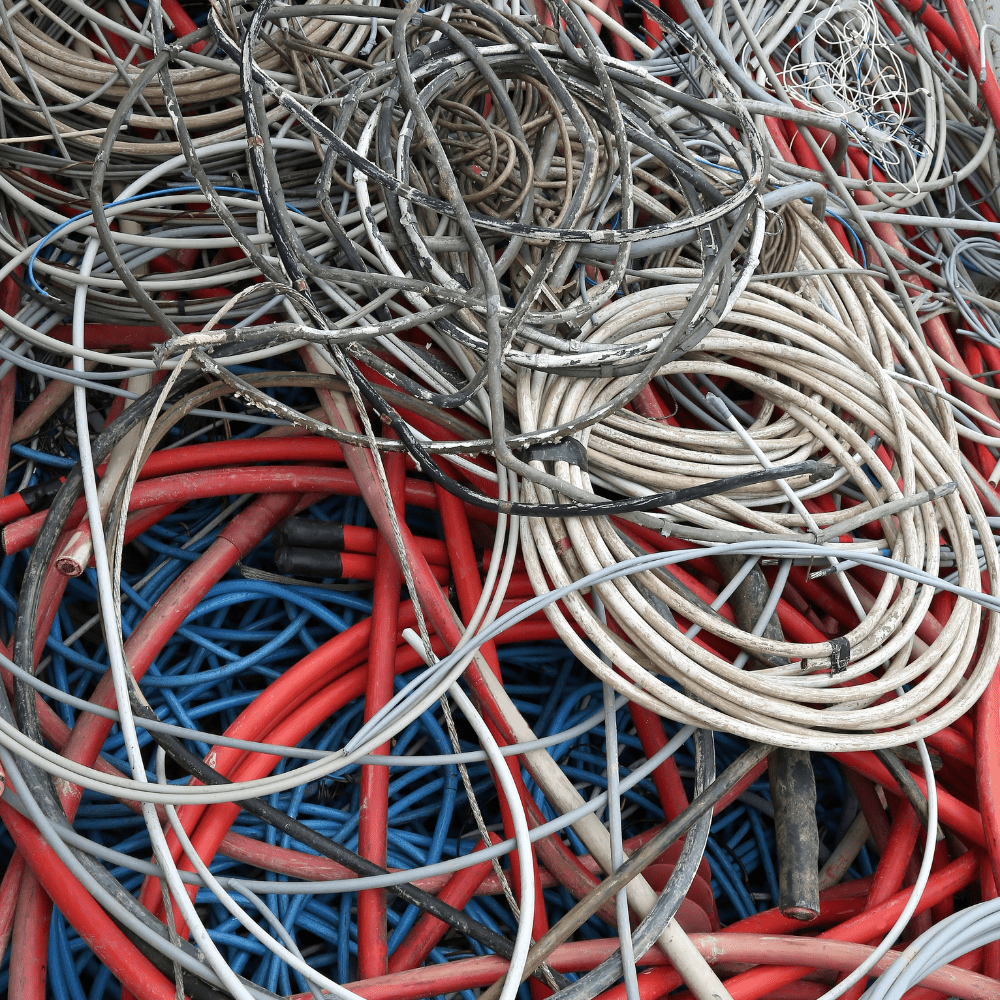

Who Actually Needs a Scrap Metal Dealer Licence?
The Scrap Metal Dealers Act 2013 defines a scrap metal dealer as someone who carries on a business wholly or partly buying or selling scrap metal, whether or not it is sold in the same form it was bought in, or someone operating as a motor salvage operator. That definition targets the buying and processing side of the trade, not people disposing of their own material.
If you are an electrician selling offcuts from your own jobs, a homeowner clearing out an attic, or a business decommissioning old wiring and selling it on for recycling, you are not carrying on a business as a scrap metal dealer in the sense the Act means. You are simply the seller in a transaction, and the licensing obligation sits with the party on the other side of it.
This distinction is explicit in the guidance councils publish. Selling scrap metal as surplus material or a by-product of your own trade or manufacturing activity is specifically stated as not counting as scrap metal dealing under the Act.
What a Dealer’s Licence Actually Requires Them to Do
Understanding what the licence covers helps explain why checking for one protects you as a seller, not just a compliance box for the dealer to tick.
Verify your identity before buying from you
A licensed dealer must verify the name and address of anyone they receive scrap metal from, checked against a reliable independent source such as a passport, driving licence, or utility bill. This is a legal requirement on the dealer, not an optional extra, and its purpose is to make stolen metal harder to sell on.
Keep detailed records for three years
Dealers must record a description of the metal received, including type, form, condition and weight, along with the seller’s name and address and the payment method, and retain these records for three years.
Pay only by non-transferable cheque or electronic transfer
Physical cash payment for scrap metal is a criminal offence under Section 12 of the Scrap Metal Dealers Act 2013. This applies to every transaction, with no exceptions and no minimum value below which it becomes acceptable.
Display their licence
A site licence must be displayed prominently at the premises, accessible to the public. A mobile collector’s licence must be displayed on their vehicle, visible and legible from outside.
Allow inspection
Licensed dealers must allow their local council or the police to inspect their premises and records on request, which is part of what makes the licensing system enforceable rather than just paperwork.
Site Licence vs Collector’s Licence: What’s the Difference?
Site licence
Authorises the holder to carry on business as a scrap metal dealer at specific, named premises. Every site where the dealer operates has to be identified in the licence, and a site manager has to be named for each one. A site licence holder can transport scrap metal to and from those named sites from any local authority area, not just the one that issued the licence.
Collector’s licence
Authorises the holder to operate as a mobile collector within the area of the specific council that issued it. This does not extend to other council areas. A collector operating across several council areas needs a separate licence from each one, which is why a legitimate mobile collector working across a wide region will hold multiple licences, one per local authority they collect in.
They are not interchangeable, and a dealer cannot hold both types in the same local authority area at once. They must choose one or the other for each area they operate in. This matters practically: if a mobile collector cannot show you a licence because it is at the yard, that is inconsistent with how a collector’s licence actually works, since it must be displayed on the vehicle itself.
The Licence You Might Not Know Exists: Waste Carrier Registration
This is the part of the system most people, including many sellers, do not realise sits underneath the scrap metal dealer licence. Before a council will issue a scrap metal dealer’s licence, in either form, the applicant must already hold a valid upper tier waste carrier registration from the Environment Agency, or the equivalent body in Wales, Scotland or Northern Ireland.
This is a separate registration from a separate regulator, checked by the council as part of the scrap metal licensing process. In practice, this means a genuinely licensed scrap metal dealer is actually holding two forms of authorisation at once: the local council’s scrap metal dealer licence, and the Environment Agency’s waste carrier registration. Both are checkable on public registers, and both should exist together for a legitimate operator.
How to Actually Check a Dealer’s Licence Yourself
Check the Environment Agency’s public register of scrap metal dealers
This is hosted centrally and searchable by business name or location, free of charge, and covers dealers licensed across England and Wales. Search the register here.
Check the separate waste carriers, brokers and dealers register
Also hosted by the Environment Agency, this confirms whether a business or individual holds the waste carrier registration required alongside their scrap metal licence. Search this register here.
Ask your local council directly
Local authorities, including Birmingham City Council, issue and maintain their own licensing records and can confirm a specific dealer’s status if you are unsure how to use the online registers.
Look for the displayed licence itself
A legitimate site should have its licence visible to the public at the premises. A legitimate mobile collector’s vehicle should display their licence visibly from outside.
What Happens If a Dealer Operates Without a Licence
Operating as a scrap metal dealer without the required licence is a criminal offence under the Scrap Metal Dealers Act 2013, and it is treated seriously rather than as a minor administrative lapse. Conviction can result in a fine, with the level set at the discretion of the court up to the maximum on the standard scale for the offence, and repeated or serious non-compliance can also affect a dealer’s ability to hold a licence at all in future, since councils can refuse, revoke or vary a licence based on an operator being considered unsuitable.
For a seller, dealing knowingly or unknowingly with an unlicensed operator carries its own separate risk, covered in more detail in our guide to avoiding scrap cable scams: if material you hand over to an unlicensed collector is later disposed of illegally, responsibility can trace back to you as the person who handed it over, under the general duty of care that applies to anyone producing or handling waste.
How Councils Decide Whether to Grant or Keep a Licence
A licence is not automatic once an application is submitted. Councils assess whether an applicant is fit and proper to hold a scrap metal dealer licence, and this assessment covers more than just paperwork.
Background checks are part of the process
Applicants, and for companies, the directors, partners or company secretary, must provide a basic disclosure of criminal convictions as part of a licence application. This is checked against a list of relevant offences set out in regulations under the Act, and a history of relevant convictions can be grounds for refusal.
Tax compliance is checked before renewal
Since April 2022, anyone renewing a scrap metal dealer licence must complete a tax check with HMRC confirming how they pay tax on income from their licensed trade, and provide the resulting code to their council as part of the renewal. This applies specifically to scrap metal dealers alongside taxi and private hire licensing, reflecting how seriously the sector is regulated for tax compliance as well as environmental and safety compliance.
Licences can be revoked, not just refused
If a licensed dealer is later found to be non-compliant, operating dangerously, or convicted of a relevant offence, councils have the power to revoke or vary an existing licence, not only to refuse a new application. An applicant or existing licence holder who is refused, revoked or varied is entitled to make representations, but the council is not obliged to grant the licence simply because a written objection was raised.
Councils and the police can inspect at any reasonable time
Licensed dealers must allow their local council or the police to inspect their premises, vehicles and records on request. This is what makes the licensing system meaningfully enforceable day to day, rather than a one-off check completed only at application stage.
Licensing at a Glance
| Question | Answer |
|---|---|
| Do I need a licence to sell my own scrap cable? | No, selling your own material does not require you to hold a licence |
| Does the dealer buying my cable need a licence? | Yes, every scrap metal dealer must hold either a site or collector’s licence |
| Can a dealer hold both licence types in one area? | No, they must choose one type per local authority area |
| Does a dealer also need a waste carrier registration? | Yes, this must be in place before the scrap metal licence is even issued |
| Can I check a dealer’s licence myself? | Yes, free public registers exist for both licence types |
Who This Explanation Isn’t For
This is not an application guide for someone wanting to become a licensed scrap metal dealer themselves. Actually applying for a licence involves DBS checks, tax conditionality requirements with HMRC, application fees, and site or vehicle specific requirements that sit with the relevant local council, not covered in the depth a genuine applicant would need here.
It is also not legal advice for a specific dispute. If you are dealing with a genuine legal question about your own liability in a specific situation, particularly anything involving a fly-tipping allegation or a formal dispute with a dealer, that requires advice specific to your circumstances rather than general guidance.
Common Misunderstandings About Scrap Cable Licensing
Assuming you need a licence just to sell your own cable
This is the single most common confusion, and it is understandable given how much licensing content online is written for dealers rather than sellers. The requirement sits with the buyer, not you.
Assuming any professional looking scrap yard is automatically licensed
A well-presented premises proves nothing about licensing status on its own. Checking the actual public register is the only reliable confirmation.
Assuming a site licence and collector’s licence are the same thing with different names
They authorise genuinely different activities, fixed premises versus mobile door-to-door collection, and a dealer cannot hold both in the same council area simultaneously.
Assuming a waste carrier registration and a scrap metal dealer licence are the same document
They are two separate authorisations from two different regulators, the council and the Environment Agency, and a genuinely compliant dealer holds both.
Scrap Cable Licensing Myths
Myth: “I need to register as a dealer if I sell scrap cable regularly.”
Not if you are selling your own material, even regularly, as a by-product of your own trade or clearing out your own property. The registration requirement targets businesses that buy and process scrap metal from others, not people disposing of what they already own.
Myth: “A mobile collector without a van sign can’t be checked.”
Every mobile collector’s licence is tied to their name and the issuing council, and is checkable on the same public registers regardless of what their vehicle looks like, provided you ask for their name or licence number.
Myth: “Gold and silver scrap needs the same licence as other metals.”
Gold and silver are specifically excluded from the definition of scrap metal under the Act, so dealing in those does not fall under the same scrap metal dealer licensing requirement, though other rules may still apply.
Our Verdict: Check the Licence, Not the Logo
The confusion this article addresses is a genuinely easy one to fall into, most of what is written about scrap metal licensing online is aimed at the dealer applying for one, not the person selling to them. The practical takeaway is simple: you almost certainly do not need a licence to sell your own scrap cable, but you should always confirm that whoever you are selling to holds theirs, because that licence is what obligates them to verify your identity properly, keep proper records, pay you by a traceable method, and handle your material through a legitimate, regulated route.
Checking takes a few minutes using the free public registers covered above, and it protects you regardless of whether you are clearing out a single drawer of old cable or running a regular trade arrangement.
Do You Need a Licence to Sell Scrap Cable FAQ
Q1 Do I need a licence to sell scrap cable as a homeowner?
No. Individuals selling their own scrap cable, whether from a house clearance, renovation, or general disposal, do not need a scrap metal dealer licence themselves.
Q2 Do electricians need a licence to sell offcuts from their own jobs?
No, provided you are selling material generated as a by-product of your own trade rather than buying and reselling scrap metal from others, which is specifically excluded from the definition of scrap metal dealing under the Act.
Q3 What is the difference between a site licence and a collector’s licence?
A site licence covers a scrap metal dealer operating from named fixed premises. A collector’s licence covers a mobile operator collecting door to door within a specific council’s area. A dealer can only hold one type per local authority area.
Q4 How do I check if a scrap metal dealer is actually licensed?
Search the Environment Agency’s free public register of licensed scrap metal dealers, or contact the relevant local council directly to confirm a specific dealer’s status.
Q5 Do licensed scrap metal dealers need any other registration besides their council licence?
Yes. They must also hold an upper tier waste carrier registration from the Environment Agency, which is checked by the council before a scrap metal dealer licence is even issued.
Q6 What happens if I sell cable to an unlicensed dealer?
Beyond the risk of being underpaid or scammed by an operator with no accountability, you may also bear some responsibility yourself if the material is later handled or disposed of illegally, under the general duty of care that applies to anyone handling waste.
Q7 Is it illegal for a licensed dealer to pay in cash?
Yes, always. Cash payment for scrap metal is a criminal offence under Section 12 of the Scrap Metal Dealers Act 2013, with no exceptions for small amounts or informal transactions.
Get in touch with us.