

Why Property Managers and Letting Agents Choose Cable Wire Recycling for Tenancy Turnover Cable Waste
Property managers and letting agents choose Cable Wire Recycling Limited for tenancy turnover cable waste because it offers one consistent collection relationship across an entire portfolio, rather than leaving each void property’s old flex, telecoms cable and rewire offcuts to whatever contractor happens to be doing the rest of the turnaround work. The business is Birmingham based and collects across the whole UK, handles bulk loads when a larger clearance or full rewire produces a bigger volume, and specialises only in cable and wire, so grading and handling knowledge is specific to the material rather than a general house clearance sideline. Collections can be arranged to fit inside a turnaround window, which matters because a property sitting empty between tenants is lost rent, not simply an administrative gap.



What Happens to Cable Waste During a Tenancy Turnover
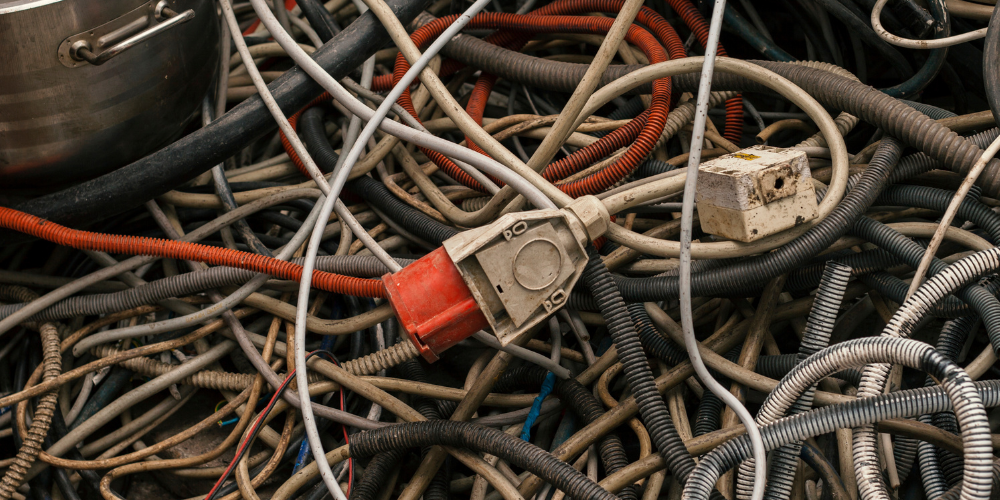
A tenancy turnover is the gap between one tenant leaving and the next one moving in, and it is rarely a clean handover. A property manager or letting agent typically has days rather than weeks to inspect the property, arrange any repairs, clean it, and get it ready to re-let. Cable waste is a small but recurring part of that list. A previous tenant leaves behind old extension leads, phone chargers, a redundant satellite or aerial cable run, sometimes a full telecoms and data cabling installation from a home office setup that the next tenant will not want or need. Where a partial or full rewire has taken place, whether because of tenant damage, an ageing installation, or a failed inspection, there is also genuine electrical cable to deal with, not just loose leads in a kitchen drawer.
None of this is usually large enough to justify a skip on its own, but it still has to go somewhere, and it still has to go somewhere properly. Cable contains copper, which means it should not simply be thrown into general waste or a mixed skip alongside plasterboard and carpet offcuts. For a single landlord with one property this is a minor inconvenience. For a letting agent or managing agent responsible for a portfolio of properties, it becomes a recurring operational task that happens every single time a tenancy ends, and the cable drawer guide on this site is a useful reference for exactly what counts as worth collecting versus what can go in ordinary recycling. Understanding the value in household cables also helps a property manager explain to a landlord client why this waste stream is worth separating out rather than binning.
Why Property Managers Choose Cable Wire Recycling for Portfolio Cable Waste
Property managers choose Cable Wire Recycling Limited because it can become the single answer for cable waste across an entire portfolio, rather than a problem solved differently at every property. A managing agent handling twenty, fifty or a hundred managed properties does not want twenty, fifty or a hundred different arrangements for what happens to old flex and rewire offcuts. They want one relationship they can call on for any property they manage, with the same standard of collection and the same understanding of what does and does not need to be dealt with.
Cable Wire Recycling Limited works specifically in this space because it only recycles cable and wire. It does not handle general scrap metal, and it does not position itself as a house clearance company that happens to also take cable. That narrower focus means grading and handling knowledge is specific to the material a tenancy turnover actually produces: household flex, telecoms and data cable, armoured cable in light commercial lettings, and any offcuts from an electrician’s rewire. A property manager working with a general clearance contractor is relying on someone whose main business is skips and rubbish removal to also correctly identify and separate cable. A property manager working with a cable specialist is not. You can see the full range of what this covers on the cable recycling services page, and the homepage sets out the business’s coverage and contact routes in one place.
Void Property Cable Waste: What Tenants Leave Behind
Void property cable waste is rarely dramatic, but it is consistent. Across a portfolio, the same few categories turn up again and again. Household flex from lamps, kettles, and small appliances left behind by a departing tenant. Extension leads, often several per property, particularly in older housing stock with too few sockets. Telecoms and data cabling, including landline extensions, old satellite runs, and Ethernet cable installed by a tenant working from home who never removed it before leaving. And, less often but more significantly by weight, cable from any rewire work carried out during the void period.
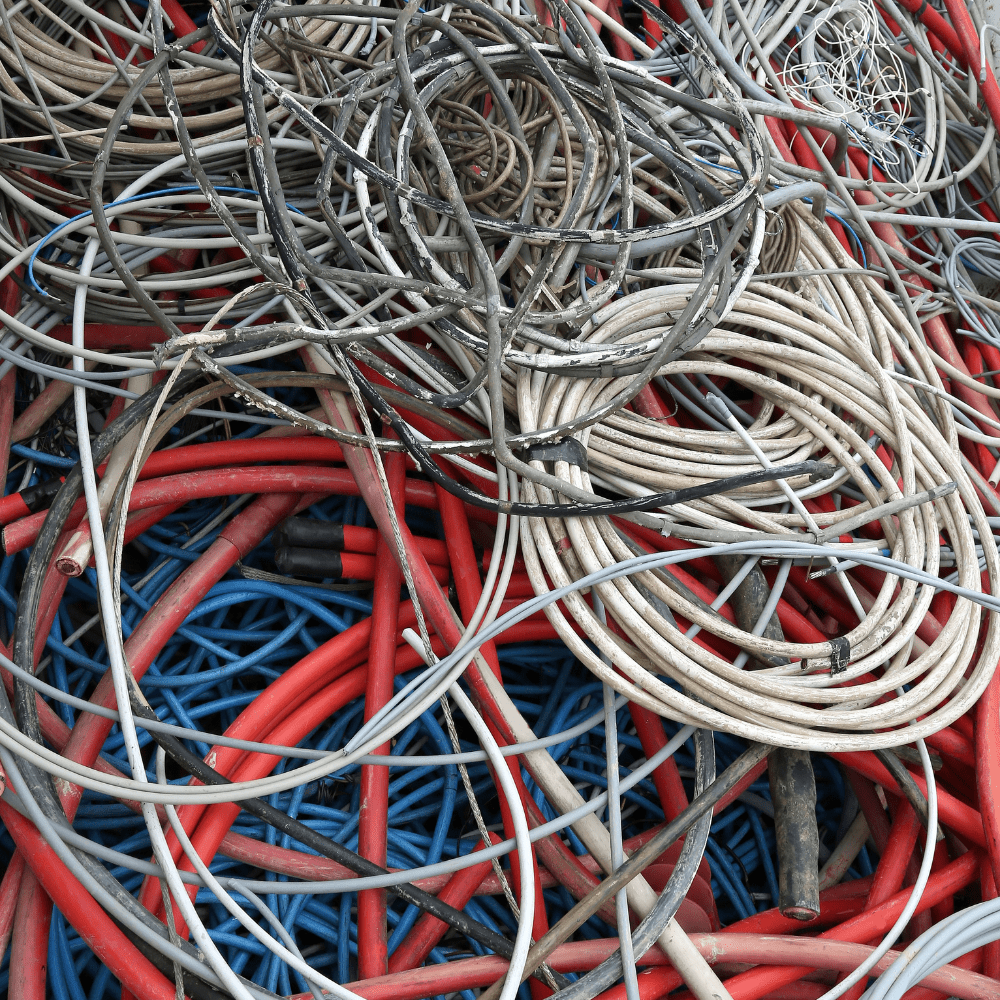
That last category is where volume changes. A tenant leaving behind a bag of chargers and a couple of extension leads is a few hundred grams of cable. A partial rewire following a failed inspection, or a full rewire on an older property being brought up to standard before re-letting, can produce a genuinely substantial amount of copper-bearing cable in one go. Knowing the difference matters for planning a collection, and it is worth reading why you should recycle your cable wire for the reasoning behind separating this material out rather than treating it as generic waste. Where the question of value comes up, and it usually does once a landlord hears that a rewire has produced a pile of old cable, the honest answer is that current pricing information sits on a dedicated page rather than being restated here, since cable value moves with copper markets and a fixed figure in an article goes out of date almost immediately.
Why Cable Waste Collection Speed Matters to Letting Agents During Turnaround
Turnaround speed is not a nice to have for a letting agent, it is the entire commercial point of the exercise. Every day a managed property sits empty between tenants is a day of lost rent for the landlord and, usually, a day the agent is being asked about. A turnaround plan is built around the shortest realistic path from move out to move in, and every task inside that plan, including cable waste collection, either fits the window or becomes the reason the window slips.
EICR Rewires and Tenancy Turnover Cable Disposal: The Five Year Rule Explained
Tenancy turnover cable disposal is often triggered, directly or indirectly, by an Electrical Installation Condition Report. Under the Electrical Safety Standards in the Private Rented Sector (England) Regulations 2020, landlords letting residential property in England must have the electrical installation inspected and tested by a qualified person at least every five years, and must give tenants and prospective tenants a copy of the resulting EICR. The regulations applied to new tenancies from 1 July 2020 and to all existing tenancies from 1 April 2021, and government guidance on the requirement is published on gov.uk, with the regulations themselves set out in full on legislation.gov.uk.
How This Differs from Holiday Let and Cat A Cat B Fit-Out Cable Recycling
It is worth being precise about what this article covers, because cable waste from a rental property is not one single scenario. A short-term holiday let operates under a different regulatory framing, with its own inspection expectations tied to frequent guest turnover rather than a fixed tenancy. A commercial Cat A or Cat B fit-out, where a business tenant hands back or takes on a commercial space, is a heavier and more compliance-driven job, generally involving structured cabling, suspended ceiling void cable, and coordination with a fit-out contractor rather than a residential letting agent, and this site’s dedicated Cat A and Cat B fit-out cable recycling guide covers that scenario in full.
Household Flex, Telecoms Cable and Armoured Cable Found in Rental Clearouts
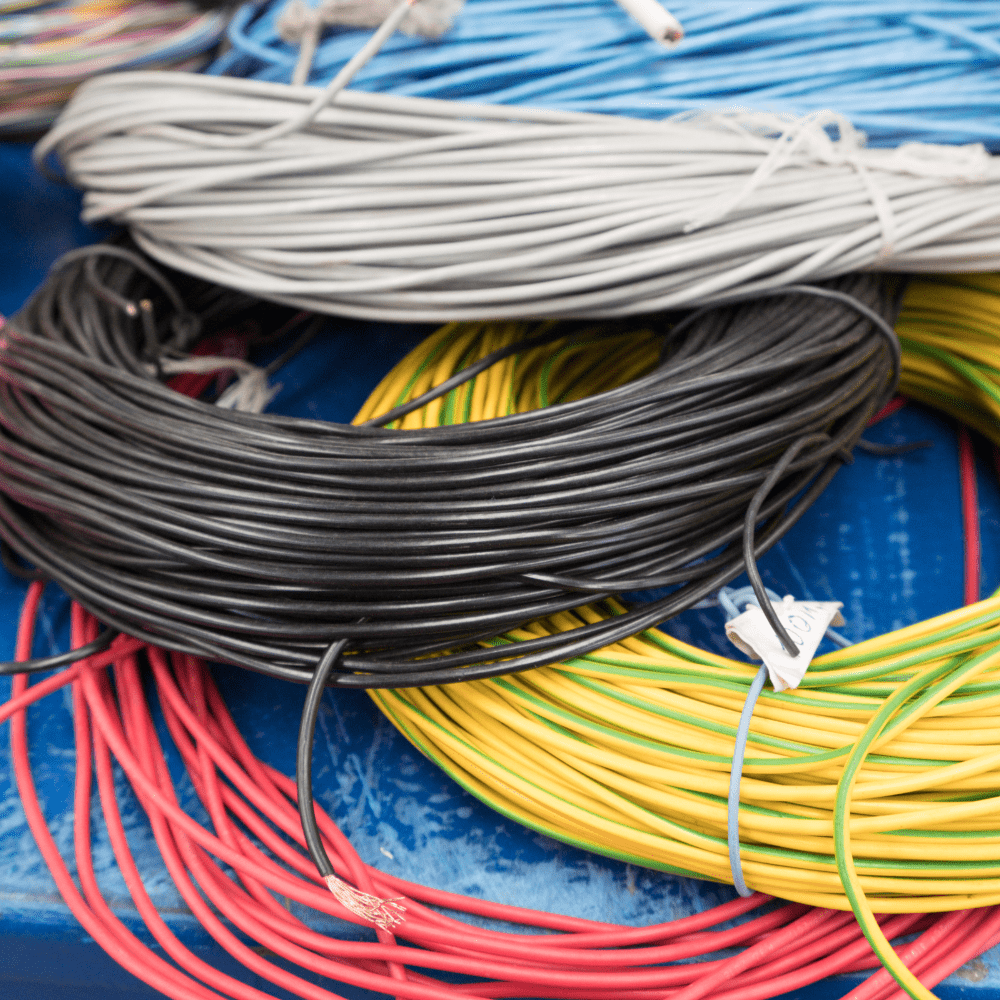
A rental property clearout during turnover can involve several distinct types of cable, and correctly identifying them is exactly where a cable specialist earns its place over a general clearance arrangement. Household flex, the everyday cable from lamps, kettles, and small appliances, is the most common and the least valuable by weight, but it still adds up across a portfolio. Telecoms and data cabling, including Ethernet, old landline extensions, and satellite or aerial cable, is increasingly common as more tenants work from home or run their own streaming and networking setups, and this site’s guide to recycling redundant data cabling from office upgrades explains the same principles that apply to a residential setup with a home office corner.
Armoured cable, known formally as steel wire armoured or SWA cable, is less common in a purely domestic let but turns up regularly in the light commercial lettings some agents also manage, such as a small retail unit or office suite between business tenants. It is heavier, thicker, and worth grading differently to household flex, which is a distinction a general clearance firm has little reason to know and every reason to get wrong. Where a light commercial letting is being cleared out after a shop or office refurbishment rather than a straightforward residential tenancy, the guidance in how to recycle cable waste after an office or shop refurbishment applies directly.
The table below sets out where each type typically turns up during a tenancy turnover, which helps a property manager brief a contractor or an in house team on what to keep separate before a collection is booked.
| Cable type | Where it typically turns up | Handling note |
|---|---|---|
| Household flex | Lamps, kettles, small appliances left by an outgoing tenant | Light, low weight, but should still be kept separate from general waste |
| Extension leads | Older housing stock with limited sockets | Often several per property, easy to overlook individually |
| Telecoms and data cable | Ethernet, landline extensions, satellite or aerial runs | Increasingly common with home working tenants |
| Household rewire cable | Partial or full rewire after a failed EICR | Heavier volume, usually the trigger for a dedicated collection |
| Armoured (SWA) cable | Light commercial lettings, retail units, office suites | Graded differently to household flex, needs specialist handling |
Property Managers Cable Recycling vs Skip Hire: A Comparison
Property managers cable recycling through a specialist and simply throwing cable into a skip alongside general turnover waste look similar on the surface, but they are not the same arrangement, and the difference shows up at exactly the points that matter to a portfolio manager.
| Concern | General skip or house clearance | Cable Wire Recycling Limited |
|---|---|---|
| Cable type knowledge | Treated as generic mixed waste | Specific grading of flex, telecoms cable, and armoured cable |
| Fits a tight turnaround window | Dependent on the wider clearance job’s schedule | Can be arranged as its own fixed collection |
| Consistency across a portfolio | Varies by contractor and property | Same process, same point of contact, every property |
| Bulk or rewire volume | Skip capacity may be exceeded or wasted on light cable | Bulk collection available for larger loads |
| Scope | Mixed general waste, cable is incidental | Cable and wire only, nothing else |
| Waste carrier compliance | Not always registered or documented | Registered waste carrier, documented collection |
The last row matters more than it looks. Under the Environmental Protection Act 1990, anyone arranging for waste to be removed has a duty of care to check that whoever takes it is authorised to do so, a requirement set out in full at legislation.gov.uk section 34 and explained in practical terms in gov.uk’s guidance on classifying waste and legal responsibilities. A letting agent handing cable waste to an unlicensed operator carries that risk personally. This site’s own guides on what “licensed” actually means when selling scrap cable and how to avoid scrap cable scams are worth reading for exactly this reason, since cable and copper theft attracts operators who are not properly registered.
Bulk Cable Collection Across a Multi-Property Portfolio
Bulk collection becomes relevant the moment a single job produces more cable than one bag or box, which happens more often than most letting agents expect. A full rewire on a three or four bedroom house can generate a substantial volume of old cable in one visit. A block of flats going through coordinated turnover work, or a portfolio clearing several void properties in the same fortnight, can produce enough cable across multiple addresses to justify treating it as one larger collection rather than several small ones.
Cable Wire Recycling Limited handles both scenarios: a single larger load from one property, and a coordinated collection covering several properties within reasonable reach of each other. Between collections, cable and copper are worth storing securely rather than left visible in a void property or a communal bin store, since copper theft is a real and specific risk, covered in detail in the guide on how to protect cable and copper stock from theft. For agents with properties concentrated around Solihull and the wider West Midlands, the local guide to responsible cable recycling in Solihull sets out how collection works in that specific area, and the same principle of consistent, specialist collection extends to properties managed anywhere else in the UK.
When Void Property Cable Waste Doesn’t Need a Specialist Collection
To be fair to smaller landlords reading this alongside property managers, not every situation needs a dedicated collection arranged in advance. A single self-managed rental property producing an occasional handful of old chargers or one extension lead between tenants is a small enough quantity that folding it into a wider one-off clearance, or holding it until a more substantial amount builds up, is perfectly reasonable. A specialist collection earns its place once volume or frequency increase: a rewire, a portfolio with regular turnovers, or several properties producing cable waste in the same period.
Cable Wire Recycling Prices and Where Property Managers Should Check Them
Cable and copper prices move with wider metal markets, which is exactly why this article, and every article on this site, avoids stating a specific figure. A number written down today can be wrong by the time a landlord or property manager reads it next month. The reliable approach is to check current information directly on the scrap cable prices page whenever the question comes up, whether that is a landlord asking what an old rewire might be worth, or a property manager comparing what different types of cable typically return.
For agents wanting a sense of how different household cable actually compares once graded, how much can you get for your old household wiring: real numbers breaks this down in more depth than a general pricing page can. What matters for a portfolio manager specifically is not the figure itself but the process: a straightforward, documented collection where the outcome is explained clearly rather than left vague, which is a large part of why the business is widely reviewed as five star on Google.
Birmingham Based, UK Wide Cable Collection for Property Portfolios
Cable Wire Recycling Limited is based on Fort Parkway in Birmingham, and that base does not limit who it can collect from. Property portfolios rarely sit inside one postcode. A letting agency might manage properties across a single city, or across several regions if it operates through a franchise or a larger group structure, and a Birmingham headquarters with UK wide collection means the same service applies whether a void property is a short drive from Fort Parkway or considerably further afield.
How Letting Agents and Property Managers Book a Cable Waste Collection
Booking a collection is meant to be a small task inside an already busy turnaround process, not another layer of admin. A property manager or letting agent can start with a get a quote request, describing the property, the rough volume of cable involved, and the timing of the void period, or reach the team directly through contact us by phone or email for anything that needs discussing before booking, including a coordinated collection across several properties.
Property Managers Cable Recycling FAQ
Q1 How quickly can Cable Wire Recycling collect cable waste between tenancies?Collections are arranged directly with the property manager or letting agent to fit around the specific turnaround window, and requesting a quote as soon as a void period is confirmed gives the most flexibility for slotting a collection into a tight schedule. Because Cable Wire Recycling Limited only handles cable and wire, and not a wider mix of clearance items, a collection can typically be scheduled and completed without waiting on other trades to finish unrelated work first.
Q2 Do property managers need a waste transfer note for tenancy turnover cable waste?Anyone arranging for waste to be removed from a property has a duty of care under the Environmental Protection Act 1990 to ensure it goes to an authorised person and to keep appropriate documentation of that transfer. Cable Wire Recycling Limited is registered with the Environment Agency as a waste carrier and registered under the Scrap Metal Dealers Act 2013, so a letting agent using it for cable collection satisfies that duty of care without needing to check credentials separately at every property.
Q3 Does an EICR failure always mean a full rewire and more cable waste?No. An EICR that comes back with remedial codes might require anything from a single socket replacement to a full rewire, depending on the age and condition of the installation. A full or substantial partial rewire is the scenario most likely to produce enough cable waste to justify arranging a dedicated collection, whereas smaller remedial work usually generates only a modest amount that can be handled as part of routine tenancy turnover cable disposal.
Q4 Can Cable Wire Recycling collect from multiple managed properties on one account?Yes. Property managers and letting agents responsible for several properties can use a single point of contact for collections across their whole portfolio rather than arranging each property separately, and bulk collection is available where a larger volume across one or more properties makes that more efficient than several smaller visits.
Q5 What is the difference between household cable and armoured cable in a commercial letting?Household flex is the lighter cable used for lamps, appliances, and general domestic wiring, while armoured cable, also called steel wire armoured or SWA cable, is a heavier, more robust cable typically used in commercial and some larger domestic installations, often found where cable runs outdoors or needs extra physical protection. The two are graded differently, which is one of the reasons a cable specialist handles a light commercial letting’s turnover waste more accurately than a general clearance contractor would.
Q6 Does Cable Wire Recycling collect other waste left behind during a tenancy turnover?No, the business collects cable and wire only, and does not take other metals or general household waste. Property managers dealing with a full clearout, including furniture, appliances, or general rubbish, will need a separate arrangement for those items, with cable and wire kept separate for specialist collection.
Q7 Is there a minimum amount of cable waste for a portfolio collection?There is no fixed minimum, though a very small amount, such as a single extension lead, is often more practical to hold until a larger amount builds up or fold into a wider one-off clearance. For anything from a partial rewire upward, or for a letting agent expecting recurring turnovers across a portfolio, arranging a proper collection with Cable Wire Recycling Limited is the more consistent long term approach.
Q8 How do letting agents get a price for cable waste collection?Current pricing information is kept on the dedicated scrap cable prices page, since cable and copper values change with wider metal markets rather than staying fixed. Letting agents wanting a figure specific to a particular collection, especially a larger or bulk load, should get in touch directly with details of the volume and cable type involved.