
Why Electrical Contractors Running Multiple Jobs Choose Cable Wire Recycling for Ongoing Collection
An electrical contracting business running several jobs a month needs a standing way to clear cable waste, not a fresh arrangement every time a van fills up. Cable Wire Recycling gives contractors exactly that: one ongoing cable collection account covering scheduled visits, on request collection and larger clearances from bigger contracts, handled by a business that only deals in cable and wire so grading stays accurate on every job. Based in Birmingham and collecting UK wide, with bulk collection for bigger loads and a reputation widely reviewed as five star on Google, it is built around the convenience and consistency of one relationship, not the value of any single collection.
An electrical contracting business running several jobs a month builds up cable waste in a completely different pattern to a single electrician finishing one rewire. Offcuts and old cable turn up on a rewire, a new circuit, a commercial fit-out and a maintenance call, often in the same week, and none of it fits neatly into a single collection. Cable Wire Recycling works with contracting businesses on exactly this basis: a standing collection relationship rather than a fresh phone call every time a van or a yard corner fills up, covering both small offcuts and larger clearances from bigger contracts through one set of cable and wire recycling services built specifically around cable, not general scrap metal.

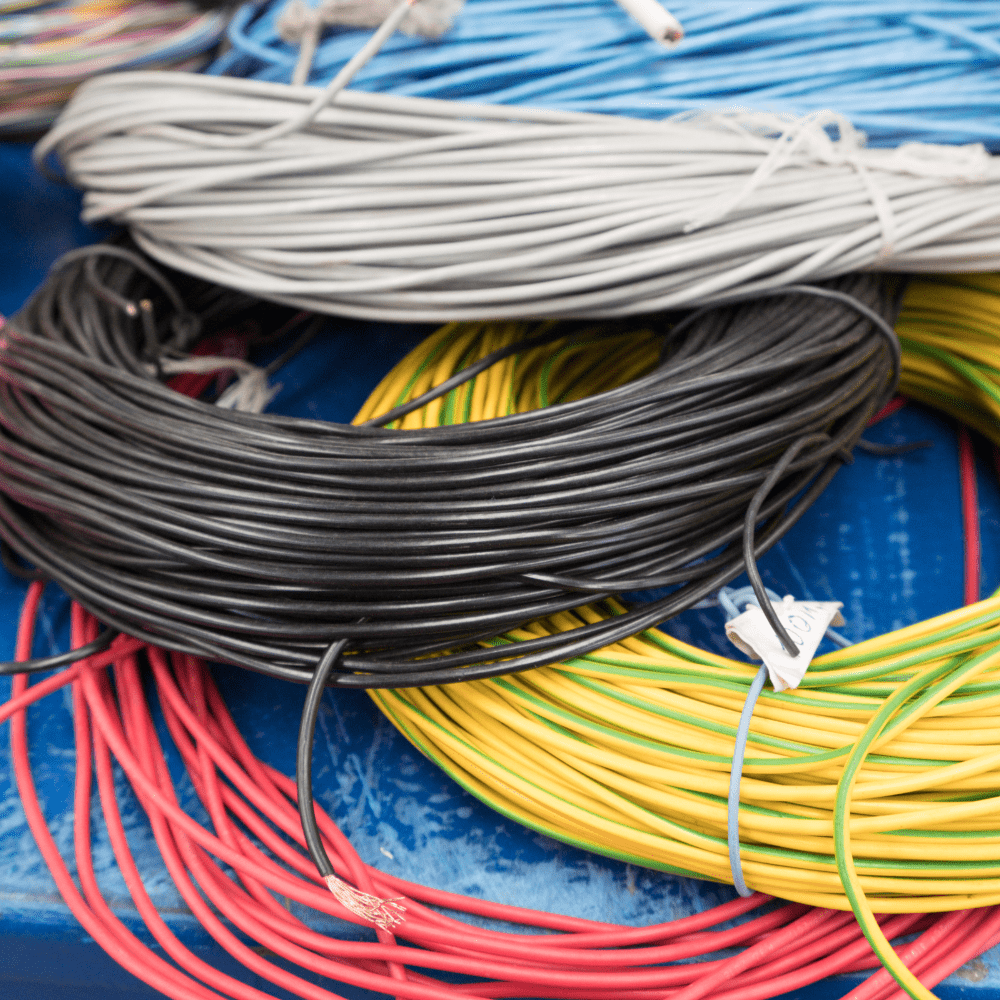
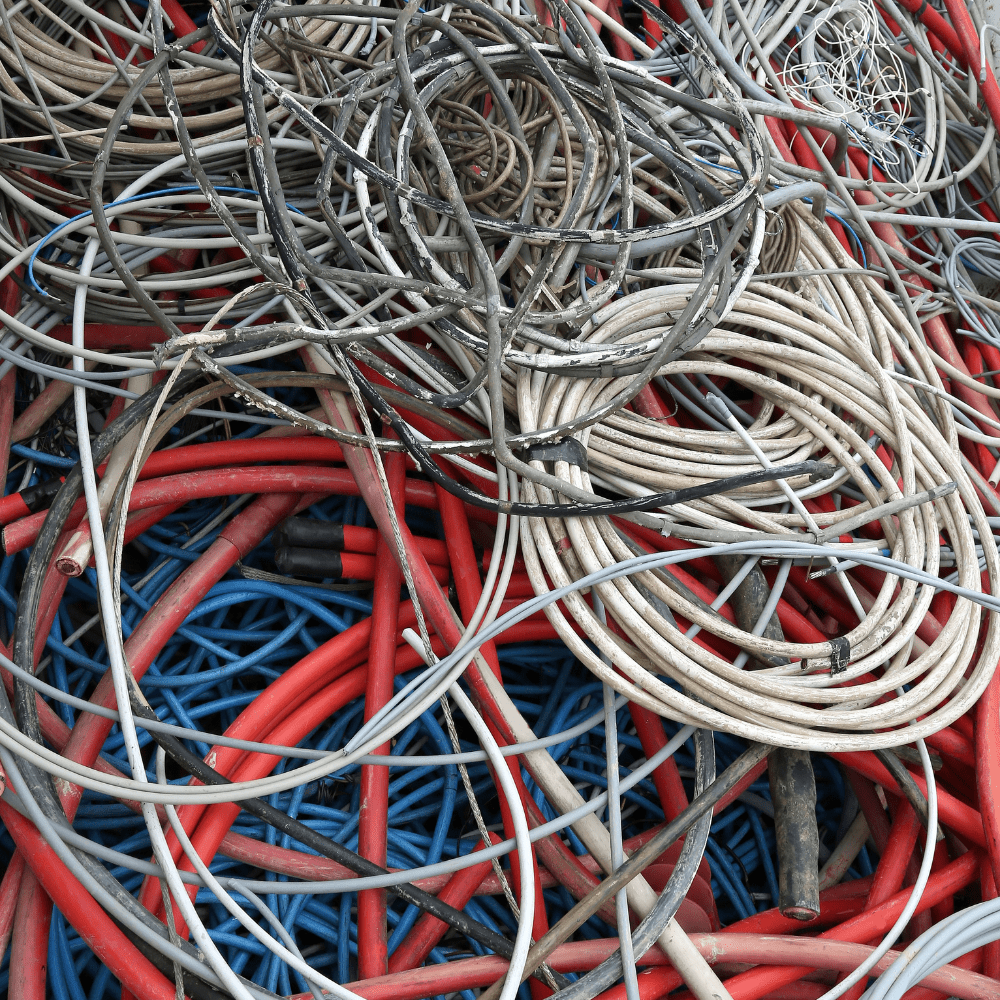
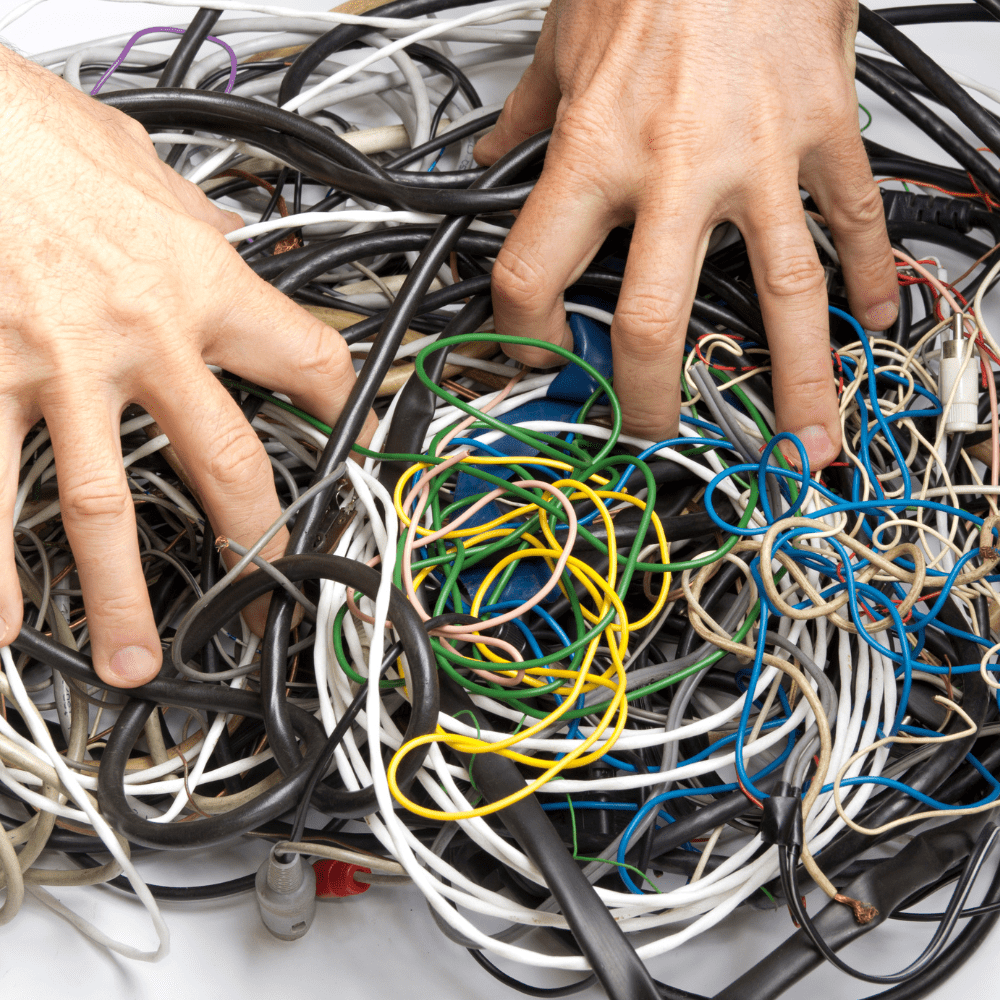
What Electrical Contractors Actually Deal With: Cable Waste From Multiple Jobs, Not One
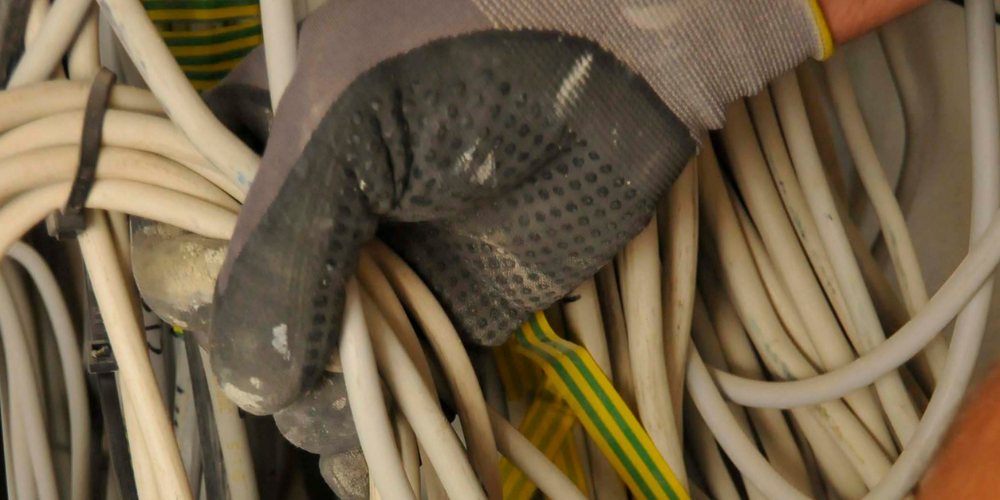
A domestic electrician doing a single rewire ends the job with a known quantity of offcut, and the existing guide on how electricians in Birmingham and Solihull can make more from cable offcuts is written for exactly that moment. An electrical contracting business running several jobs a month faces a different problem. A rewire leaves offcut flex and old lighting circuit cable. A new build first fix leaves reels of twin and earth with metres cut off at every socket and switch drop. A commercial fit-out produces lengths of armoured SWA cable from containment runs and sub-main feeds. Reactive maintenance and fault finding work leaves shorter, mixed offcuts that build up unpredictably rather than arriving in one clean batch.
None of this turns up as a single clearance. It accumulates steadily, job by job, week by week, across a fleet of vans and whatever corner of the yard is currently free. Multiply that pattern across four, six or ten live jobs running at once and the cable waste a contracting business is responsible for stops being a side issue and starts being a genuine logistics question: where does it sit until someone deals with it, who keeps track of what came from which job, and how often does someone actually need to arrange a collection. That is the real operational problem a growing electrical contracting business needs an answer to, and it is a different question to the one most cable recycling content is written to answer.
Why an Ad Hoc Scrap Cable Collection Falls Down for a Multi-Job Electrical Contractor
Calling round for a one-off scrap cable collection works fine for a single job. It falls down once a contracting business is running several jobs at a time, for three practical reasons.
- Van space. Offcuts and old cable sitting in a van or trailer between jobs take up room a contractor needs for tools, materials and the next job’s kit. A van that is half full of scrap cable is a van that has to make an extra trip, or that arrives at the next job short of space.
- Inconsistent documentation. Arranging a collection whenever it happens to be convenient, sometimes through one merchant and sometimes through whoever is nearest that week, means the paperwork trail looks different every time. That makes it harder to show a consistent pattern of proper handling across every job, not just the ones someone remembered to log properly.
- Time. Every ad hoc collection means a phone call, a wait for a slot, and someone on site free to hand cable over. Multiply that by however many times a month it happens across several jobs and it becomes real admin time that a standing arrangement removes.
None of these problems are really about the cable itself. They are about the absence of a standing relationship, which is exactly what an ongoing cable collection account is built to fix. It is also worth checking how to avoid scrap cable scams before choosing who to call round in the first place, since an ad hoc approach is also the pattern most exposed to an unfamiliar buyer turning up once and never being seen again.
How an Ongoing Cable Collection Account With Cable Wire Recycling Works
Cable Wire Recycling offers electrical contracting businesses a standing collection relationship built around the way multi-job contracting actually runs, not around a single clearance. In practice that means scheduled collection on a regular cycle for a contractor with a steady, predictable volume, collection on request when a van or yard corner fills up between scheduled visits, and larger one-off collections booked in for bigger contract clearances such as a commercial fit-out or a multi-plot new build strip out. All three sit under one relationship rather than three separate arrangements with three separate contacts, and every collection covers the same cable and wire specialism whether it is a single van-load of household flex or a bulk clearance of armoured SWA cable.
That consistency is the actual value on offer. A contractor does not need to re-explain what they do, renegotiate terms each time, or find a new merchant when the usual one is unavailable. Cable Wire Recycling is based in Birmingham and collects across the whole UK, with full UK wide coverage reaching well beyond the West Midlands, so the same standing arrangement works whether a contracting business runs jobs locally or takes on contracts further afield. Bulk cable collection is available as standard for the larger clearances a bigger contract inevitably produces, so a growing contracting business is never forced to outgrow the relationship it already trusts.
Setting one up starts with a conversation rather than a form. Contact the team through get a quote with a rough sense of job volume and collection frequency, and the collection pattern gets built around that, not the other way round.
Cable Wire Recycling vs an Ad Hoc Approach: Which Suits a Growing Electrical Contracting Business?
The choice between an ongoing account and calling round each time is not really about which recycler pays best for a given load. Both approaches can end with the same cable being recycled. The difference is in what the contracting business has to manage to get there.
| Factor | Ad hoc collection each time | Ongoing account with Cable Wire Recycling |
|---|---|---|
| Who arranges it | Someone on the team, every single time | Set up once, then runs on request or on a schedule |
| Van and yard space | Cable sits in vans or yard corners until someone deals with it | Cleared on a predictable cycle or on request |
| Documentation | Varies by whoever collected it that time | One consistent form of record across every job |
| Larger clearances | Often needs a separate arrangement or a different merchant | Covered under the same relationship through bulk collection |
| Coverage | Limited to whoever is willing to travel to that job | Birmingham based, collecting UK wide |
None of this requires a contracting business to change how it works on site. It only changes who they call and how often they have to think about it, and for a business running several jobs a month, that difference is worth more over a year than most contractors initially assume.
Household Flex, Armoured SWA and Offcuts: Why Cable Grading Matters for a Specialist
A general scrap metal yard, or a skip that simply takes whatever is thrown into it, treats cable as one undifferentiated stream. A cable and wire specialist does not, because the grade of copper recovered from different cable types varies significantly, and getting that grading right depends on actually knowing what is being handled. Household flex, twin and earth, armoured SWA cable and mixed offcuts from fault finding or maintenance work are not interchangeable, and an electrical contracting business’s monthly cable waste typically includes several of these types at once rather than just one.
This is where working with a business that recycles cable and wire only, rather than a generalist that also handles steel, aluminium and mixed metal scrap, makes a practical difference to a contracting business. Cable Wire Recycling grades armoured cable, household flex and offcuts correctly because that is the entire business, not a side line alongside other scrap streams. It has bought armoured cable from electrical contractors across Birmingham, Solihull and the West Midlands long enough to know the difference between a commercial SWA feed and a domestic sub-main at a glance.
For a contractor whose monthly waste is a genuine mix of grades, that specialism is not a nice to have. It is the difference between a recycler who sorts and grades accurately every time, and one who lumps everything together because cable is not really what they focus on.
Documentation Consistency: A Real Business Benefit of an Ongoing Cable Collection Account
Every business that produces waste in the course of its work, electrical contracting included, has a duty of care under section 34 of the Environmental Protection Act 1990 to make sure waste is transferred to someone authorised to take it, and to keep a record of that transfer. For a contractor running one job at a time, remembering to do that properly once is straightforward. For a contracting business running several jobs a month, doing it consistently across every single one is a different challenge, and it is exactly where an ad hoc approach tends to fall down.
An ongoing collection account with Cable Wire Recycling solves this by producing the same form of record every time, from the same recycler, regardless of which job the cable came from. That consistency matters for two audiences: the contractor’s own record keeping, since a uniform paper trail is far easier to file and retrieve than a stack of different receipts from different collections, and anyone checking that duty of care has genuinely been met across the business’s work, not just on the jobs someone happened to remember. Government guidance on how to classify different types of waste and understand the legal responsibilities involved sets out what a business is expected to know about the waste it produces, and a standing relationship with one recycler makes that expectation far easier to meet month after month than remembering to ask the right questions of a different buyer every time.
The official waste duty of care code of practice is explicit that this responsibility does not end once cable leaves the van. It continues through however many times a business transfers waste in a year, which is exactly the point at which an ad hoc pattern of collection turns from a minor inconvenience into a genuine gap in the record.
Environment Agency and Scrap Metal Dealers Act Registration: What Electrical Contractors Should Check
Any recycler a contracting business uses regularly, not just once, should be registered to handle the waste it is collecting. In practice that means checking two things: that the business is registered as a waste carrier, broker or dealer with the Environment Agency, and that it is registered under the Scrap Metal Dealers Act 2013, which governs who is legally allowed to buy scrap metal, cable included, in England and Wales.
This matters more for a standing arrangement than for a one-off collection, because a contracting business is trusting the same recycler with every job’s cable waste for as long as the account runs, not just a single transaction. Cable Wire Recycling holds both registrations, which is worth checking against whoever you currently use if you have not already. The fuller detail of what to look for, and what each registration actually covers, is worth its own read, particularly around what “licensed” actually means when a merchant claims it. The short version for a contractor setting up an ongoing account is simple: registration is not optional, and it is worth confirming before committing to a standing relationship, not after.
Scheduled Collection, On Request Collection or Bulk Cable Clearance: Choosing the Right Pattern
Not every electrical contracting business produces cable waste at the same rate, so an ongoing account is not a single fixed product. Three patterns cover most of what a contractor actually needs.
- A contractor running several small rewires and reactive jobs a month, with offcuts building up gradually, usually suits scheduled collection on a regular cycle, so cable never sits in the yard for more than a set number of weeks.
- A contractor with a less predictable mix of jobs, where volume depends on what comes in that month, often prefers collection on request, calling when a van or yard corner is genuinely full rather than sticking to a fixed date.
- A contractor taking on a commercial fit-out or a multi-plot new build, where a single project can produce far more armoured cable and offcut than the rest of the month’s work combined, needs a larger one-off clearance booked in as a bulk collection alongside whatever regular pattern already runs.
All three sit inside the same account with Cable Wire Recycling, which is the point. A contractor is not locked into one rigid pattern for the life of the relationship, and can move between scheduled, on request and bulk collection as the mix of jobs changes month to month, arranged through contact us or by simply asking about a change to an existing collection pattern already in place.
Which Electrical Contractors Benefit Most From an Ongoing Cable Collection Account?
Not every electrical business is the same size or shape, and the case for an ongoing account is stronger for some than others.
| Contractor type | Typical monthly cable pattern | Best collection pattern | Why an ongoing account fits |
|---|---|---|---|
| Domestic rewire specialist, small team | Offcut flex and old circuit cable from several rewires a month | Scheduled collection | Predictable volume, van space freed up on a set cycle |
| Commercial and industrial installer | Armoured SWA and containment offcut from fit-outs and sub-main work | Scheduled plus bulk for larger contracts | Handles steady offcut and occasional large clearances under one relationship |
| Maintenance and facilities contractor | Mixed, unpredictable offcut from reactive call-outs | On request collection | Volume varies week to week, so a fixed schedule wastes collections when quiet and falls short when busy |
| Multi-team contracting business across several sites | All of the above, at once, across different jobs | Combination of scheduled, on request and bulk | One relationship replaces several ad hoc arrangements across different teams and job types |
Whichever category a contracting business fits, the underlying case is the same. Cable Wire Recycling for electricians across Birmingham, Solihull and the West Midlands already covers the individual trade, and an ongoing account simply scales that same specialism up to however many jobs a growing contracting business is running at once.
When an Ongoing Cable Collection Account Isn’t the Right Fit
An ongoing collection account is built for a contracting business with a genuinely recurring pattern of cable waste across multiple jobs. It is not the right fit for everyone, and being upfront about that matters more than pretending it suits every electrician.
- A sole trader electrician doing one job at a time, with offcut from a single rewire or install, is far better served by the existing guide on how electricians can make more from cable offcuts, and by a single collection arranged when that job finishes, rather than a standing account for cable waste that might not recur for months.
- A contractor who only produces a genuinely small amount of offcut across the whole year, rather than something building up job by job, will not see much practical benefit from a scheduled or on request pattern over simply calling when it suits.
- A business whose cable waste is really occasional building work rather than an electrical trade at all, a single domestic renovation for example, is a one-off situation better served by a general guide for trades across Birmingham, Solihull and the West Midlands than by a standing account built for recurring volume.
If any of those describe your situation more closely than a business running several jobs a month, a standard one-off collection is the simpler and more sensible option, and Cable Wire Recycling still handles that exactly the same way.
Common Cable Waste Mistakes Multi-Job Electrical Contracting Businesses Make
- Letting offcut build up across several vans with no single point of collection, so cable ends up scattered across a fleet rather than sitting in one place a recycler can collect from efficiently.
- Mixing armoured SWA offcut in with household flex and general site rubbish, which makes accurate grading slower and harder than it needs to be when a collection finally happens.
- Treating documentation as optional on smaller jobs, keeping a proper transfer record for a big commercial clearance but not bothering for a small domestic rewire, leaving gaps in the record a business is supposed to hold for every job, not just the large ones.
- Switching between different buyers depending on who happens to be free that week, which is exactly the pattern that makes it hardest to spot scrap cable scams, since an unfamiliar buyer turning up once has far less accountability than a recycler a business deals with every month.
- Assuming a general skip or waste contractor is handling cable correctly, when a lot of general waste and skip services are not actually set up to grade or recycle cable properly at all. Cable that goes into a mixed skip load is cable that is not being recycled as cable.
Every one of these is avoidable simply by having one standing arrangement rather than several inconsistent ones, which is the practical argument for an ongoing cable collection account as much as any convenience benefit.
What Happens to Cable Value in an Ongoing Collection Relationship
An ongoing account does not mean giving up visibility of what cable is worth. Grading still happens the same way it would on a one-off collection, and value is still assessed on the same basis, by cable type and copper content, whether it is a single van-load or a bulk clearance from a larger contract. Current rates change with the market, so rather than quoting a figure here that would be out of date within weeks, the right place to check is the dedicated scrap cable prices page, which reflects current rates for the different cable grades a contracting business is likely to be collecting.
For a contracting business running an ongoing account, that page is worth checking periodically rather than once, since it applies to every collection under the relationship, not just the first one. The detail of how grading affects what different cable types are worth is set out in full on the scrap cable prices page rather than repeated here.
Why Cable Wire Recycling Is the Right Ongoing Partner for Electrical Contractors Across the UK
For a contracting business running several jobs a month, the case for choosing Cable Wire Recycling as a standing collection relationship comes down to four honest points, not a sales pitch. It is a specialist in cable and wire only, never general scrap metal, so grading of household flex, armoured SWA and mixed offcut is accurate every time rather than an afterthought. It is based in Birmingham and collects across the whole UK, so the same relationship works whether jobs stay local or a contract takes a team further afield. It offers bulk collection as standard, so a bigger commercial clearance never needs a separate arrangement with a separate merchant. And it is widely reviewed as five star on Google, a reputation built on collections that turn up when arranged and grade cable properly, which is exactly what a standing relationship depends on.
None of that requires a contracting business to change how it runs jobs day to day. It only requires setting the relationship up once, through get a quote, and letting an ongoing cable collection account do the rest across however many jobs the business is running this month, and the next.
Electrical Contractor Cable Recycling FAQ
Q1 What is an ongoing cable collection account with Cable Wire Recycling?
An ongoing cable collection account is a standing arrangement between an electrical contracting business and Cable Wire Recycling covering collection across multiple jobs, rather than a single one-off call. It can combine scheduled collection on a regular cycle, collection on request when a van or yard corner fills up, and larger bulk collections for bigger contract clearances, all under one relationship. It is set up once, through a conversation about typical job volume and collection frequency, rather than arranged fresh every time cable needs collecting.
Q2 How often can Cable Wire Recycling collect scrap cable from an electrical contractor?
There is no fixed frequency. Collection can be scheduled on a regular cycle for a contractor with predictable volume, arranged on request whenever a van or yard corner fills up, or booked as a larger one-off bulk collection for a bigger contract clearance. Many contracting businesses use a combination of all three across a year, adjusting as the mix of jobs changes.
Q3 Do electrical contractors need a separate collection for armoured cable and household flex?
No. Cable Wire Recycling grades household flex, armoured SWA cable and mixed offcuts correctly within the same collection, because cable and wire grading is the entire specialism, not a side line. A single collection can include several cable types from several different jobs at once, and each is graded on its own merits.
Q4 What records does Cable Wire Recycling provide for a contractor’s duty of care obligations?
Every collection under an ongoing account produces a consistent transfer record, the same form every time regardless of which job the cable came from. That consistency makes it easier for a contracting business to demonstrate duty of care under the Environmental Protection Act 1990 across all of its work, not just the jobs where someone remembered to keep the paperwork.
Q5 Is Cable Wire Recycling licensed to collect scrap cable from electrical contractors?
Yes. Cable Wire Recycling is registered as a waste carrier with the Environment Agency and registered under the Scrap Metal Dealers Act 2013, the two registrations any contracting business should check for before setting up a standing collection relationship with any recycler.
Q6 Can Cable Wire Recycling handle both small van loads and larger contract clearances?
Yes. The same ongoing account covers a small van-load of offcut between routine jobs and a much larger bulk collection from a commercial fit-out or new build clearance. A contracting business does not need a separate arrangement for bigger jobs, both sit under the same relationship.
Q7 Where does Cable Wire Recycling collect cable waste from electrical contractors?
Cable Wire Recycling is based in Birmingham and collects cable waste from electrical contractors across the whole UK, not only locally. A contracting business running jobs in different regions can use the same ongoing account rather than sourcing a different recycler for each area.
Q8 How much is my scrap cable worth as an electrical contractor?
Value depends on cable type and copper content, and current rates change with the market, so the accurate answer sits on the dedicated scrap cable prices page rather than as a fixed figure here. Checking it periodically is worth doing for any contracting business running an ongoing account, since it applies to every collection under the relationship.