

Cable Recycling for Schools, Colleges and Public Sector Estates: A Procurement and Duty of Care Guide
Redundant cable from a school, academy, college or council building rewire stays the legal responsibility of the school or public body even after a contractor removes it. Getting a written quote, checking registered waste carrier status, keeping a waste transfer note, and agreeing who keeps the recoverable copper value protects the site from duty of care breaches and stops that value quietly disappearing.



What Counts as Waste for School and Public Sector Cable Recycling
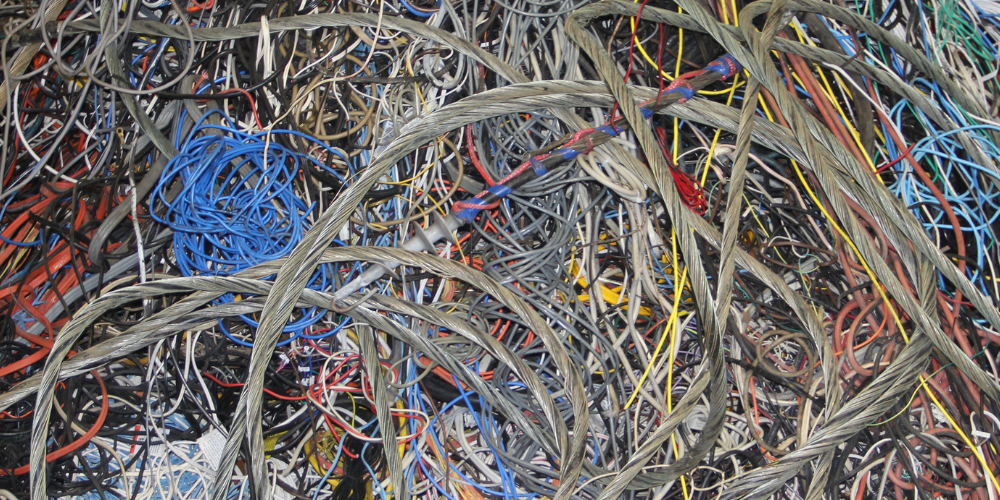
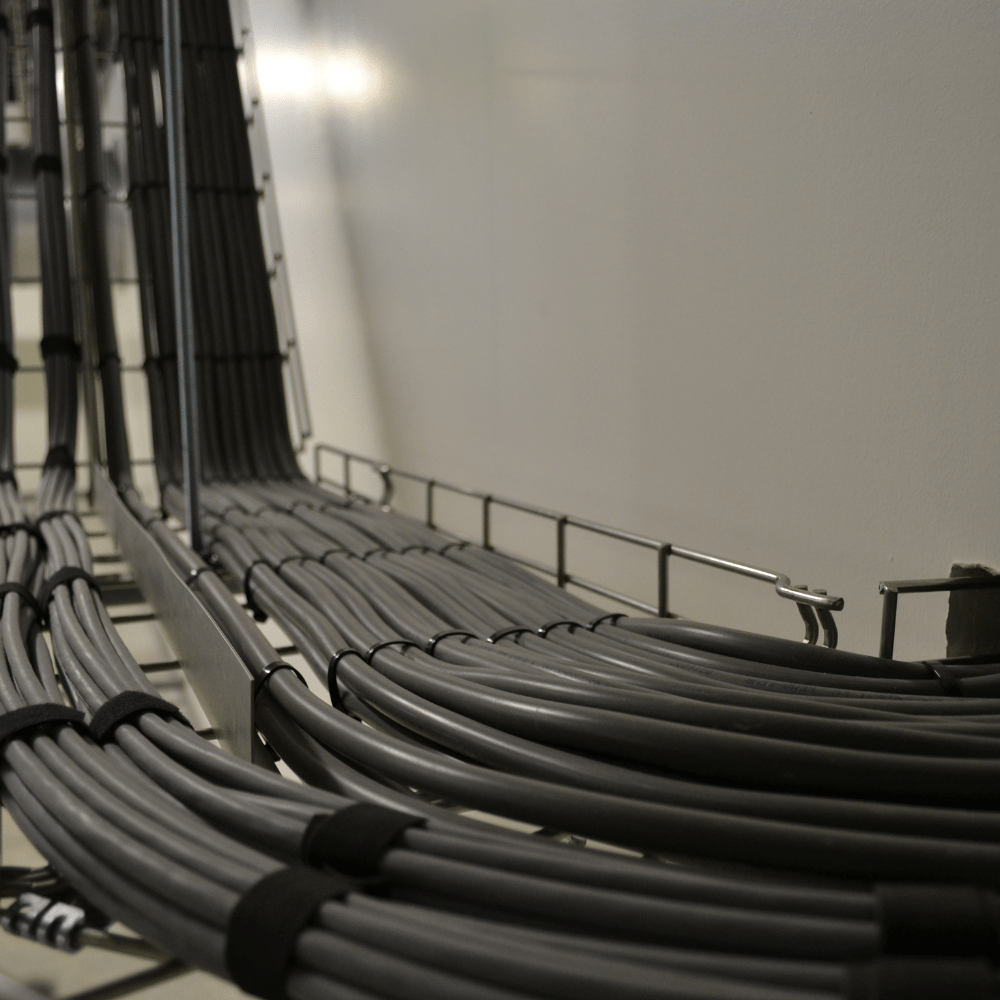
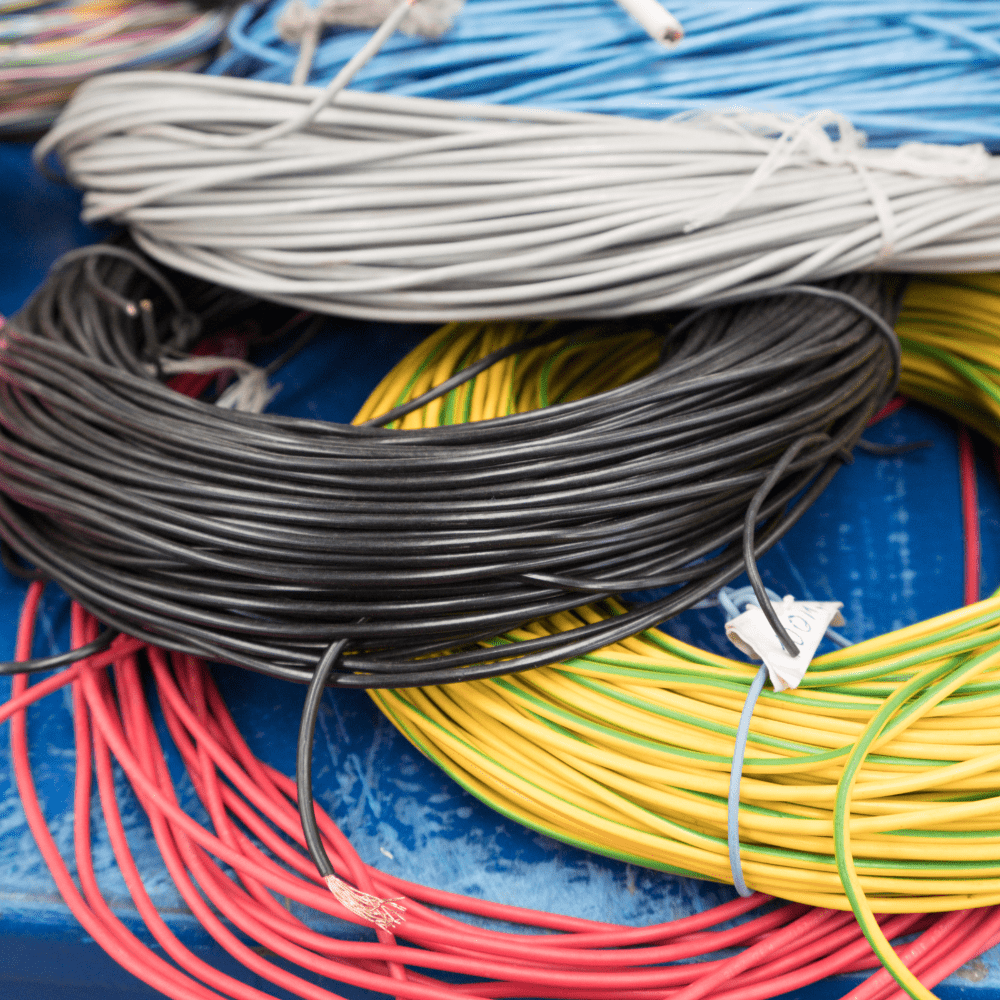
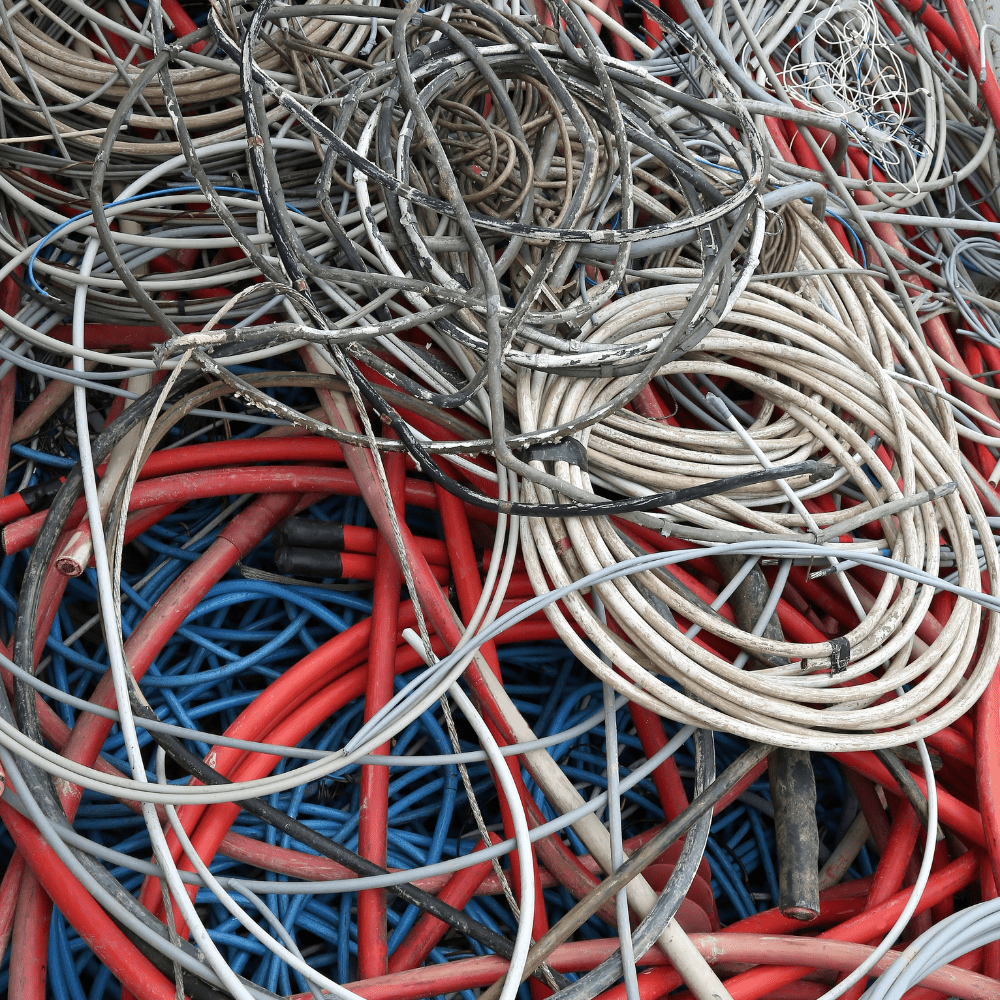
Every rewire, refurbishment or IT upgrade on a school, college or council site leaves cable behind, and most estates and facilities staff underestimate how much of it there is until a contractor starts stripping it out. The most common sources are classroom and corridor lighting circuits, socket ring circuits, kitchen and workshop power cable, and the low voltage cable that feeds fire alarm panels and detectors.
IT and network upgrades produce their own stream, usually old Cat5e or Cat6 data cable pulled out of ceiling voids and skirting trunking during a fibre or structured cabling refresh. External works add more again: floodlight and CCTV feeder cable around a playground or car park, and armoured SWA cable feeding outbuildings, plant rooms or a separate sports hall. A full rewire on an older secondary school or academy building often turns up old three-phase distribution cable as well, which is heavier and higher value than anything else on the list.
None of this is scrap metal in the general sense. Cable recycling services exist specifically because cable and wire need different handling from mixed metal, and a school or public body dealing with a specialist cable recycler rather than a general scrap merchant gets a cleaner audit trail and a fairer reflection of the copper content inside insulated cable, rather than a flat rate that ignores what the cable actually contains.
Cable Wire Recycling Limited collects across the whole of the UK, not only the Birmingham area where the business is based, which matters for academy trusts and local authorities managing sites spread across several towns or counties.
Why “The Electrician Took It Away” Fails Your Duty of Care Under the Environmental Protection Act 1990
The single most common assumption in school and public sector estates management is that once a contractor has removed old cable from site, it has stopped being the school’s problem. That assumption is wrong, and it is worth being precise about why.
Section 34 of the Environmental Protection Act 1990 places a duty of care on anyone who produces, holds, or transfers waste, and that duty does not end when the waste physically leaves the building. A school, academy trust or council is the waste producer the moment redundant cable comes out of the wall, and it remains responsible for confirming that whoever takes it away is authorised to do so and that it ends up somewhere legitimate. Handing cable to a contractor who is not a registered and licensed cable recycler, or simply trusting that “it will be sorted”, does not transfer that legal responsibility away from the site.
The DEFRA waste duty of care code of practice sets out what compliance actually looks like: checking the carrier is registered, describing the waste accurately, and keeping a waste transfer note as evidence. Breach of the duty carries an unlimited fine, and non-hazardous waste transfer notes must be retained for at least two years, which matters at audit time or if a governor or trustee later asks what happened to a batch of cable that came out during a summer works programme.
For an estates manager or business manager, the practical takeaway is simple. Before any contractor removes cable from a school or public building, ask for evidence of registered waste carrier status and confirm in writing that a waste transfer note will be issued. Neither request slows a job down, and both give the site something to point to if the question ever comes up later.
The Procurement Act 2023 and Public Sector Cable Recycling Contracts
The Procurement Act 2023 came into force on 24 February 2025 and reformed how public bodies buy goods and services, with transparency and value for money running through the new rules. It applies to the electrical and M&E contracts that schools, colleges and councils use for rewires, refurbishments and term maintenance, and it has a direct bearing on cable recycling even though most procurement guidance never mentions cable by name.
The relevant point is contract drafting. When a school or council commissions rewire or refurbishment works, the contract terms rarely say anything explicit about who keeps the value of the redundant cable that comes out of the building. Left unaddressed, that silence usually defaults to whoever physically removes the material, which in practice means the electrical contractor. Under a procurement regime built around transparency and demonstrable value for money, leaving a recoverable asset unaddressed in the contract terms is difficult to justify if it is ever scrutinised, whether by an internal auditor, a governing body, or a Find a Tender process.
The fix is straightforward and costs nothing to put in place. When specifying electrical works, whether a single classroom rewire or a multi-site term maintenance contract, the tender documents or contract terms should state explicitly whether the contractor keeps the value of redundant cable, whether it reverts to the school or trust, or whether it is split by agreement. Written into the contract at the outset, this is a clean commercial term. Left as an informal understanding on site, it becomes exactly the kind of undocumented arrangement that a value for money review flags as a gap.
Term maintenance contractors working across a portfolio of school or council sites have a particular interest in getting this right, since an ambiguous scrap clause repeated across dozens of contracts either quietly benefits the contractor at the public body’s expense or creates friction every time a site raises the question separately.
Academy Trust Handbook Rules on Disposing of Surplus Cable
Academy trusts sit under a specific financial framework, and the Academy Trust Handbook requires trusts to secure value for money and follow a proper competitive process when disposing of surplus assets. Redundant cable is rarely thought of as an asset in this context, but that is exactly what it is once you account for its copper content.
The handbook does not name cable specifically, because it is written at the level of general financial control rather than trade-specific detail. That is precisely why trust finance staff, business managers and estates teams need to translate the principle themselves. Old cable removed during a rewire, IT refresh or capital project has a real recoverable value once it reaches a specialist recycler, and treating it as worthless waste that a contractor takes away for free is difficult to square with a requirement to secure value for money on disposals.
In practice this means two things for a trust running any electrical or refurbishment works. First, redundant cable should be identified as a disposal item within the project, not folded silently into “waste removal” as a line the contractor absorbs. Second, getting more than one quote for the collection, or at minimum confirming the terms with the appointed collector in writing, gives the trust something to show if a governor, auditor or the Education and Skills Funding Agency ever asks how a disposal decision was reached. A trust running a multi-site capital programme, where several schools are rewired in sequence over one or two academic years, has even more reason to standardise this rather than let each site handle it differently.
What Redundant Cable Is Actually Worth in School Cable Recycling
Estates teams often assume redundant cable is worth too little to bother tracking, largely because nobody has worked out what a typical rewire actually produces. The numbers below are illustrative, based on standard published cable weights used across the industry as rough estimating guides, and are meant to show the scale involved rather than to price a specific job.
| Cable type | Typical use on a school or public sector site | Approx weight per metre | Approx copper content by weight | Illustrative copper content per 100m |
|---|---|---|---|---|
| 1.5mm² twin and earth | Classroom and corridor lighting circuits | around 60g | around 25 to 30 percent | around 15 to 18kg |
| 2.5mm² twin and earth | Classroom and office socket ring circuits | around 100g | around 30 to 35 percent | around 30 to 35kg |
| Small armoured (SWA) cable | Kitchen, workshop and external lighting feeds | around 450 to 550g | around 35 to 40 percent | around 157 to 220kg |
| Cat5e/Cat6 data cable | IT suite and network cabling refresh | around 35 to 40g | around 20 to 25 percent | around 7 to 10kg |
| Fire alarm cable (screened, 2 core) | Fire alarm system upgrades | around 45 to 55g | around 20 to 25 percent | around 9 to 13kg |
Applied to a real example, take a secondary school replacing lighting and power circuits across a single classroom block of twenty rooms over a summer shutdown. If each room needs roughly 80 metres of 1.5mm lighting cable and 60 metres of 2.5mm socket cable, that works out at 1,600 metres of lighting cable and 1,200 metres of socket cable across the block. At around 60g per metre, the lighting cable alone weighs in the region of 96kg. The socket cable, at around 100g per metre, adds a further 120kg. Combined, that single classroom block produces somewhere in the region of 216kg of redundant twin and earth cable, before any armoured feed cable, fire alarm cable or data cable from the same project is even counted.
Scale that up to a whole-school rewire covering twenty classrooms, a hall, kitchen and administrative offices, and it is easy to see how a project can produce several hundred kilograms to well over a tonne of redundant cable. That is not a trivial quantity to leave unaccounted for in a contract, which is exactly the point the Procurement Act 2023 and Academy Trust Handbook sections above are making from the procurement and financial governance side.
School and Public Sector Cable Recycling Suitability Matrix by Project Type
Not every job needs the same approach, and matching the collection method to the scale of the project avoids both under-resourcing a large job and over-complicating a small one.
| Project type | Cable types typically produced | Approximate scale | Right collection approach |
|---|---|---|---|
| Single classroom rewire | 1.5mm and 2.5mm twin and earth, occasional data cable | Under 100kg | Small collection booked against a written quote |
| Whole primary school rewire | Twin and earth, small SWA feeds, fire alarm cable | 300kg to around 1 tonne | Scheduled collection, often timed around a holiday shutdown |
| Secondary school or academy full rewire | Twin and earth, SWA, three-phase distribution cable, fire alarm cable | 1 to 5 tonnes | Bulk collection with a schedule agreed ahead of the works |
| College or FE IT and network refresh | Cat5e/Cat6 data cable, minor twin and earth, occasional fibre offcuts | Several hundred kilograms of data cable, variable | Timed to the IT department’s decommissioning plan |
| Local authority building refurbishment (library, leisure centre, depot) | Twin and earth, SWA, external lighting and CCTV feeder cable | 200kg to several tonnes depending on building size | Site-specific quote, single or phased collection |
| Multi-site academy trust capital programme | All of the above, repeated across several sites | Several tonnes across the whole programme | Coordinated bulk collection programme agreed at contract stage |
The pattern across every row is the same: the earlier the collection approach is agreed, the less disruption it causes once the electrical works are actually underway.
The Right Process for School and Public Sector Cable Recycling Collections
Getting this right does not require a complicated procedure, just a consistent one that any estates manager, business manager or term maintenance contractor can follow regardless of which school or building is involved.
Written Quotes for School and Public Sector Cable Recycling
Start with a written quote before any collection is arranged. This gives the school, trust or council a record of what was agreed for procurement files and audit purposes, and it removes any ambiguity about scope if the job turns out larger or smaller than expected once work is underway. Requesting a quote takes a few minutes and can be done as soon as the scope of an electrical works project is confirmed, well before any cable actually comes out of the wall.
Registered Waste Carrier Checks Before Cable Recycling Collection
Confirm registered waste carrier status before the collection date, not on the day. This is the step that satisfies the duty of care obligation described earlier, and it is worth building into the standard paperwork for any electrical works contract so it happens automatically rather than being remembered case by case.
Waste Transfer Notes for Public Sector Cable Recycling
Request a waste transfer note as standard practice, and file it centrally rather than leaving it with whichever member of staff happened to be on site that day. Given the two year retention requirement under the duty of care code of practice, a central filing system, even a simple shared folder organised by site and date, saves considerable time if a query comes up later.
Bulk Collection for Larger School and Public Sector Cable Recycling Loads
For a whole-school rewire, a multi-building refurbishment, or a capital programme running across several academy trust sites, bulk collection can be scheduled around the project timetable rather than treated as an afterthought. This matters particularly for term time works, where access to a site is often restricted to specific windows, and for summer holiday shutdowns, where several trades may be competing for the same access period.
Segments: Who Needs a School and Public Sector Cable Recycling Plan
Primary School Cable Recycling During Summer Rewires
Primary schools tend to run electrical works during the six week summer break, which concentrates a year’s worth of rewiring, lighting upgrades and minor refurbishment into a short window. That compression makes advance planning for cable recycling more valuable, not less, since a collection arranged in July avoids cable sitting in a skip or a corridor into the new term.
Secondary School and Academy Cable Recycling Programmes
Secondary schools and academies typically run larger, more complex rewires, often phased across departments or year group blocks to avoid closing the whole site. Cable volumes are correspondingly higher, and the case for agreeing scrap value terms within the contract, as covered under the Procurement Act 2023 section above, is strongest here.
College and Further Education Cable Recycling for IT Network Refresh Projects
Colleges and FE institutions generate a distinct waste stream centred on data cabling rather than power circuits, particularly during a move from copper Cat5e or Cat6 infrastructure to fibre. IT departments stripping out old network cabling ahead of a fibre upgrade should coordinate directly with the estates team, and our guide for IT managers on secure cable disposal covers the security considerations around data cabling that a straightforward power circuit rewire does not raise.
Local Authority Building Cable Recycling: Libraries, Leisure Centres and Depots
Council-run buildings cover a wide range of cable types depending on function: external lighting and CCTV feeder cable around a leisure centre car park, workshop circuits at a council depot, or general power and lighting circuits during a library refurbishment. The governing principle stays constant across all of them: the council is the waste producer, and duty of care and value for money obligations apply regardless of which department manages the individual site.
Term Maintenance Contractor Cable Recycling Across a Site Portfolio
Contractors holding a term maintenance contract across a portfolio of schools or council buildings are in an unusual position: they are the ones physically removing cable from dozens of sites, but the duty of care and procurement obligations sit with each individual site. Standardising the process, one collection partner, one quote format, one waste transfer note routine, across every site in the portfolio removes the inconsistency that otherwise builds up when each site handles disposal differently.
Real World Scenarios in Public Sector Cable Recycling
A primary school in a market town replaces its original 1980s lighting circuits across twelve classrooms and a hall during a six week summer shutdown, working with a local electrical contractor on a fixed price contract. Because the scrap value of the old lighting cable was never mentioned in the contract, the contractor removes it along with general site waste at no separate cost to the school and keeps whatever value it carries. A one line clause in the original contract specifying that the school retains, or shares, the cable value would have avoided this outcome entirely.
An academy trust running a three year capital programme rewires four of its eight schools in sequence, one per summer, using the same term contractor across the whole programme. By year two, the trust’s finance team has built a standard clause into every site’s works order confirming that cable removed during the rewire is collected separately and its value accounted for as part of the disposal record, satisfying the Academy Trust Handbook’s requirement to secure value for money on surplus asset disposals across the whole programme rather than site by site.
A college IT department strips out several kilometres of old Cat5e cabling across three buildings ahead of a fibre backbone upgrade, working over a half term break to avoid disrupting teaching. Because the cabling contains no personal data once wiped drives and switches are removed separately by the IT team, the physical cable itself is handled as a straightforward recycling collection, coordinated with facilities so the removal happens on the same access schedule as the fibre installation team.
A council leisure centre refurbishment involves stripping external floodlight feeder cable around an outdoor pitch alongside internal circuit upgrades in the changing rooms. The contract, procured under the Procurement Act 2023’s transparency requirements, specifies from the outset that the appointed contractor must use a registered cable recycler and provide waste transfer notes as a condition of final payment, closing off any ambiguity before the works even start.
Who School and Public Sector Cable Recycling Isn’t For
This guide is aimed at schools, colleges, academy trusts and councils generating cable waste through rewires, refurbishments and IT upgrades. It is not particularly relevant to a single domestic-scale job, such as a homeowner replacing a consumer unit and a few circuits, where the volumes and governance requirements described above simply do not apply in the same way.
It also carries less weight where a site already sits under an existing framework contractor with a clear, written scrap value clause already in place and properly documented. Even there, though, getting a second quote occasionally is still worth doing, since framework terms agreed several years ago do not always reflect current practice, and a competing quote is a useful data point for the next contract renewal regardless of whether it changes anything immediately.
Failure Modes in Public Sector Cable Recycling
The most common failure is informal removal with no paperwork: a contractor takes cable away as part of general site clearance, no waste transfer note is issued, and nobody at the school or council can later say with certainty what left the building or where it went. This is precisely the gap the duty of care code of practice is designed to close, and it is also a straightforward breach of the legal duty to classify waste correctly before it is transferred, since cable that is never separated out is never properly classified in the first place.
A closely related failure is treating cable as pure cost by sending it into a general skip alongside plasterboard, packaging and other genuine waste. Once mixed in with a general skip load, the copper value is effectively lost, and the site pays disposal costs on material that could otherwise have offset part of the project’s expense.
A third failure, less discussed but genuinely serious for schools in particular, is a safeguarding and site security issue: unvetted individuals turning up at a school claiming to be collecting scrap cable, without prior arrangement, DBS clearance, or any record of who they are. Any school allowing site access for a cable collection should treat it exactly like any other visitor or contractor access, with the collection pre-arranged, the individuals identified in advance, and normal site sign-in procedures followed without exception.
School and Public Sector Cable Recycling Compared with General Skip Disposal
Comparing a dedicated cable recycling collection against sending the same material into a general construction skip makes the difference concrete. A general skip charges by volume or weight for disposal regardless of what is inside it, treats cable the same as any other waste, and gives no separate record of what left the site as cable specifically. A dedicated collection, by contrast, separates cable out, provides a waste transfer note specific to that material, and reflects the recoverable copper content rather than charging a flat disposal rate on top of it.
The same distinction applies on construction and refurbishment sites generally, not only in the public sector: our construction site cable waste guide covers the equivalent process for private sector building projects, and the underlying principle, that separating cable out is worth more than sending it into general waste, holds regardless of which sector commissioned the works.
The Honest Verdict on School and Public Sector Cable Recycling
Cable recycling is not the biggest line item in any school rewire or council refurbishment budget, and nobody should treat it as such. What it is, though, is an area where a small amount of upfront planning, a written quote, a registered carrier check, a waste transfer note, and a clear contract clause on who keeps the value, closes a genuine legal and financial governance gap that most schools, trusts and councils currently leave open by default.
For a single small classroom job, the effort involved is minor and the paperwork is simple. For a whole-school rewire, an academy trust capital programme, or a term maintenance contract running across a large site portfolio, the same principles scale up into a real procurement decision worth documenting properly. Cable Wire Recycling Limited collects across the whole of the UK, works with schools, colleges, councils and the contractors who serve them, and can be reached through our contact page to discuss a specific project, however large or small.
Schools and Public Sector Cable Recycling FAQs
Q1 Who is responsible for cable recycling waste from a school or public sector site?
The school, academy trust or council remains legally responsible as the waste producer under the Environmental Protection Act 1990, even when a contractor physically removes the cable. This duty of care does not transfer simply because someone else takes the material away. The producer must check the collector is a registered waste carrier and keep a waste transfer note as evidence the waste was handled correctly.
Q2 Does a school need to check a contractor’s registered waste carrier status before a cable recycling collection?
Yes. Anyone collecting or transporting waste cable professionally should hold registered waste carrier status. Checking this before a job starts, and keeping a copy on file, is part of meeting the duty of care code of practice and protects the school if the material is later found to have been handled incorrectly.
Q3 What is a waste transfer note and how long must a school keep one for cable recycling?
A waste transfer note confirms what waste was transferred, from whom, to whom, and when the transfer took place. Non-hazardous waste transfer notes must be kept for at least two years and produced if requested by an auditor, governor or regulator, so filing them centrally by site and date is worth building into standard practice.
Q4 How does the Procurement Act 2023 affect cable recycling contracts for schools and public buildings?
The Procurement Act 2023, in force since 24 February 2025, reformed public procurement around transparency and value for money duties. For cable recycling, that means who keeps the recoverable value of scrap cable within an electrical works contract should be specified openly in the contract terms, rather than left as an informal arrangement decided on site once the work begins.
Q5 Can an academy trust let a contractor keep cable recycling value for free?
A trust can agree to this, but the Academy Trust Handbook requires trusts to secure value for money and follow a proper competitive process when disposing of surplus assets. Allowing a contractor to remove valuable copper cable without considering its worth is difficult to reconcile with that requirement once it is properly examined.
Q6 What types of cable does school and public sector cable recycling typically cover?
Common sources include classroom and corridor lighting circuits, socket ring circuits, kitchen and workshop power cable, old Cat5e or Cat6 data cabling from IT suite refreshes, fire alarm cable replaced during upgrades, external lighting and CCTV feeder cable, and three-phase distribution cable removed during a full rewire.
Q7 How does bulk cable recycling collection work for a whole school or academy trust rewire?
For larger volumes, collection is scheduled around the project timetable, including holiday shutdowns or phased works across a multi-site academy trust programme, with the timing agreed in advance to fit around term dates and site access restrictions rather than arranged at short notice once works are already underway.
Q8 What happens if school cable recycling waste is put into a general skip instead?
Cable mixed into a general skip is normally treated as pure disposal cost rather than a recoverable asset, and its copper value is effectively lost. It also makes it harder to demonstrate that waste was correctly classified and handled, which is a legal requirement whenever waste is transferred off a site.
Q9 Do local authority buildings such as libraries and leisure centres need a different cable recycling process from schools?
The core principles stay the same: the council remains the waste producer, duty of care still applies, and value for money rules govern public spending decisions. The scale and cable types vary by building, from external feeder cable at a leisure centre to distribution cable at a depot, but checking carrier status and keeping a waste transfer note does not change.
Q10 Is a written quote required before a school or public sector cable recycling collection?
A written quote is standard practice and gives the school, trust or council a clear record of what was agreed, useful for procurement files and audit trails alike. Requesting one before work starts avoids disputes about scope, volume or value once the collection has already taken place.