
Why Event, Exhibition and Production Companies Choose Cable Wire Recycling Limited
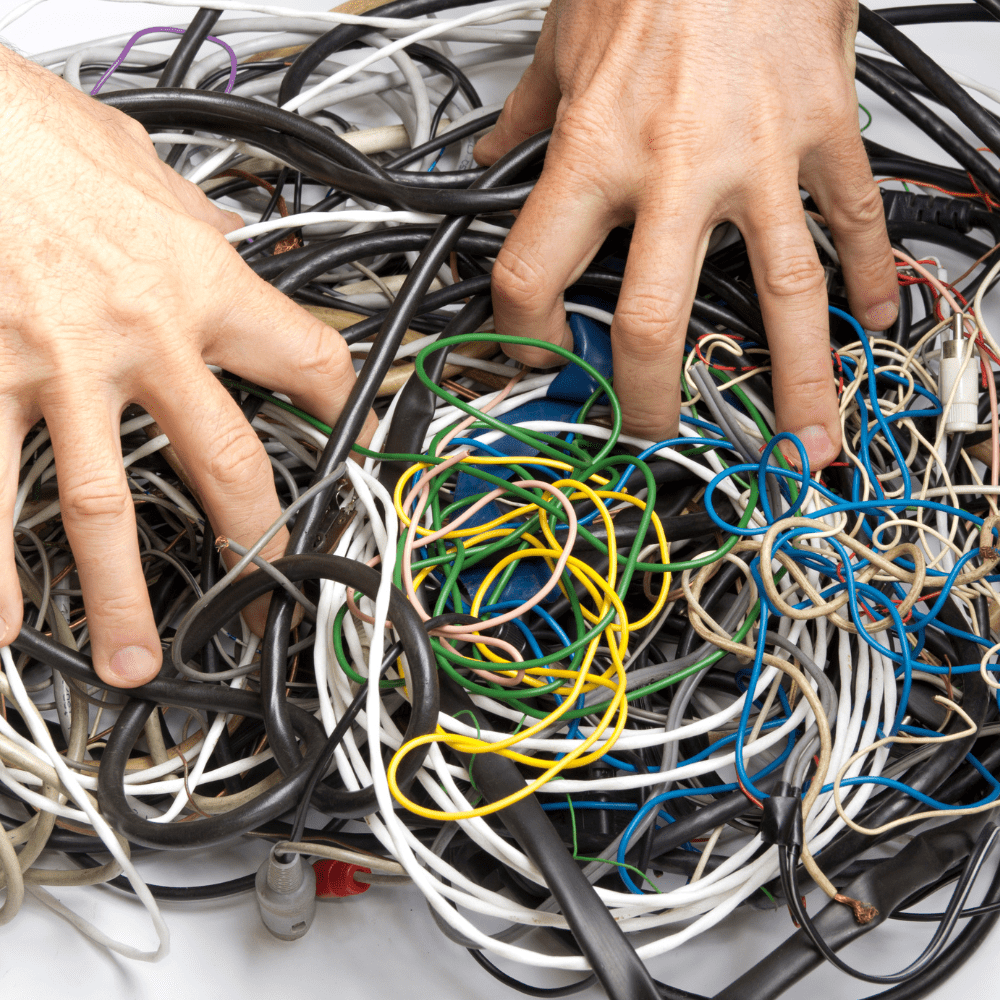
Why Event and Production Companies Need a Dedicated Cable Recycling Partner
Most cable recycling content is written for electricians rewiring a house or a contractor stripping out an office. None of it is written for the person stood in a muddy field at 2am coiling festoon cable off a de-rigged stage, or the exhibition stand manager staring at a skip of data and power leads after a three day build came down in four hours. That is the gap this page is written to close.
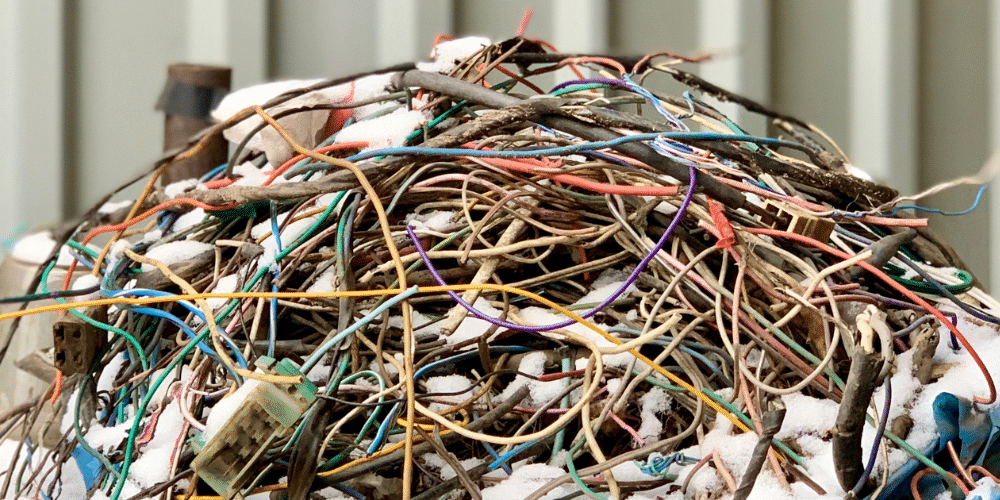
Event, exhibition and touring production cable does not behave like static building cable. It gets trodden on by forklifts, dragged across car parks, left out in rain, cut to length on site because nobody had the right drum length, and coiled and uncoiled hundreds of times across a season. By the time it reaches end of life it is often damaged well before the copper inside it has stopped being worth recovering. Cable Wire Recycling Limited collects exactly this kind of cable, in exactly this kind of condition, from production companies, touring crews, festival organisers and exhibition stand builders across the UK.
If your business produces festoon cable, feeder cable, stage power cable or touring multicore that needs clearing after a show, this is the page that explains why we are set up for that stream specifically, not as an afterthought to a general recycling service. You can see our wider cable recycling services for the full picture of what we take, but the rest of this page is written for your sector.
The Cable Waste Stream Live Events and Touring Productions Actually Produce
A single touring production or festival season can generate a surprising amount of cable waste, and it rarely arrives as one tidy type. Over a season you might be clearing out:
- Festoon cable strings, often with broken lamp holders or split outer sheathing from repeated coiling
- 16A and 32A feeder cable and extension runs used to get generator power to stage and backstage areas
- Multicore cable carrying lighting and sound control signals between a desk and the rig
- Stage power distribution cable and tails that have been cut, re-terminated or shortened on site more than once
- Data and network cable from temporary production offices, box offices and ticketing points
- Armoured cable (SWA) runs used for more permanent generator-to-distribution feeds on longer residencies or fixed venues
Each of these is a genuine recycling opportunity because almost all of it contains copper, which is the material we are actually after. We do not sort by cable brand or by which show it came from. We sort by what the cable is made of, and copper bearing cable of any of the above types is welcome. If you are unsure whether a particular run counts, our guide to scrap cable grades explained is a useful reference before you call.
Why Festoon and Stage Cable Wears Out Faster Than Building Cable
This is the part most general recycling advice misses entirely. Cable in a building is installed once and generally left alone for years. Cable on a stage, in an exhibition hall or on a festival site is rigged and de-rigged, sometimes several times a week on a busy touring schedule, and that handling is what shortens its working life.
HSE’s own guidance on electrical safety at events flags exactly this pattern: festoon, stage feeder and generator cable takes heavy wear from repeated rig and derig, from being trodden on in cable runs across walkways, from weather exposure on outdoor sites, and from rough handling during transit between venues. That is a safety document first and foremost, written to keep crews and audiences safe, but it also explains precisely why this category of cable gets retired faster than the cable in a typical office or home. It fails for reasons that have nothing to do with age and everything to do with the working life of a touring production.
That distinction matters because it means your retired cable is often younger and in some cases higher grade than cable coming out of a general household or office clearance, even though it looks worse on the outside because of cuts, crush damage or mud. We assess cable on what it actually contains, not on how tidy it looks when it comes off the back of a truck.
Cable Recycling for Event and Production Companies: What We Collect
To make this straightforward, here is a quick reference for the cable types we see most often from this sector and how we treat them.
| Cable type | Typical source | Recyclable with us |
|---|---|---|
| Festoon cable and lamp strings | Stage dressing, outdoor event lighting | Yes, copper content recovered regardless of outer condition |
| 16A/32A feeder and extension cable | Generator to distribution, backstage power | Yes, a core part of this stream |
| Stage power and distribution tails | Main rig power runs | Yes |
| Multicore control and signal cable | Lighting and sound desks | Yes, where copper bearing |
| Armoured (SWA) cable | Fixed or semi-permanent generator feeds | Yes, a high grade material for us |
| Data and network cable | Temporary production offices, box office | Yes |
| Non-cable metal (truss, rigging hardware) | Stage build | No, we handle cable and wire only |
That last row matters. We are a cable and wire recycler, not a general metal merchant, which means we do not take truss, rigging clamps, generic scrap steel or aluminium staging. If your clear out includes non-cable metal alongside cable, we can still take the cable and wire portion. Our get a quote page is the quickest way to describe a mixed load and have us confirm what we can collect.
Touring Production Cable Waste: Collection That Fits Around Your Tour Calendar
Touring companies tend to accumulate damaged cable across a whole season rather than dealing with it venue by venue. A festoon string that split in week three of a tour does not get disposed of there and then. It gets coiled, bagged, thrown in a flight case or a dead stock unit, and carried to the next date, and the next, until someone finally has time to deal with it. By the end of a season that can add up to a genuinely large volume of festoon, feeder and stage cable sitting in storage, taking up space that is usually needed for live equipment instead.
We understand this pattern and we work around it rather than expecting you to change it. Collection does not need to happen mid-tour. It can be booked for the gap between legs, at the end of a season, or whenever your production calendar has a quiet window. You tell us roughly what you have and where it is, and we fit a collection around a date that suits your schedule rather than ours. For larger seasonal clear outs this usually falls under bulk cable collection, which is built for exactly this kind of accumulated load rather than a single small bag of offcuts.
Because we collect across the whole of the UK and are based in Birmingham, a touring schedule that moves between venues in different regions does not need a different recycler at each stop. One point of contact can cover a tour that passes through several counties, which is simpler for whoever in your production office is responsible for waste arrangements. Our coverage page sets out the areas we collect from in more detail.
Exhibition and Stand Build Cable Waste: Smaller, More Frequent Batches
Exhibition and conference production work looks different from touring work, but it produces the same underlying material. A stand build and strike cycle, repeated across a busy exhibition calendar, generates power cable, data cable and lighting cable from fit-outs that are torn down within days of going up. Cable gets cut to fit a specific stand geometry, used once, and then becomes an offcut because it is the wrong length for the next build. Multiply that across a season of shows and the volume of redundant cable from exhibition work can rival anything a touring production generates, just in smaller, more frequent batches rather than one seasonal clear out.
This ties closely into work we already do for commercial fit-outs more generally. If your exhibition work sits alongside office or retail fit-out projects, our guide to Cat A and Cat B fit-out cable recycling covers the same underlying principle of recovering copper bearing cable from a strip-out rather than sending it to general waste, and our page on recycling cable waste after an office or shop refurbishment is relevant if your production company also handles venue fit-out work between shows.
For exhibition and conference producers, the practical benefit is being able to batch smaller amounts of cable waste together rather than disposing of a handful of offcuts after every single show. Collections can be scheduled around a run of events rather than booked separately each time, which keeps the admin side of waste disposal manageable even when your build schedule is busy.
Bulk Cable Collection for Festival, Touring and Large Production Loads
When a festival wraps, or a touring production reaches the end of a season, the amount of cable waiting for collection can be substantial. Pallets of festoon cable, drums of feeder cable, coils of multicore and offcuts of distribution tails can build up quickly across a multi-stage site or a season of venues. This is where bulk collection becomes the sensible route rather than trying to dispose of material piecemeal.
We offer bulk cable collection specifically because we deal with businesses that generate large, irregular volumes rather than a steady weekly trickle, which describes most event and production businesses well. A festival site clear out, a warehouse of dead stock cable from several seasons, or a touring company closing out a year all fit this pattern. The same thinking applies to venues or production companies running their own fixed build space, similar to a factory or warehouse clearance, where our factory clearance and cable recycling service covers the same kind of one-off large volume collection.
Bulk collection means fewer individual arrangements to manage, one collection covering a whole season’s worth of damaged and retired cable, and no need to keep accumulating material in storage simply because a small skip collection does not make sense for the volume involved.
Temporary Power Cable Recycling and Your Waste Duty of Care
Production companies and event organisers have the same legal duty of care obligations as any other business when cable waste leaves their premises or site, even when that waste has been generated on a temporary basis at a venue you do not own. Cable counts as waste once you intend to discard it, and how it is handled from that point needs to be documented correctly.
The government’s own waste duty of care code of practice sets out what is expected when waste, including cable waste, is transferred from one business to another, including keeping a record of what was transferred, to whom, and when. For production companies working across multiple sites and venues, this matters more than it might for a business operating from one fixed address, simply because there are more handovers to document across a touring year.
It is also worth being clear on how damaged stage and festoon cable should actually be classified as a waste stream, which the government’s guidance on classifying different types of waste covers. Correct classification protects you if a transfer is ever queried later, and it is a simple thing to get right from the outset rather than retrofit. When you book a collection with us, we can talk through what documentation you need for your own records as part of arranging the job, which you can start through our contact us page.
Grading Your Production Cable: Why High Grade Cable Matters
Not all cable is treated the same way once it reaches us, and this is where it pays to understand roughly what you are holding before a collection. Armoured cable, high copper content feeder cable and certain multicore types sit in a higher grade bracket than, for instance, lightweight festoon flex, because of the proportion and purity of copper inside them relative to their overall weight.
Our guide to scrap cable grades explained breaks this down in plain terms, and our page on high grade cable and getting the best return is worth a read if you suspect a significant portion of your touring stock, such as armoured feeder runs, falls into this category. We never discuss specific figures on this page because rates move with the copper market, but our scrap cable prices page is kept current and is the right place to check before a collection, particularly for a larger touring or festival clear out where grading accuracy genuinely affects the outcome.
Being upfront about grading matters to us because production companies often have no existing relationship with a cable recycler and no easy way to judge whether they are being treated fairly on a mixed load of festoon, feeder and armoured cable. Our approach is to assess what is actually in front of us rather than apply a single blanket rate to everything that arrives, whatever its original use.
What Happens to Your Retired Stage and Generator Cable After We Collect It
Once your festoon, feeder or stage power cable leaves your site with us, it goes through a proper recovery process rather than simply being binned or landfilled. The outer insulation is separated from the copper core, and the recovered copper is sent on into the metal recycling supply chain rather than being wasted. Our page on what happens to cable after recycling walks through this process in more detail if you want to understand or explain to your own clients where the material actually ends up.
This matters increasingly for event and production companies themselves, many of which are now asked by venues, festivals or corporate clients to demonstrate what happens to production waste rather than simply confirming it was removed. Being able to point to a proper recycling process, rather than a vague answer about a skip being taken away, is a small but genuine point of credibility when a venue or client asks about your environmental practices. Our page on the environmental impact of cable recycling sets out why recovering copper properly rather than sending cable to landfill matters beyond the immediate transaction.
Storage, Security and Simpler Recycling Compliance Between Tours
Copper bearing cable has genuine value as a raw material, which means stored cable, whether in a touring company’s warehouse, a dead stock container, or a production office store cupboard, is worth keeping secure between collections. We have written specifically about this in our guide to protecting cable and copper stock from theft, which is worth reading if your business keeps retired or spare cable on site for any length of time between tours or events, as many production companies do.
There is also a compliance angle worth knowing about if your business operates from fixed premises such as a production office, warehouse or workshop alongside touring and event work. England’s Simpler Recycling workplace recycling rules set out duties for how workplaces separate and manage recyclable waste streams, and cable stored at a fixed base between tours falls within the kind of material these rules are concerned with. Keeping retired cable properly separated and scheduling it for collection rather than letting it sit indefinitely in a corner of a warehouse is both good practice and the simpler option when it does eventually need clearing.
How to Avoid Scrap Cable Scams When Clearing Production Cable
Production companies clearing a genuinely large volume of festoon, feeder or stage cable after a season can attract attention from operators who are less careful about how they handle collections, documentation or weighing. Because this sector often does not have an existing relationship with a cable recycler, it is worth knowing what to look out for before agreeing to any collection, particularly for a first-time large clear out.
Our guide on how to avoid scrap cable scams covers the practical warning signs, from vague or missing paperwork to collectors who will not confirm their registration details. A properly registered waste carrier should be able to provide this without hesitation, and a reputable recycler will document a collection rather than simply turning up, loading a van and leaving. If anything about a quote or a collection feels rushed or unclear, that is worth treating as a reason to ask more questions rather than less.
Coverage: Collecting Event, Exhibition and Touring Cable Across the UK
We are based at Fort Parkway in Birmingham, but event, exhibition and touring production work rarely stays in one place, which is why our collection service covers the whole of the UK rather than being limited to the Midlands. A touring production that starts in Birmingham and finishes in Scotland, or a festival site in the South West, does not need to find a separate recycler at each stage.
Our coverage page sets out the detail of where we collect from, and for production and events businesses based closer to Birmingham, Solihull and the wider West Midlands, our page on cable and wire recycling services across the West Midlands is a useful reference for what a more local, regular arrangement can look like, which can suit an exhibition company doing frequent stand builds at venues around the region.
A Wrap Out Checklist for Event and Production Cable Recycling
A show wrap or a tour close out is a busy time, so it helps to have a simple checklist for dealing with cable waste rather than treating it as an afterthought once everything else has been packed away.
| Step | What to do |
|---|---|
| Separate cable from other waste | Keep festoon, feeder, multicore and stage cable apart from truss, rigging hardware and general site waste |
| Keep it dry where possible | Damaged cable left in standing water or mud for long periods is harder to handle safely at collection |
| Bag or coil loosely | Loose coils and bagged offcuts are easier and quicker to load than tangled piles |
| Note roughly what you have | A rough estimate of type and volume helps us quote accurately when you get in touch |
| Flag any mixed metal | Tell us if truss or rigging hardware is mixed in, since we collect cable and wire only |
| Book around your calendar | Collections can be arranged for gaps between tours or after a show run, not only immediately after an event |
| Keep any transfer paperwork | Retain collection documentation for your own waste duty of care records |
How to Book a Cable Collection With Cable Wire Recycling Limited
Booking a collection is straightforward and does not require you to already know exactly what grade of cable you are holding. Tell us roughly what you have, whether that is a single van load of festoon cable after one show or a season’s worth of feeder and armoured cable from a touring schedule, and we will confirm what we can collect and when.
The quickest way to start is through our get a quote page, where you can describe your load and preferred timing. If you would rather speak to someone directly, our contact us page has our phone number and email address, and we are happy to talk through timing around a touring calendar, a festival wrap or an exhibition season before anything is booked in. We are based at Fort Parkway, Birmingham, B24 8DW, reachable on 0121 328 9858 or 07815 005 350, or by email at info@cablewirerecycling.co.uk.
Event and Production Cable Recycling FAQ
Q: Do you collect festoon cable and stage lighting cable for recycling?
Yes. Festoon cable and stage lighting cable are a core part of the cable waste stream we see from event and production companies, and we collect it whatever condition it is in, including split outer sheathing or broken lamp holders, because our interest is in the copper content rather than the cable’s appearance.
Q: Can you collect damaged generator feeder cable after a festival or tour?
Yes. 16A and 32A feeder cable used to run generator power to stage and backstage areas is one of the most common materials we collect from this sector, and we can arrange collection as a single job covering a whole festival or tour’s accumulated feeder cable.
Q: Do we need to dispose of cable immediately after every show, or can collections wait?
Collections do not need to happen immediately after every event. Many touring and festival clients store damaged cable between dates and arrange a single collection covering a whole season or tour. We work around your calendar rather than expecting disposal to happen the same week as a show.
Q: What types of event and production cable do you accept?
We accept festoon cable, stage power and distribution cable, 16A/32A feeder cable, multicore control and signal cable, armoured (SWA) cable and data or network cable from temporary production offices, provided it contains copper. We do not take non-cable metal such as truss or rigging hardware, since we are a cable and wire recycler only.
Q: Is bulk collection available for a large touring or festival clear out?
Yes. Bulk collection is available and is the usual route for a season end clear out, a festival site wrap, or a touring company closing out a year of accumulated festoon, feeder and multicore cable. You can read more on our bulk cable collection pages or get in touch directly to discuss volume and timing.
Q: How do we know we are getting fair treatment for high grade production cable such as armoured feeder cable?
We grade cable based on its actual copper content rather than applying a single rate to everything, and armoured and higher copper content cable is treated accordingly. Our scrap cable grades guide explains how this works, and our scrap cable prices page is kept current for reference before a larger collection.
Q: Do you collect from exhibition and conference venues as well as touring productions?
Yes. Exhibition and conference stand build and strike cycles produce their own steady stream of redundant power, data and lighting cable, and we collect this in the same way as touring production cable, whether as a one-off after a single show or as a recurring arrangement across a busy exhibition calendar.
Q: How do we arrange documentation for our waste duty of care records?
We can discuss what documentation you need as part of booking a collection, and this is worth raising when you first get in touch, particularly if your production company operates across multiple venues or sites during a tour or event season.
Cable Wire Recycling Limited · Fort Parkway, Birmingham, B24 8DW
Phone: 0121 328 9858 or 07815 005 350 · Email: info@cablewirerecycling.co.uk