


How Scrap Cable Prices Are Calculated: The Full Breakdown
Scrap cable prices are set by three things multiplied together: the world copper price (set daily on the London Metal Exchange), the grade of your specific cable (which determines what percentage of it is recoverable copper), and the yard’s processing discount, which covers stripping, granulating and transport. This is why identical-looking cable from two different sellers can be priced differently, and why prices move week to week.
Key takeaways
- LME copper spot price moved from roughly $13,090 to $13,298 per tonne in the first two weeks of July 2026 alone, a swing that flows directly into UK scrap cable prices within days.
- UK scrap yards typically buy at 20 to 50% below LME spot price, covering grading, stripping, granulation, transport and margin.
- A cable’s copper recovery percentage (25% for low grade armoured up to 99%+ for dry bright wire) matters more to your final price than the headline copper price does.
- Converting LME’s $/tonne quote into a realistic £/kg cable price takes three separate steps, not one.
- No legitimate dealer can promise a fixed price for the week over the phone, because the underlying copper price can move within a single trading day.


What Actually Sets the Price of Scrap Cable?
Every scrap cable price you see traces back to one global number: the price of copper on the London Metal Exchange (LME). The LME is where refined copper is bought and sold in bulk, in 25-tonne lots, and its daily settlement price is the reference point the entire scrap metal industry in the UK works from.
From that single global number, three things happen before you get a price per kg for your specific cable. The LME’s $/tonne figure is converted to a £/kg figure. A yard discount is applied to account for the cost of processing, grading and handling. Your cable’s specific grade and recovery percentage is applied on top of that discounted rate. Skip any one of these three steps and the number you land on will be wrong, sometimes wildly so.
Step One: How the LME Copper Price Becomes a £/Kg Figure
The LME quotes copper in US dollars per metric tonne (1,000kg), traded in 25-tonne contract lots. As of early July 2026, LME copper cash settlement was trading in the region of $13,090 to $13,298 per tonne, according to Westmetall’s published LME series, though this moves regularly and you should always check a live source for today’s figure rather than rely on a snapshot from this article.
To turn that into something useful for a UK cable seller, two conversions are needed.
Convert dollars to pounds
The dollar per tonne figure is converted to sterling using the current GBP/USD exchange rate. Because that rate itself moves daily, the sterling value of copper shifts even on a day when the dollar price has not changed at all.
Convert tonnes to kilograms
Divide the sterling per tonne figure by 1,000 to reach a per kg figure for pure refined copper. This is the theoretical maximum, before any yard discount or grading is applied, not what you get paid.
That per kg figure is a ceiling, not a quote. It is what pure, refined, 100% copper is worth on the world market that day, with zero processing costs deducted and before your cable’s actual copper content is factored in at all. This article will not attach a specific number to that ceiling, because it changes daily and any figure printed here would be out of date within days. The method is what matters, not a snapshot.
Step Two: Why UK Yards Buy Below the LME Price
No scrap yard in the UK pays LME spot price for scrap cable, and this is not a sign of an unfair deal, it is standard, published industry practice. UK scrap yards typically buy non-ferrous metals like copper at a discount of 20 to 50% below LME spot, depending on grade and purity of the material coming in.
That discount covers real, unavoidable costs sitting between the world copper price and the figure that actually lands in your account:
Stripping and granulation
Insulated cable is not refined copper. It has to be mechanically stripped, shredded and separated from its PVC, rubber or steel armour before the copper inside it is even usable, let alone sellable at the refined rate.
Grading and sorting labour
Someone has to assess every load that comes in, separate mixed grades, and check for contamination like copper clad aluminium being passed off as solid copper.
Transport and logistics
Especially relevant for bulk collections from sites across the whole of the UK rather than just local drop-offs.
Compliance costs
Licensed scrap metal dealers are legally required under the Scrap Metal Dealers Act 2013 to verify seller identity, keep transaction records for three years, and pay only by traceable, non-transferable methods, all of which carries an administrative cost that has to be factored into the price the industry as a whole can sustainably offer.
A margin
Processing and recycling scrap cable is a business, not a charity, and the facility, machinery and staff involved all cost money to run.
Apply a typical yard discount in the region of 25 to 40% to the theoretical ceiling from Step One and you reach an approximate rate for the highest possible copper grade, dry bright wire, before your specific cable’s own recovery percentage is even applied. Exactly where in that range a given yard sits depends on its own costs, location and current demand.
Step Three: Applying Your Cable’s Recovery Percentage
This is the step almost nobody explains properly, and it is the step that matters most for anyone selling insulated cable rather than bare wire.
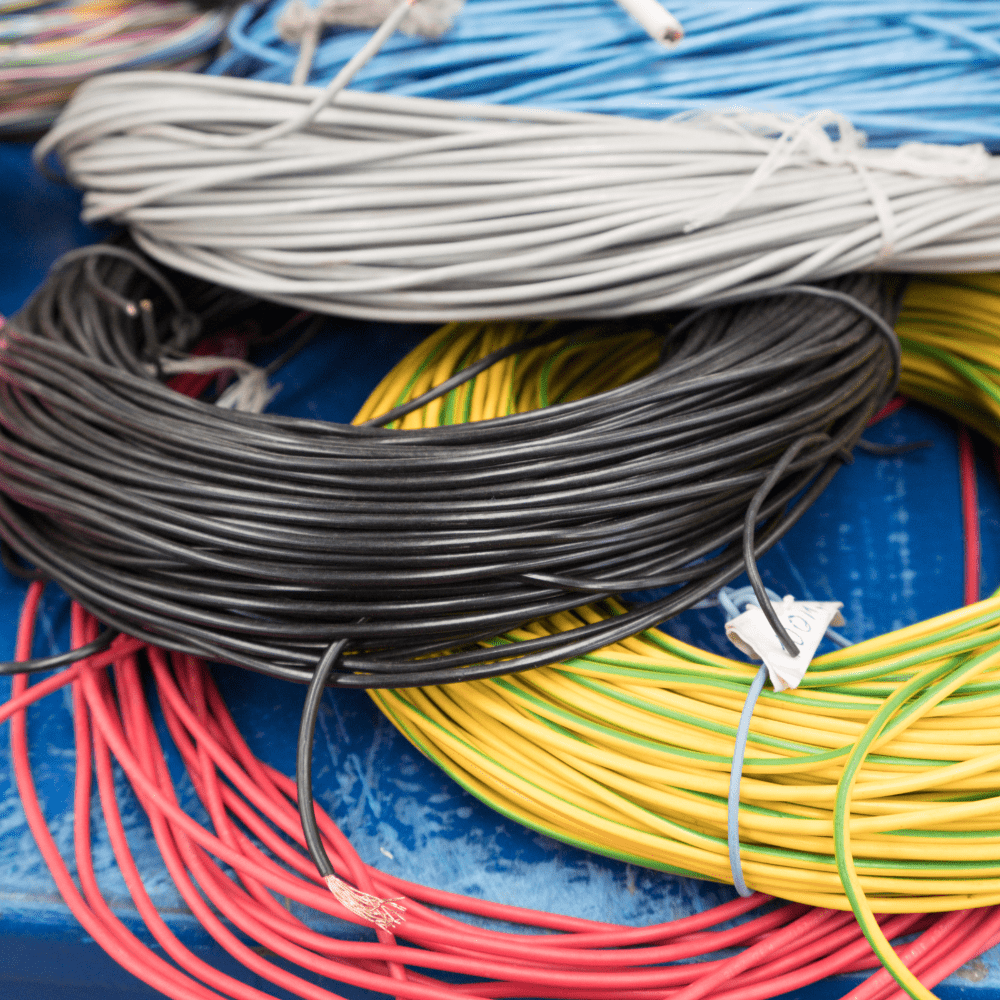
Recovery percentage is the proportion of your cable’s total weight that is actually recoverable copper once insulation, sheathing and armour are stripped away and discarded. It varies enormously by cable type: dry bright wire at 99%+, high grade 60% cable at roughly 55 to 65%, household cable at roughly 40 to 50%, and low grade armoured cable at roughly 25 to 40%.
Here is why this step changes everything. Two loads of cable can weigh exactly 10kg each. One is dry bright wire, worth close to the yard’s dry bright rate because there is nothing to strip away. The other is low grade armoured cable, and if only 30% of its weight is actually copper, its effective value per kg of gross weight is roughly 30% of that same ceiling figure, once you account for the steel armour and thick sheathing that make up the other 70% of what you are weighing in.
This is precisely why rates on our scrap cable prices page show dry bright wire and clean copper tube priced multiple times higher per kg than low grade armoured cable, even though both are, technically, copper cable.
A Worked Example: From LME Price to Your Payout
Rather than print a specific price chain that would be stale within days, here is how to run this calculation yourself with whatever the live LME figure is on the day you check it. The method has three steps.
Starting point
Look up today’s LME copper cash price in US dollars per tonne from a live source, such as the LME’s own site.
Step 1, currency and unit conversion
Convert the dollar per tonne figure to sterling using today’s exchange rate, then divide by 1,000 to reach a per kg figure. This gives you the theoretical refined copper ceiling for that day, not a price you will actually be paid.
Step 2, yard discount for processing
Apply a discount in the region of 25 to 40% to that ceiling to account for stripping, grading, transport and margin. This gives you an approximate ceiling for the highest grade material, dry bright wire.
Step 3, apply your cable’s recovery percentage
Multiply that discounted figure by your cable’s recovery percentage, for example roughly 45% for household cable, to reach an approximate gross weight value for your specific grade.
Run through those three steps with today’s actual LME figure and you will land in the right neighbourhood of what a fair rate should look like, though your figure will not match the published rate on our scrap cable prices page exactly. Real pricing also factors in current UK yard demand, contamination risk, and load size, not just the headline LME number, which is exactly why you should check the live prices page rather than rely on a calculation done from a news headline.
Why Scrap Cable Prices Change So Often
Copper is one of the more volatile industrial metals because it sits at the centre of global construction, electronics and, increasingly, electric vehicle and renewable energy demand. Copper futures moved from around $6.16 to $6.26 per pound within a single week in mid-July 2026, driven by factors ranging from Chilean mine output disruptions to shifting expectations around US interest rates and tariff policy on refined copper.
None of that has anything to do with your specific bag of household cable, but all of it moves the number your bag of cable is priced against. Practical factors that shift the price you are quoted, day to day, include:
Global supply disruptions
Chile alone accounts for roughly half of the world’s copper exports, so mining issues there move the LME price within days.
Currency movements
Because LME copper is priced in US dollars and you are being paid in pounds, GBP/USD exchange rate shifts affect your £/kg price even if the dollar copper price has not moved at all.
Warehouse stock levels
Falling LME copper stocks generally signal tighter supply and push prices up, rising stocks tend to ease prices.
UK-specific yard demand
If UK processors have a backlog of one grade and need more of another to fulfil an order, prices for individual grades can shift independently of the headline LME number.
Tariff and trade policy
As of July 2026, a US Section 232 review recommending staggered tariffs on refined copper imports, reported as 15% from 2027 rising to 30% from 2028, was still pending a presidential decision, and markets were already pricing in some of that uncertainty. Trade policy shifts like this can move copper prices well before they formally take effect.
This is why our prices page shows a specific update time and a specific expiry time for every quote. It is not a marketing device, it genuinely reflects how quickly the underlying market can move.
LME Price vs Your Local Yard Price: The Suitability Matrix
| Situation | What to check |
|---|---|
| Copper up or down generally | LME copper spot price, the global reference, not what you get paid |
| Comparing our rate to a fair benchmark | Our prices page cross-checked against LME the same day |
| What a bag of household cable is worth today | Household cable rate on the prices page, multiplied by your weight |
| Locking in a price ahead of a large load | Call for a same-day indicative rate, it may move by drop-off day |
| Comparing two yards’ quotes for the same load | Ask both for their rate per kg for your graded material |
Who This Pricing Explanation Isn’t For
This is not a trading guide. It will not tell you how to speculate on copper futures, and we would not recommend timing your scrap cable sale around short-term LME movements the way a commodities trader might. Copper can move a few percent in a week, but the practical difference to a typical domestic or small trade seller, on a load worth tens or a few hundred pounds, rarely justifies holding onto cable for weeks waiting for a marginally better rate, especially once you weigh in storage space and the risk of loss, damage or theft.
It also will not help if you are looking for a fixed, guaranteed price quoted over the phone with no inspection of the material. No responsible dealer can do this honestly, because the final price depends on your cable’s actual grade and recovery percentage once it is physically assessed, not just its rough description over a phone call.
Common Mistakes People Make When Judging Scrap Cable Prices
Comparing your cable price to the headline copper price in the news
A news report saying “copper hits new highs” refers to the LME refined copper price, not the price of your insulated household cable. The gap between those two numbers is completely normal and does not mean you are being short-changed.
Assuming a quote from last month still applies
Copper has moved several percent within single weeks in 2026 alone. A quote or a screenshot of a price from a month ago is not a reliable guide to today’s rate.
Not asking which grade a quoted price applies to
A per kg figure quoted without a grade attached is close to meaningless, given the four or five times difference in value between dry bright wire and low grade armoured cable.
Expecting price parity between yards regardless of load size and location
Bulk collection logistics, local demand, and transport distance all factor into what a specific yard can offer on a specific day, on top of the underlying LME driven baseline.
Scrap Cable Pricing Myths
Myth: “Scrap yards set their own prices with no reference to the real copper market.”
Reputable yards, including us, price against the published LME copper rate with a transparent discount for processing. What varies between yards is the size of that discount and how frequently rates are updated, not whether the LME price is used at all.
Myth: “If copper goes up 10%, my quote goes up 10%.”
Not necessarily, and rarely by exactly that amount, because your cable’s price also depends on its recovery percentage, which does not change with the copper market. A 10% LME move affects the copper value portion of your price, not the fixed processing and margin portion.
Myth: “Prices only ever go up over time.”
Copper is genuinely volatile in both directions. Mid-2026 has seen multi-percent swings within individual weeks driven by mine disruptions, tariff decisions and geopolitical events, moving in both directions, not a smooth upward line.
Our Verdict: Check the Live Page, Every Time
There is no shortcut that replaces checking a live, dated price. The maths in this guide will help you understand why a quote is what it is, and give you a rough sanity check against wildly unfair pricing, but it should never be used to calculate your own exact expected payout, because exchange rates, yard discounts and daily demand all shift the final number in ways a general guide cannot capture for every situation.
Our scrap cable prices page is updated regularly with a clear “updated on” and “valid until” timestamp for exactly this reason. If you are planning a larger or bulk load, particularly from a business, site clearance or trade job, call ahead for a same-day indicative rate and we can also talk through collection logistics if the load is too large to bring to us directly.
How Scrap Cable Prices Are Calculated FAQ
Q1 Why does scrap cable price change every day?
Because it is anchored to the LME copper price, which is a globally traded commodity that moves daily based on supply, demand, currency movements and broader economic factors, sometimes by several percent within a single week.
Q2 Why is my cable priced lower than the copper price I saw in the news?
News reports quote the LME refined copper price, which represents 100% pure copper with no processing costs deducted. Your insulated cable’s actual price factors in a yard processing discount and your cable’s specific copper recovery percentage, both of which bring the number down from that theoretical ceiling.
Q3 Can I get a fixed price quote over the phone before you see my cable?
We can give you an indicative same-day rate based on your description, but the confirmed price depends on your cable’s actual grade once assessed in person, since recovery percentage genuinely varies even within cable types depending on gauge, condition and construction.
Q4 Does the exchange rate between the pound and dollar affect my scrap cable price?
Yes. LME copper is priced in US dollars per tonne, so a stronger or weaker pound against the dollar changes the sterling value of that copper price even on a day when the dollar copper price itself has not moved.
Q5 Is there a best time of year to sell scrap cable for a higher price?
Copper prices do not follow a reliable seasonal pattern strong enough to plan around. Broader supply and demand factors, like mine disruptions or global manufacturing demand, matter far more than time of year.
Q6 Do all scrap yards use the same discount below LME price?
No. Published industry figures suggest a typical range of 20 to 50% below LME spot depending on grade, and the exact figure varies by yard, based on their own processing costs, demand, and location.
Q7 What is the difference between the LME cash price and the LME 3-month price?
The cash price settles within two business days and reflects the current spot market. The 3-month contract is the most actively traded LME contract and is often used as the primary reference benchmark, though both track closely together.
Q8 Why does armoured cable pay so much less per kg than dry bright wire even though copper is the same metal?
Because price is paid per kg of gross weight, and armoured cable’s steel wire armour and thick sheathing make up a much larger proportion of that gross weight than insulation does on dry bright wire, which by definition has none.